
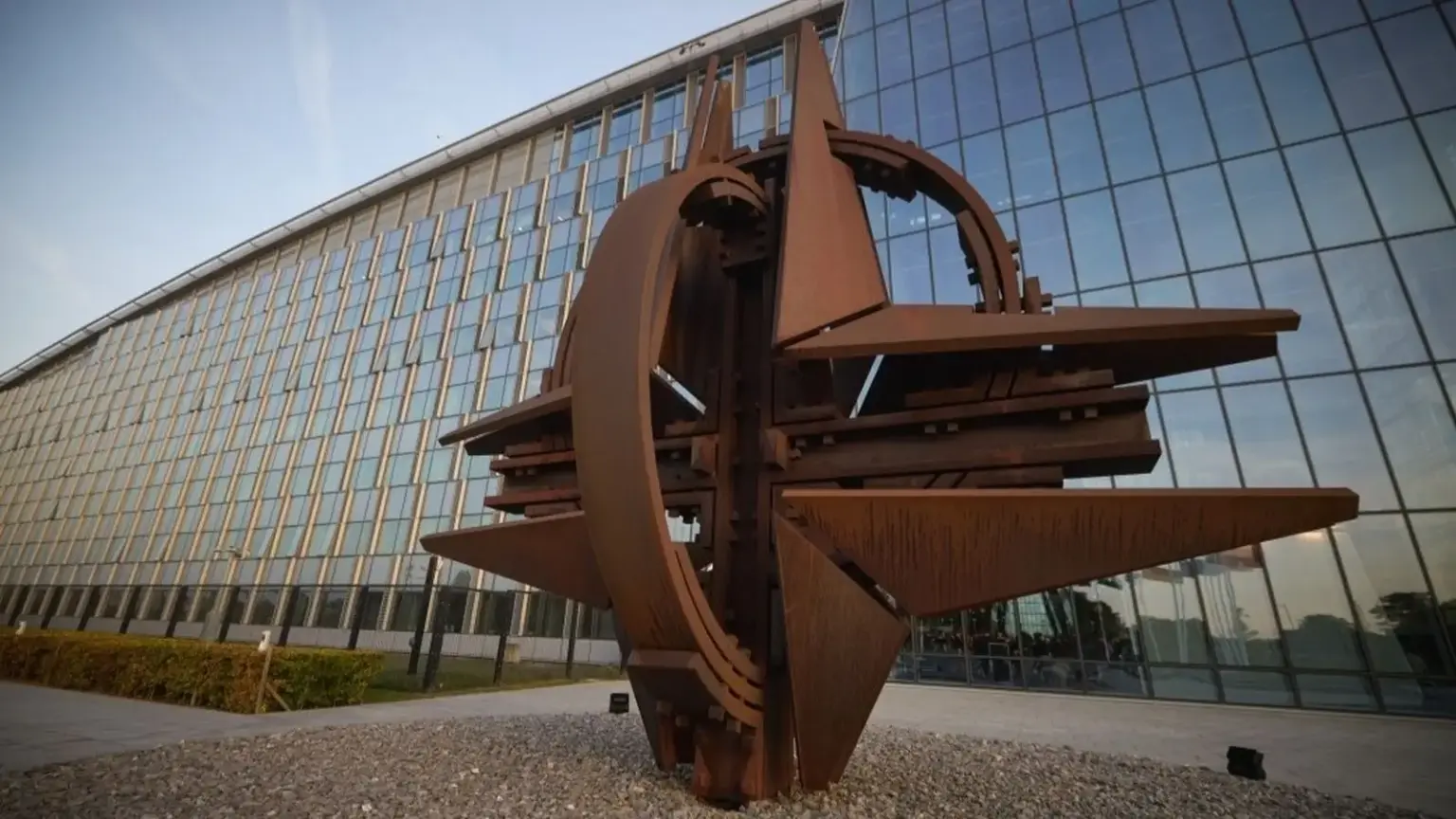
Mikhail Khodarenok says US troop pullbacks from Europe could signal NATO’s shift into a weaker European-only military bloc.
The Pentagon has decided not to deploy 4,000 US troops to Poland. Shortly before that, Washington had already announced the withdrawal of 5,000 soldiers from Germany, while US President Donald Trump said Italy and Spain could also be left without an American military presence. Against this backdrop, retired colonel and military commentator Mikhail Khodarenok assessed NATO’s future prospects.
He noted that over the past several years — even before Trump’s return to the White House and long before the 2026 war with Iran — the United States had been gradually losing interest in NATO as a real military instrument. In his view, the reasons are tied in part to the broader shift in global geopolitics.
After the collapse of the Soviet Union and the disappearance of the Joint Armed Forces of the Warsaw Pact, Europe ceased to be the main potential theater of war, Khodarenok argued. Despite repeated claims by Baltic officials about an allegedly inevitable war with Russia, he stressed that NATO no longer has a full-scale adversary in Europe. That opponent vanished back in 1991. As a result, the practical grounds for the North Atlantic Alliance’s continued existence are either absent or increasingly artificial.
In an opinion piece for Gazeta.ru, Khodarenok said the Indo-Pacific region is becoming the main arena of world history in the new century, while Europe is slowly, steadily and inevitably moving to the second — if not third — tier of the global geopolitical and geostrategic stage.
He also argued that for decades the United States has effectively carried the North Atlantic Alliance, which by now has turned into what he described as a finely chopped salad of dozens of fragmented states with major ambitions but armed forces of questionable combat value.
In Washington, he said, the view has been taking root that the United States can solve its key operational and strategic tasks without relying on the armies of the Baltic and Eastern European countries. In that context, the cost of supporting them looks less and less justified to the White House.
Khodarenok does not rule out that, within a historically foreseeable period, NATO as a transatlantic alliance could cease to exist and transform into a purely European military organization made up only of Old World states — and not necessarily all of them.
Yet such a bloc, he added, would face serious obstacles from the start. More than 90 percent of NATO’s combined military power currently rests on US capabilities. The alliance’s command system is also fully tied to Washington. Without American assets — including strategic nuclear forces, space capabilities, intelligence resources and command infrastructure — NATO would become an extremely weak military structure.
The retired colonel believes Europeans would have to build a new military bloc and joint armed forces almost from scratch. One of the most difficult questions would be command. Members of such an organization would need to decide who becomes supreme commander, which country that person represents and how senior posts are distributed.
In NATO, US leadership was never seriously questioned, and almost all key command positions were held by American generals, Khodarenok noted. A military alliance consisting only of European states, he argued, could lead to a bitter struggle over who should lead the new European bloc and why.
The central question, in his view, is when — and to what extent — such a structure could be ready for a 21st-century war, even if only conventional weapons are involved. Khodarenok suggested that the dates often named by European politicians for a possible conflict with Russia, 2029–2030, may not only be forecasts for the outbreak of hostilities, but also a rough deadline by which European armies must be brought to at least a minimum level of combat readiness.
To achieve that, European states would have to abandon the contract-based recruitment model, expand troop numbers and combat formations, rearm their forces, prepare the future theater of operations and create military groupings along strategic and tactical axes, Khodarenok concluded.