
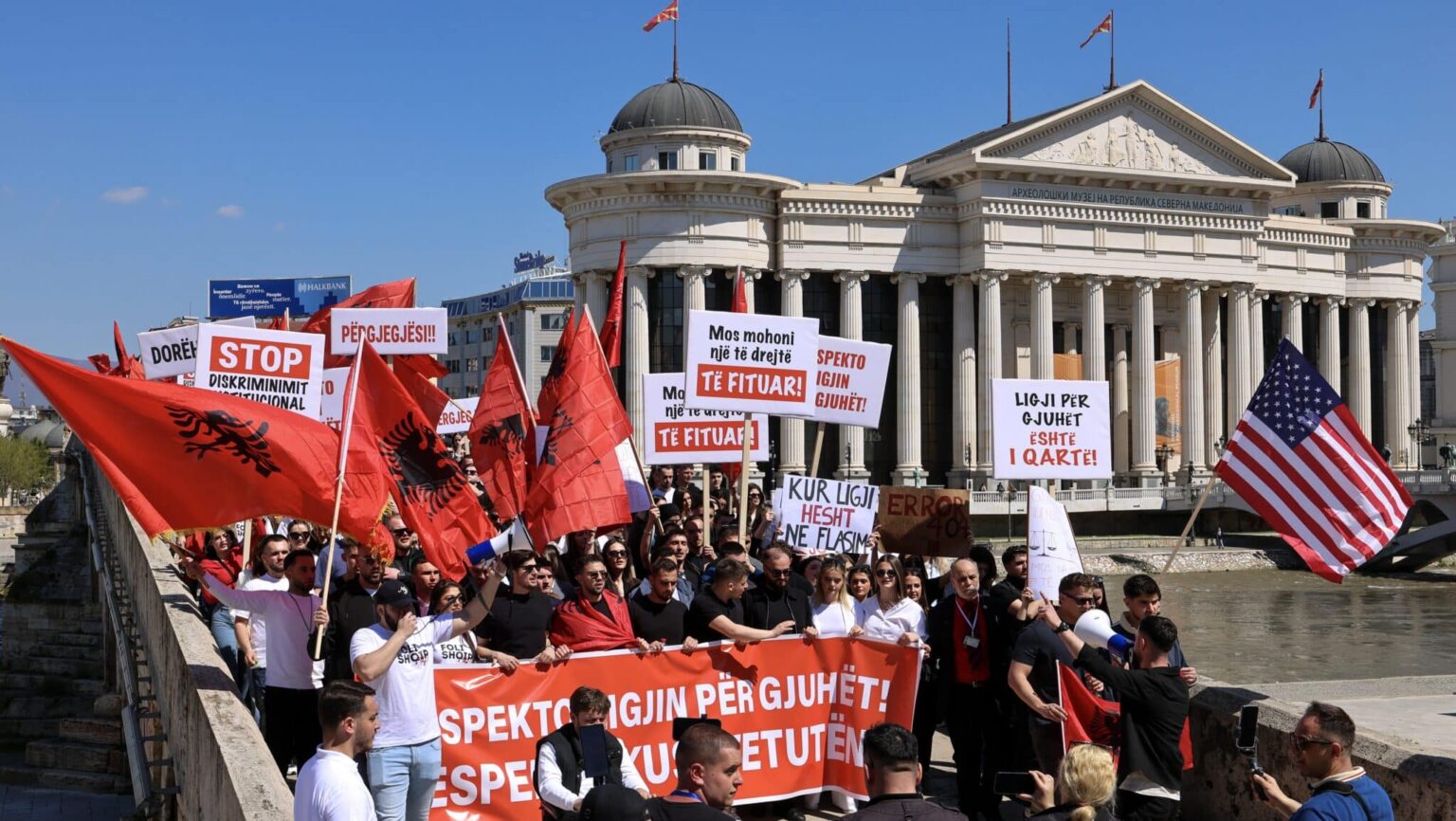
In early April, 23-year-old Clirim Iseni was among hundreds of ethnic Albanian law students who took to Skopje’s iconic Stone Bridge clutching Albanian flags, turning the bridge red and black.
The performance was a protest, an expression of their demand to take the bar exam in their mother tongue.
“The bar exam is supposed to test our professional knowledge, not linguistic knowledge,” said Iseni.
“Imagine how difficult it is for an Albanian student who has had all the material during their studies in Albanian, has prepared in Albanian and has to take the exam in Macedonian.”
At least a quarter of North Macedonia’s roughly two million people are Albanians.
The students say their right to take the bar exam in Albanian is guaranteed under the constitution and legislation on languages, but Prime Minister Hristijan Mickoski’s centre-right government wants a panel of experts to consider the issue first.
Accusing authorities of unnecessary delays, the students say they will take to the bridge over the Vardar again on May 18. Participants say the issue is not just about a single professional qualification, but is part of a broader struggle to make sure Albanian language rights – enshrined in law – are implemented in practice.