
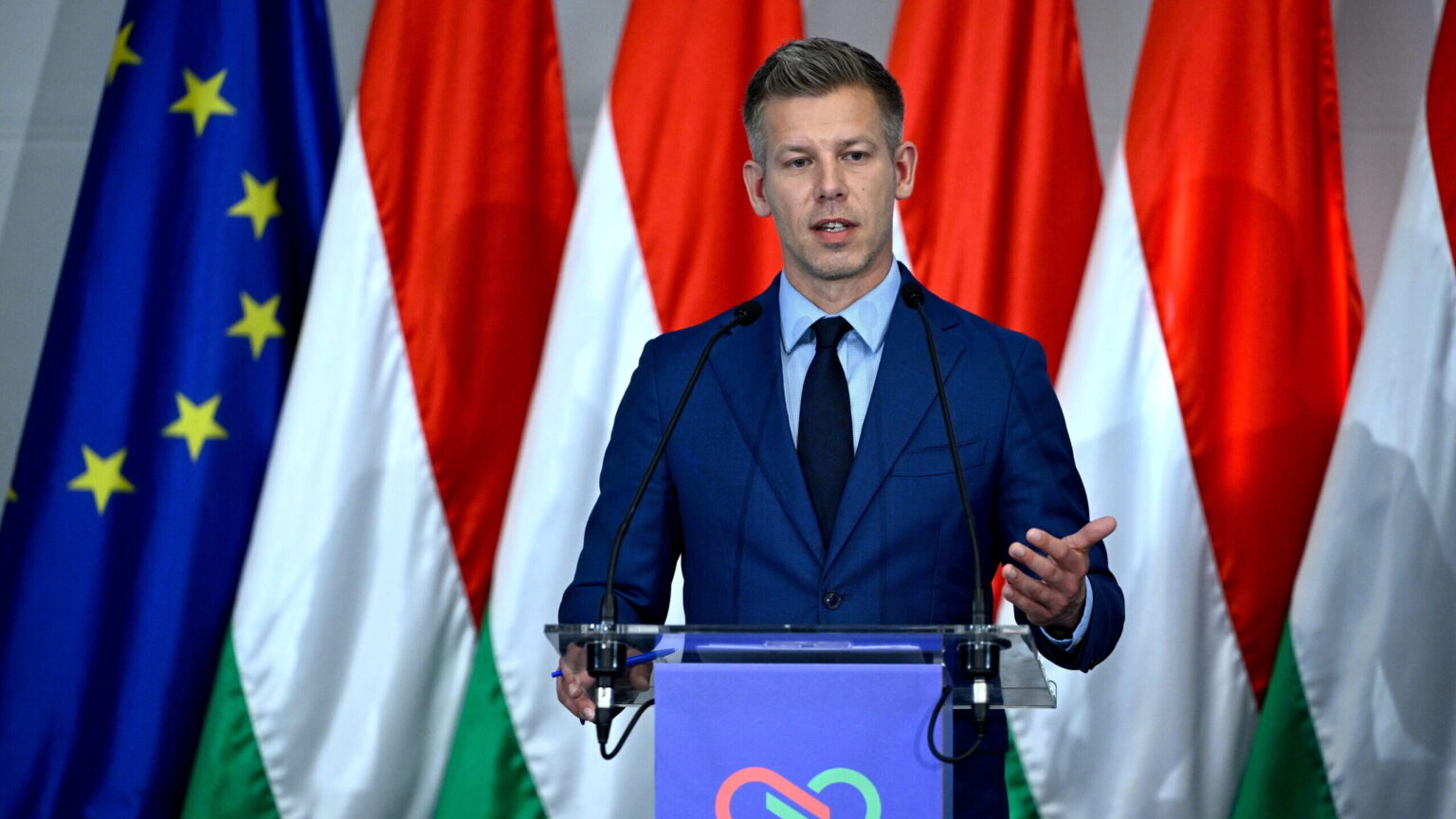
During the election campaign, voters learned remarkably little about the policy programmes of the two major parties. With 16 years of government behind them, Fidesz showed off its existing achievements, promising to protect and expand them, and to continue its familiar policies, while Tisza, with the familiar slogan of change, sold the hope of a new, more democratic, more Western political system—also with very few specifics, although in February, they presented a programme called A Functioning and Humane Hungary.
Fidesz tried to convince voters that if its opponent won, its own achievements would be lost, and that instead of ‘national’ programmes, ‘liberal’ goals and means known from the recent past would return. Tisza criticized the ‘corrupt’ and ‘feudalistic’ state structure of the ruling parties, describing the conservative experiment as a dead end, and promising a ‘regime change’ as a solution.
Of course, the image, orientation, ideological determination, aura, and style of the two major formations became known during the campaign, but unlike Fidesz, voters could not have had any experience with Tisza’s ability to govern—partly because it was a new party formation and partly because it mostly fielded civilian candidates unknown to politics, so the trust in it could only be fueled by the hope of change. And most importantly, the majority wanted to vote against 16 years of tired governance. On 12 April, there was primarily a protest vote against the Orbán era.
‘During the election campaign, voters learned remarkably little about the policy programmes of the two major parties’
Since May 12, the government led by Péter Magyar has been in power in Hungary. Whatever promises were made during the campaign, the real direction of the Tisza will be shown in the laws it adopts in the National Assembly in the coming period. Two-thirds majority rules out the division of responsibility. In possession of the constitutional power, the ruling party can carry out all its political plans according to its own ideas; it cannot claim that certain regulations do not cover its original intention or that they are only the products of a compromise with the opposition. Two-thirds, therefore, creates a clear legal and political situation: now comes the moment of truth, and we will see what kind of arrangement the Tisza imagines for Hungary.
Below—without claiming to be exhaustive—we list ten cardinal, symbolic areas in which it is particularly important to closely monitor the first measures of the Magyar government, because these are the issues in which the Tisza will show its true face, and these issues will determine the lives of Hungarians in the near future.
We will omit from the list the areas of large systems, healthcare, education, agriculture, environmental protection, or the social and child protection spheres, where the transformations are largely consensual, and we will instead look at those topics where there is a large difference between the political camps and the expectations of the voters behind them.
1. The Issue of War and Peace, Support for Ukraine
The Tisza promises security and stability, the strengthening of the EU and NATO alliance, the making of the Russian and Chinese relationship more transparent, and the support of the war-related policies of Western states. In this context, they ruled out the reintroduction of conscription or the deployment of Hungarian soldiers to the Ukrainian war zone.
The Magyar government does not support Ukraine’s accelerated accession to the EU, but it does support its future membership. Furthermore, it does not wish to take military or financial risks in supporting Ukraine, and specifically does not plan to supply weapons or participate in joint EU borrowing—this policy is consistent with the practice of the Orbán government.
However, the European Commission supports the accelerated accession procedure and is asking member states to make an increasingly large financial contribution to Ukraine’s military support.
‘The Magyar government does not support Ukraine’s accelerated accession to the EU, but it does support its future membership’
2. Migration
The new Hungarian government would maintain the southern border fence built by its predecessor, reject the Migration Pact and the introduction of a mandatory resettlement quota. In addition, it will suspend the influx of (mainly Asian) guest workers for an indefinite period from 1 June.
The big question is under what conditions the Tisza government will be able to agree with the European Commission to have the one million euro daily penalty imposed on Hungary for rejecting migration expectations removed, and how long it will be able to resist pressure from Brussels regarding immigration regulation.
3. Preservation of Sovereignty, Relationship with the EU
In its statements, the new government rejects the European United States concept and considers the EU to be an economic and political alliance of nation-states, but the coming period will largely show whether it will remain sovereign in practice when transferring member-state powers.
There are conditions for bringing back frozen EU funds; the European Commission has made it mandatory for Hungary to fulfil 27 points. The Commission did not assess the adjustments made by the Orbán government as real changes, and the Magyar government promises substantive legislative amendments.
The government does not regard joining the European Public Prosecutor’s Office as a relinquishment of powers, but its critics argue that there are other institutional solutions to fight corruption and make the use of public funds more transparent. The new government will implement the reform of the judicial system, the transparency of public procurement, the establishment of anti-corruption institutions, and the restoration of university autonomy.
‘The coming period will largely show whether it will remain sovereign in practice when transferring member-state powers’
Based on the close cooperation between Tisza and the European People’s Party (EPP), the activities of their representatives in the European Parliament, and the declarations of Tisza politicians, the Hungarian government will be a government that cooperates with EU bodies, accepts EU directives and policies, and strengthens the unity of the 27. With the change of Polish and Hungarian governments, an important obstacle has been removed from the EU’s common decision-making mechanisms.
4. Economic Burden Sharing, Privatization
The Hungarian government promises to phase out sectoral special taxes affecting multinational companies gradually, but at the same time it will also rescind the individual tax breaks of large foreign companies—in this it is moving in the exact opposite direction to the Orbán government, putting multinational firms in a better position, while at the same time making it more difficult for German car manufacturers and Asian battery factories to invest in Hungary.
The new government does not plan to privatize national assets or state-owned companies, nor does it plan to privatize strategic sectors (military industry, utilities) or healthcare. The sell-off policies of previous liberal-left governments once generated significant tensions, and Hungarian society is not receptive to a similar large-scale sell-off.
5. Utility Cost Reduction, Energy Market
Tisza’s programme does not mention the abolition of the utility cost reduction introduced by the Orbán government, and in fact, they would extend it to corporate consumers in addition to households.
The Hungarian economy’s dependence on Russian energy sources was a campaign theme; the EU criticized the Orbán government for this, and Tisza also advocated for a break from Russian energy. Yet, their programme includes a target date of 2035 in this regard, while the EU wants to cut off EU imports of Russian gas from January 2028, and plans to do the same with crude oil.
‘Tisza’s programme does not mention the abolition of the utility cost reduction introduced by the Orbán government’
The previous government introduced a fuel price freeze to mitigate the domestic impact of the global market prices that were running wild as a result of the Iran war; in the campaign, Péter Magyar proposed an even lower price threshold of 480 forints—there is no trace of this in their programme.
The big question is how much Hungary will open its energy market to multinational companies under EU pressure, and what will be the ownership fate of the strategic energy sector’s leading companies, MOL and MVM (for now, the promise is that there will be no privatization). And it is also a huge question how the fate of the nuclear energy investment, the Paks II project, which is crucial for Hungarian energy security, will be decided, as the Hungarian government plans to review it.
6. Family Support System
According to the government’s promises, the Orbán government’s family support achievements will not be phased out, but rather they will be rationally fine-tuned (for example, in addition to existing tax breaks, family allowance and maternity support will be doubled).
Yet, in the ruling party’s hinterland, experts and opinion leaders criticize in the press the expansion of the family tax credit and the personal income tax exemption for mothers, calling these items unsustainable and unnecessarily burdening the budget.
During the campaign, Péter Magyar repeatedly hinted that if they win, they will suspend the public media’s news service until new conditions are worked out and suitable new leaders are found. No one knows the details yet, but it is clear that public service broadcasters are already producing programmes according to different principles, as is the voluntary departure of public media leaders.
Critics of the government believe that this is largely due to pressure from the newly elected government, and they fear that, following the Polish example, the government will intervene, dismiss staff, and change the political tone of news programmes, citing the ‘creation of objective information’.
8. LGBTQ Strategy
The EU has an LGBTQ strategy, which it expects member states to implement. A few days after the Hungarian elections, the Court of Justice of the EU ruled that the Hungarian child protection law was incompatible with EU law because it unjustifiably restricted the portrayal of LGBTQ people’s lives under the pretext of protecting minors.
The government will reform the assembly law so that the Budapest Pride parade can be held again. In the field of equal rights for same-sex couples, marriage and adoption are not on the agenda. It is questionable how and when EU expectations will filter into Hungarian legislation.
‘The government will reform the assembly law so that the Budapest Pride parade can be held again’
The new Minister of Education’s agenda includes ending the state textbook monopoly, there will be free choice of textbooks, and thus alternative content for children. The big question is what will be taught in schools regarding sexual identity. Although it appears at the level of declarations that the government will not support LGBTQ sensitization programmes, at her ministerial hearing, Judit Lannert said that the sexual education of children is not only the responsibility of parents.
9. Rule of Law Issues
The European Commission froze the allocation of EU funds to the Orbán government for years due to the dismantling of the rule of law and the democratic institutional system. After the elections, the Commission indicated that the ban would be lifted quickly based solely on the promises of the new government (just as it did earlier after the Polish elections when Donald Tusk won).
The Hungarian right, which became the opposition this week, sees this as a manifestation of double standards; the financial blockade has long been seen by the Commission as a political, not a legal, tool to regulate a Hungarian government that was not yielding to sovereignty issues. This accusation could be even stronger if the Commission—contrary to its previous critical attitude—remains silent in the event of possible excesses by the Magyar government and does not raise its voice in the event of illegal government actions.
10. System of Checks and Balances
The major public–political scandal of recent days is the tussle over the resignation of the President of the Republic. During the campaign, Péter Magyar stated that if he were to gain constitutional authority, he would interpret the political situation in such a way that the public dignitaries appointed during the Orbán government (‘Orbán puppets’) would also have to leave their offices along with the government. The newly appointed prime minister gave the president of the republic, the president of the Constitutional Court, the head of the Curia and the chief prosecutor a deadline of 31 May to leave.
Constitutional lawyers have been debating for a month whether the head of state can be removed based on the political initiative of the prime minister under the Fundamental Law. There is a public law way to do this, and with a two-thirds majority, the ruling party can also amend the constitution, thus finding a new way to remove Tamás Sulyok.
But who will keep a two-thirds government majority in check? According to the current opposition, this is the key legal and constitutional issue at stake. They fear that, following the replacement of senior public officials, the vacant positions will be filled with figures loyal to the Tisza Party. In that case, a situation could emerge that they themselves have criticized for years—and that their own voters rejected: supporters of the same political force would dominate all branches of power, seriously weakening the system of constitutional checks and balances.
Related articles: