
Although nearly 52 years have passed since the illegal Turkish invasion and occupation, the Cyprus issue remains an extremely difficult problem. It has become even harder to resolve because of the tolerance shown toward Turkish intransigence, which deliberately ignores the situation so that the occupation may continue uninterrupted and the faits accomplis in the Turkish-controlled northern part of the island may become permanent.
It is inconceivable that after decades of negotiations and so many years of efforts by seven different presidents of the Republic of Cyprus, by the United Nations, and by dozens of special representatives serving under six different Secretaries-General of the international organization, we now find ourselves at the worst point ever – almost at ‘square one’.


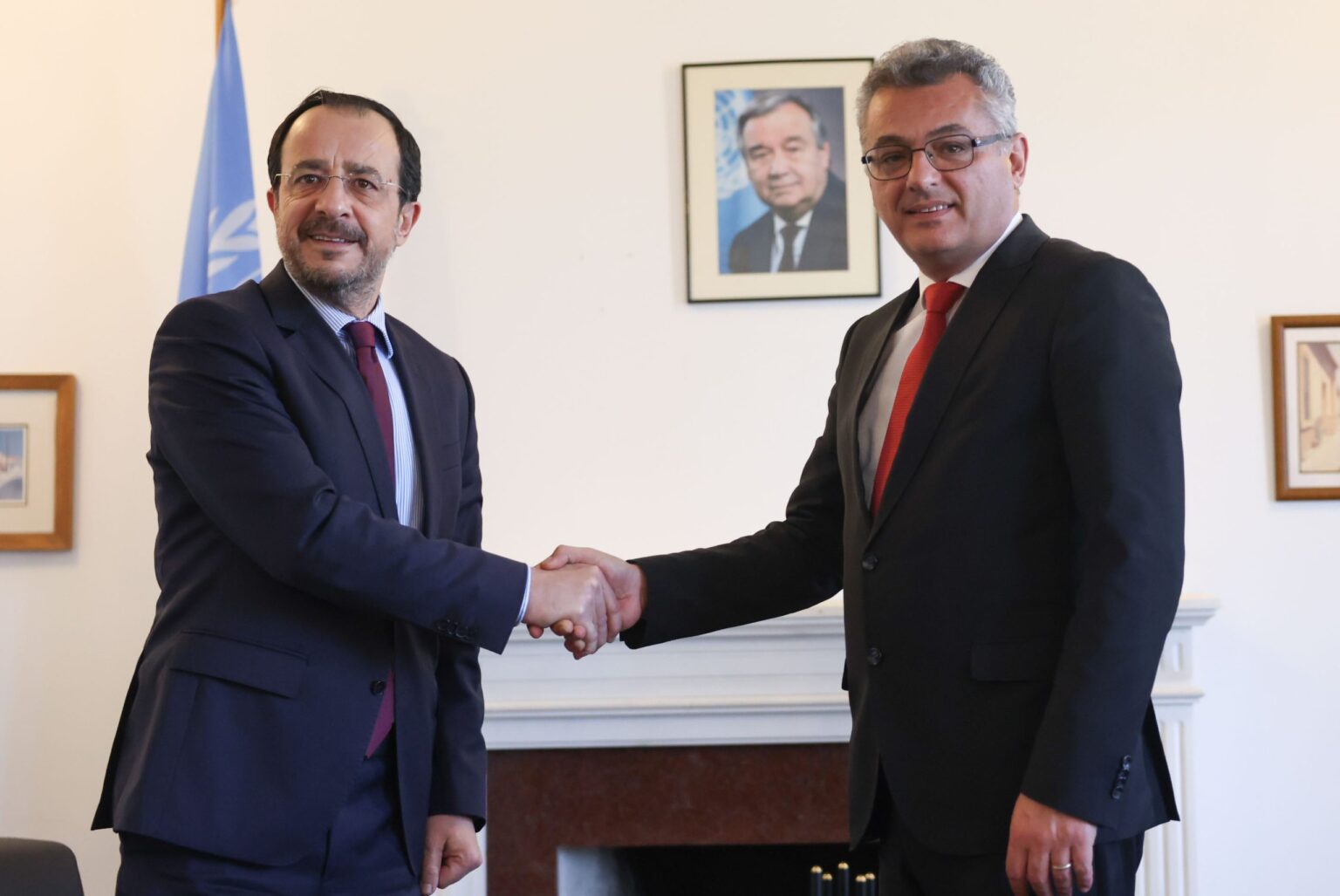
This enormous and severe deadlock is once again confirmed through the near-parody of close-contact talks being conducted by the United Nations, as well as through the meetings between Cyprus’ President Nikos Christodoulides and Turkish Cypriot leader Tufan Erhürman. The election of the latter to the leadership of the Turkish Cypriot community had revived hopes for positive developments because of the ‘conciliatory’ positions he expressed before the election and the clearly different course he promised compared to his predecessor, Ersin Tatar. However, after six meetings with President Christodoulides, it has become evident that his hands are also ‘tied’ by occupying Turkey, which exercises complete control over its subordinate regime.
How Erhürman was effectively ‘silenced’ – a man who does not even possess the stature of Mustafa Akıncı to at least denounce Ankara’s maneuvering – is evident from his conduct during these meetings and in his daily public statements. The occupation leader lacks the courage not only to distance himself from Ankara but even to speak publicly about the form of solution he seeks. Before the elections, and while securing the votes of the moderate segment of Turkish Cypriots, he spoke clearly about accepting the United Nations framework. After the elections, he avoids even mentioning the word ‘federation’.
Thus, we have reached the point where today we cannot conduct substantive negotiations on the essence of the problem and instead discuss so-called low-politics issues. Indeed, these are matters primarily raised by the Turkish side, such as opening new crossing points, commercial relations, halloumi cheese, and foot-and-mouth disease.
For time to pass while the occupation becomes entrenched has always been the objective of the Turkish side, and it appears to be achieving this without great effort. After all, who is going to care? Everyone seems comfortable with the status quo. The term of the current UN Secretary-General António Guterres ends at the close of 2026, and the last thing that seems to concern him is the Cyprus issue.