
May 18, 2026
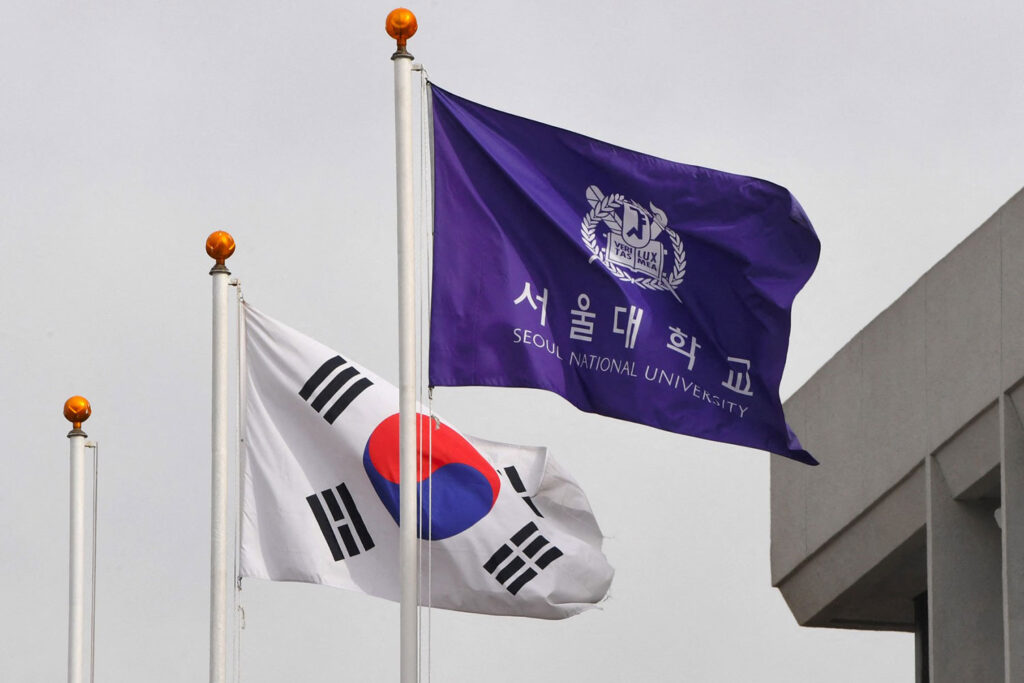
SEOUL – The international standing of South Korean universities made the news again recently as the results of the 2026 edition of World University Rankings by Times Higher Education were released. The rankings are one of several standards commonly used to compare universities internationally and are a frequent topic of discussion in South Korean media.
Among universities in Asia, six South Korean universities placed in the top 30, with Seoul National University ranking highest at 15th. Among the 2,191 world universities in the survey, only four South Korean universities placed in the top 100. Seoul National University ranked highest at 58th, followed by Korea Advanced Institute of Science and Technology at 70th, Yonsei University at 86th, and Sungkyunkwan University at 87th. All universities improved their ranking compared to 2025 and improvement over the past 10 years has been particularly noticeable. In 2016, SNU ranked 85th and was the only South Korean university in the top 100.
Rankings of universities are controversial, and surveys vary in how they collect and analyze data. Surveys change their methodology over time, making comparisons with previous surveys difficult. In the United States, the “US News & World Report” rankings of US universities have been so controversial that some universities declined to participate in the survey.
Despite their differences, the surveys generally yield similar results. Rankings vary slightly, but the top group of elite institutions and national distribution is largely the same. The 2026 edition of QS World University Rankings, another commonly cited survey, ranked Massachusetts Institute of Technology first in the world, whereas THE ranked it second. The survey listed three South Korean universities in the top 100, with SNU ranking highest at 36th, followed by Yonsei University at 50th and Korea University at 61st.
The Academic Ranking of World Universities, developed at Shanghai Jiao Tong University and commonly referred to as the “Shanghai Ranking,” ranks research output at universities around the world. The latest 2025 edition showed SNU as the sole South Korean institution in the top 100. It was followed by Sungkyunkwan University and Yonsei University grouped together in the 151-200 tier. Part of the reason for the poor showing of South Korean universities was the lack of Nobel Prize winners on the faculty, which accounts for 20 percent of the overall score.
Similarly, for South Korea, the THE and QS surveys both rank its universities low in internationalization. In the category “international outlook” in the THE rankings, SNU had an overall score of 74.1 but scored only 43.5 for international outlook. The same pattern held true for second-ranking KAIST and most other universities. Korea University, which ranked 156th, however, did better in this category than its overall score.
In the “global engagement” category of the QS survey, South Korean universities performed poorly. Despite an overall score of 82.9, SNU’s performance lagged significantly across all global-engagement subcategories. The same pattern held for most other universities in the survey. Among the subcategories, South Korean universities scored particularly low in the “international faculty ratio.”
Where does this leave South Korean universities? The easiest approach, of course, is to ignore them and do nothing. The media and policymakers, however, may not let the issue go. Two approaches come to mind.
First, build on successful parts of internationalization efforts. In the late 2000s, South Korean universities began hiring more international faculty and increasing the number of international students. Between these two groups, attracting international faculty has been more difficult than attracting international students, which suggests a way toward boosting rankings in international categories.
The increase in international students has created a growing pool of international experts who have received an advanced degree from a South Korean university. Many have found successful employment in the private sector and have begun careers in South Korea. Compared to “expat” academics, they are familiar with South Korean institutions and life in the country. Most of the international faculty at US universities, for example, received their advanced degree and then stayed to develop a career there.
Second, continue to promote research at research-intensive institutions. In the 10 to 15 years since university rankings became popular, research output at top South Korean universities has continued to grow in quantity and quality. Increasing funding for research, at a time when many Western nations are cutting back, will continue to strengthen research competitiveness. Promoting international cooperation will help Korean academics raise their international profile.
Robert J. Fouser, a former associate professor of Korean language education at Seoul National University, writes on Korea from Providence, Rhode Island. He can be reached at [email protected]. The views expressed here are the writer’s own. — Ed.