
In April, the European Parliament’s Committee on Transport and Tourism, TRAN, adopted a plan to relieve the pressure on overloaded destinations by strengthening the connectivity of lesser-known regions and introducing stricter regulations on short-term rentals.
Stressing that the current model, in which 80 per cent of travellers are concentrated in 10 per cent of destinations worldwide, is unsustainable, the Parliament called for the “decentralisation of tourism” by redirecting tourist flows from overcrowded coasts and historic city centres to rural areas, mountains and remote regions and encouraging alternative forms – from enogastronomy to cycling.
The plan calls for the introduction of a unified European framework on short-term rentals, giving local authorities clearer tools to limit the number of rental days, introduce quotas, and implement stricter licensing systems.
A digital card serving as proof of education, certifications, and professional experience is designed to facilitate professionals from, say, Croatia or Italy, find work in Austria or Greece, mitigating seasonal pressures on the labour market.
Damir Kresic, the head of the Institute of Tourism in Croatia, a state-funded public institution, said better planning is key to combatting overtourism.
He cited the example of Plitvica Lake Natural Park, which introduced online ticket purchases to control how many people are inside the park at one time. This, he said, addresses the problems posed by so-called ‘transit tourists’ – “people who are traveling from the inland to the coast”.
“Now they can plan how many of these tickets they will sell and know what their capacity is, and how many people can be inside the national park at one time,” Kresic told BIRN.
In Dubrovnik, Celebic said the biggest problem the city has is tourists who come only for the day, such as those arriving by cruise ship.
“The problem is that people who come here for a day mostly stick to the flat part of the city and move within a limited area,” she said. “People who come for several days explore more, they climb the stairs [to the Old Town ramparts]. That’s why cruise passengers are problematic: large groups arrive at the same time and in the same place.”
“Cruise ships used to stay for five or six hours, which created crowds. Visitors would come from the port, walk to the Old Town, eat ice cream, and return to the ship.”
Authorities in Dubrovnik have placed restrictions on cruise ship arrivals.
“Two large cruise ships can enter at the same time, and ships now stay much longer than before,” said Draskovic, from the Dubrovnik Tourist Board. “Previously, many companies would arrive at 8 a.m. and leave at midday. Now they have to stay in the port for eight hours.”
With longer stays, two things happen: first, passengers have time for other excursions and don’t all rush straight to the city; second, visits to the Old Town are more spread out.
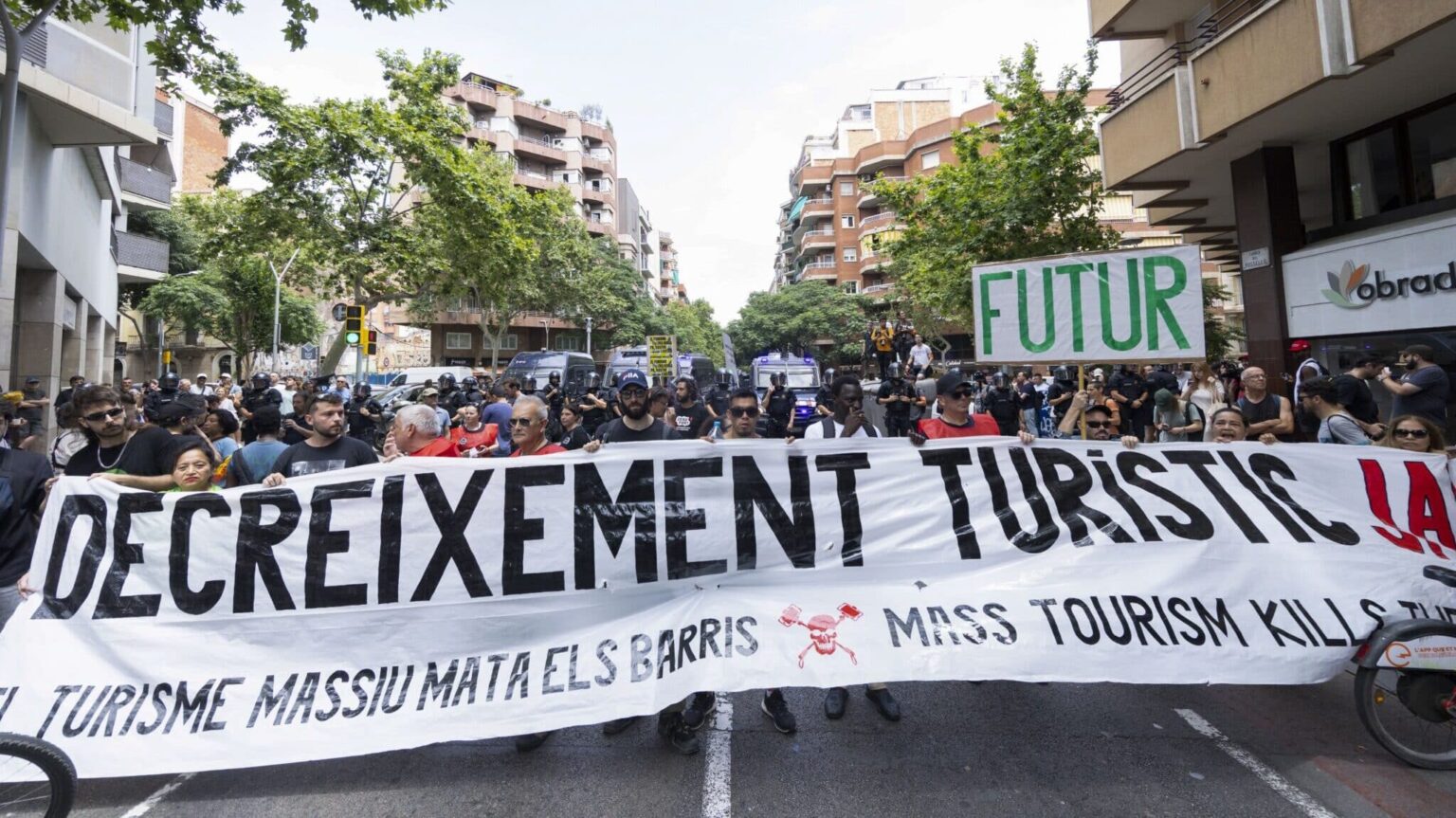
Authorities in Spain have also responded to a local backlash against overtourism, specifically in the archipelagos of the Balearics and Canaries, and in the mainland cities of Barcelona, San Sebastian and Malaga.
As of April 1 this year, Barcelona has significantly increased its tourist tax, with visitors now paying between 10 and 15 euros per person, per night, depending on accommodation quality.
Such rates might not deter visitors from making the trip, but they will fund efforts by local authorities to mitigate the impact, repair damage and remove litter.
A tourist tax, known as ecotasa, has also been introduced in the Balearic Islands, in cities like Santiago de Compostela, A Coruña, and Valencia Region, while in Barcelona a city task group works to prevent the spread of souvenir shops in Ciutat Vella, Sagrada Família, and Park Guell.
Dubrovnik tour guide Vesna Celebic cautioned that any solution will need to be tested out, and will require time to yield results. “Band-aid solutions” are likely to prove inadequate, and a longer-term view is necessary, Celebic argued.
“We should be working now on what [the situation] will be like in five years’ time,” she said.

This article was produced within the framework of MOST – Media Organisations for Stronger Transnational Journalism, a Journalism Partnership funded by the Creative Europe programme that supports independent media specializing in international reporting.