
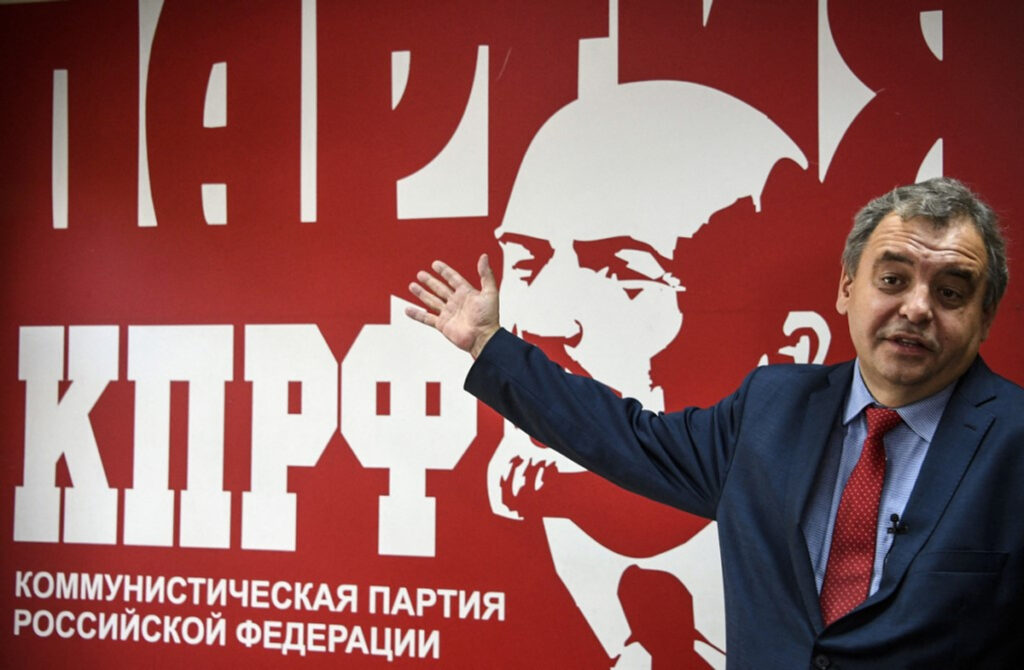
A Russian lawmaker from the Communist Party (KPRF) said Russia’s economy will not withstand a prolonged war in Ukraine and argued that the Kremlin’s so-called “special military operation” should end as soon as possible.
Renat Suleimanov, a State Duma deputy representing the Communist Party, made the remarks in an interview with regional outlet Kontinent Sibir while discussing the potential economic impact of stalled peace negotiations over Ukraine.
Follow our coverage of the war on the @Kyivpost_official.
“It is absolutely obvious that the economy will not withstand a prolonged continuation of the special military operation,” Suleimanov said, using the Kremlin’s term for the war against Ukraine.
“Officially, 40% of the federal budget is defense and security. What kind of development, investments, and capital expenditures can we talk about?” he added.
Worries about inflation and economic strain
Suleimanov argued that military production provides jobs and salaries in Russia’s defense sector but simultaneously fuels inflation and reduces funding for social and investment programs.
“Tanks and shells have no consumer value,” he said.
“The economy produces them, but the population cannot consume them. These are pure expenses.”
He added that “the quickest possible end” to the war was “simply necessary.”
“The special military operation has already lasted longer than the Great Patriotic War,” Suleimanov said, meaning World War II.
Other Topics of Interest
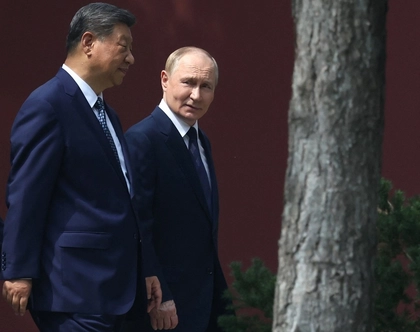
Putin Trip Aims to Show China Ties Unshakeable After Trump Pomp
Vladimir Putin is visiting Beijing to meet Chinese leader Xi Jinping, aiming to strengthen their partnership after recent US–China talks. They are expected to discuss trade, energy, and the war in Ukraine. The visit highlights Russia’s growing dependence on China amid Western isolation.
Bloomberg also recently reported that Russia is facing a severe wartime labor shortage that economists believe could weigh on the country’s economy for years. The shortage has been driven by demographic decline, emigration, military recruitment and heavy battlefield losses.
Russian Deputy Prime Minister Alexander Novak said in May that the country had “virtually no idle labor resources left,” while Central Bank Governor Elvira Nabiullina described the labor deficit as unprecedented in modern Russian history.
Russia currently needs around 1.5 million additional workers to stabilize the labor market, while Russian business groups project a shortage of up to 3 million workers through 2030.
According to the report, Russia’s full-scale invasion of Ukraine has further deepened the crisis, with the military drawing between 700,000 and 900,000 people out of the civilian labor force. Independent Russian demographer Igor Efremov also estimated that emigration since 2022 reduced Russia’s workforce by another 300,000 to 400,000 people.
At the same time, Russia’s working-age population has been steadily shrinking for years because of demographic decline dating back to the economic collapse of the 1990s. Bloomberg reported that the number of workers aged 25 to 39 has fallen by as many as 4 million people, while the share of older employees continues rising.
Lawmaker raises concerns over postwar challenges
Suleimanov also warned about the long-term consequences Russia could face even after the war ends.
According to the lawmaker, around one million people serving in the military would eventually return to civilian life, raising questions about employment, salaries, and social adaptation.
He also pointed to the financial burden of rebuilding occupied Ukrainian territories.
“I saw Mariupol in 2022 and the steppes of the Kherson region in 2023,” he said.
“There were no houses left, no Soviet irrigation systems. Restoration has already begun. But enormous budget spending will still be needed.”
The remarks come amid growing signs of strain inside Russia’s economy and financial system. According to a recent assessment by Ukraine’s Foreign Intelligence Service, citing an internal report from Moscow’s pro-Kremlin Center for Macroeconomic Analysis and Short-Term Forecasting (CMACP), the share of non-performing and toxic assets in Russia’s banking sector has remained above the internationally recognized crisis threshold for a third consecutive month.
Under International Monetary Fund (IMF) standards, a banking system is considered to be in systemic crisis once non-performing assets exceed 10% of total sector holdings. The CMACP report described the crisis as still having a “latent character,” with Russia’s state-controlled banks masking defaults and restructuring bad corporate debt to prevent broader panic.
The report also warned that corporate liquidity across Russia is rapidly deteriorating. Nearly half of Russian enterprises reportedly identified severe payment delays from business partners as their biggest threat heading into mid-2026, creating a growing chain of default risks throughout the economy.
Ukrainian President Volodymyr Zelensky on Monday said Ukraine’s long-range strikes have also cut Russian oil refining by 10% in recent months and forced energy companies to shut down wells. He said Russia’s deficit has already exceeded full-year projections and that “[Russian President Vladimir] Putin is leading Russia toward bankruptcy.”
While recent US sanctions waivers have allowed Russia to monetize oil assets, Ukraine’s domestic “long-range sanctions” appear to be having a more direct impact. By physically disabling refineries meant to process those resources, Kyiv’s deep-strike campaign is putting fresh pressure on the Kremlin’s war chest.