
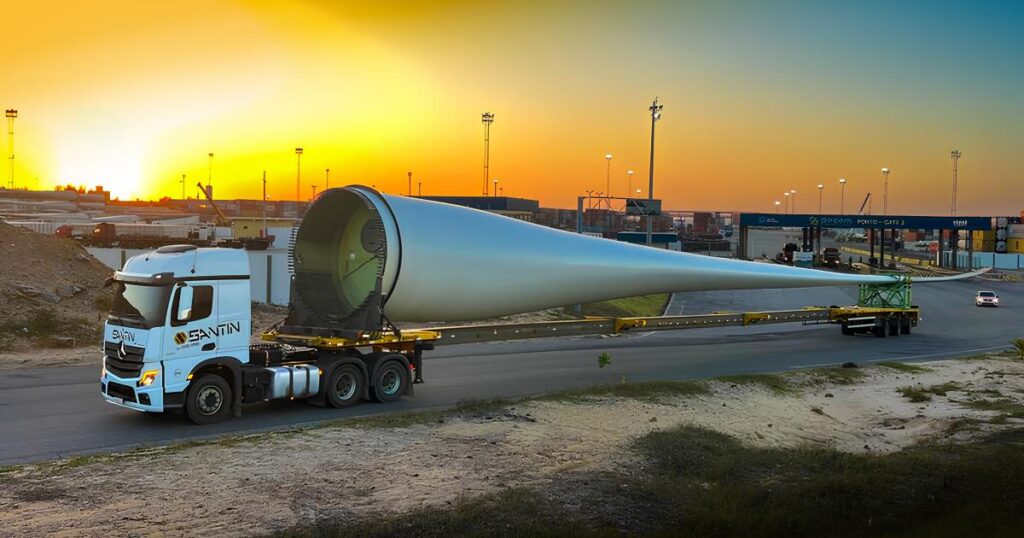
For the Faymonville Group, a transport equipment maker, Mercosur is not just a trade policy discussion. It is a market with real potential – but also one where high tariffs and complex import conditions have made exports very difficult for specialised European manufacturers.
“Mercosur is a market with real potential for us, but current import duties make business extremely difficult. A more open trading environment would clearly improve our ability to export from Europe and compete on fairer terms.”
Jeremy Keller,
Head of export sales,
Faymonville
A European manufacturer with global reach
The Faymonville Group is a European manufacturer of specialised transport equipment with a global footprint. The company has already sold equipment in more than 125 countries, and around half of its exports go to markets outside the European Union. All its current production sites, however, remain in the EU, including in Belgium, Luxembourg, Italy and Poland. The Faymonville Group is therefore a significant employer in Europe.
High tariffs and complex market access
Mercosur stands out as a region of particular interest for the Faymonville Group, in which Brazil is one of the most promising markets. However, the company stressed that market access remains challenging, notably due to high import duties and administrative complexity. For some categories of specialised road equipment, the company faces import tariffs of up to 35%, which, in its words, reduce the business case for operating there to almost zero.
Temporary tariff exemptions have sometimes provided relief. However, the Faymonville Group explained that these mechanisms remain limited in scope and apply only to part of its portfolio. They also depend on administrative procedures and policy decisions that are not always predictable, including whether such exemptions will be maintained or extended over time. This creates an unstable business environment for a niche manufacturer like the Faymonville Group, which exports relatively small volumes of highly specialised equipment rather than mass-produced goods.
Real opportunities if conditions improve
For the Faymonville Group, the importance of Mercosur goes beyond tariffs alone. The company has built experience in Brazil over many years, notably in the wind energy sector, where it supplied transport solutions for oversized components. This long-standing activity helped the Faymonville Group to establish a strong reputation in the market. It demonstrates the real opportunities that exist in the region when conditions allow European suppliers to compete.
At the same time, the Faymonville Group notes that European manufacturers can face disadvantages compared with competitors benefiting from more favourable access conditions. In that context, a more predictable and progressive reduction of trade barriers in Mercosur would be an important signal for specialised EU exporters producing in Europe and seeking to grow in South American markets.
For the Faymonville Group, the EU-Mercosur Agreement therefore represents an opportunity: doing business in Mercosur countries is challenging in current conditions, but the Mercosur market has a clear growth potential if trade barriers are reduced and competition becomes fairer.
Key facts:
- Founded: 1843
- Headquarters: Lentzweiler, Luxembourg
- Employees: approx. 1,530
- Annual turnover: approx. €515,000,000 (2025)
- +99% of sales are outside of Luxembourg
- Annual exports outside the EU: approx. 50% of turnover