
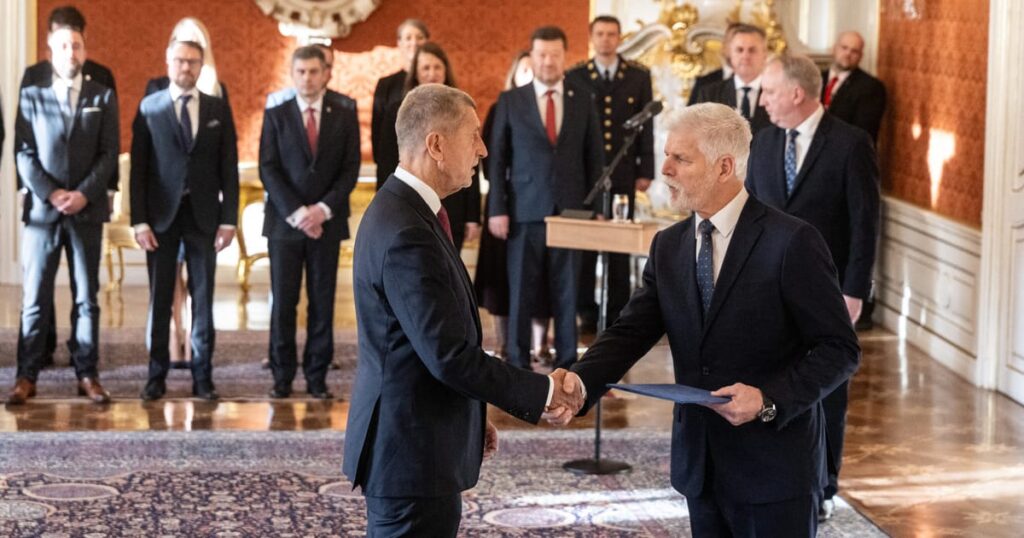
The Czech constitution gives the president the authority to “represent the state externally” under Article 63, but presidential decisions that are taken under that provision require government approval — leaving it unclear whether Pavel can force his way onto the official delegation without backing from Babiš.
Since Babiš returned to power last year, his relationship with Pavel has been adversarial, shaped by deep political and personal differences. Pavel, a pro-Western former NATO general, has repeatedly clashed with the populist Babiš over everything from foreign policy to democratic norms and the PM’s long-standing business conflict-of-interest controversies.
The duo also went head-to-head in the 2023 presidential election, which Pavel won by almost a million votes, a substantial margin in this country of 10.9 million.
Pavel — who has also represented Czechia at the U.N. General Assembly and, more recently, at the May 13 Bucharest Nine and Nordic Allies Summit, a gathering of NATO allies — has even offered to cover the costs of his attending the NATO summit, and is considering legal proceedings against Babiš for blocking his bid to go.
He told Czech media it would be “embarrassing” if he didn’t attend, suggesting he could participate in informal meeting of heads of state at the summit while Babiš handles official matters.
“If the government were to decide in June in a way that would effectively exclude him from his constitutional duties, he would have to consider other instruments,” a spokesperson for Pavel told POLITICO, a reference to a possible competence lawsuit before the Constitutional Court.