
Bringing Belgian Folk Music Back to Life
By
·
May 19, 2026
Toasaves
A slightly surreal world of fiddle bands, medieval bagpipes, urban community dances, and avant-garde accordion compositions—it’s a little surprising that the folk music of Belgium isn’t more widely known today. A country divided between the French influences in the Walloon Region of Southern Belgium and the Flemish traditions in the Dutch-speaking Flanders in the North, Belgium has always been a crossroads country in Europe. Today, large immigrant populations from the Middle East, Africa, and centuries old Romani communities bring musical traditions that mix with a burgeoning revival of old Belgian folk music, nearly lost after the 19th century Industrial Revolution.
Most European countries went through folk revivals in the 1960s and ’70s during which young musicians scoured the countryside for elder fiddlers, bagpipers, accordionists, and singers, to help bring this old music into modern times. In Belgium and a few other European countries, those elder musicians were gone; the living traditions of folk music had been broken. Laura Cortese, an American folk musician who now lives in Ghent, points out that it’s very rare to find field recordings of early Belgian folk music. Without access to elders or early recordings, Belgian folk music had to be recreated from written sources—often old manuscripts dating back to the 18th century. Cortese’s husband, Bert Ruymbeek, plays in the Belgian folk band WÖR, who broke out in the European folk scene in 2015 playing music from these manuscripts. A 1743 manuscript in particular from Petrus Josephus Van Belle was found inside a Belgian organ by a restorer in the 1970s. ”They took out the pipes one by one,” says Ruymbeek, “and the booklet was revealed. It adds a bit to the magic.” These manuscripts were written by trained classical musicians, not folk musicians, and the music in them finds Belgium as the crossroads of Western Europe. Ruymbeek points out that the folk music of Flanders in that period was tied to Northern France, Southern England, The Netherlands, and West German sources.
Without a living tradition to draw on, the Belgian folk revival focused more on recreating this music through a modern lens. That’s reflected in the choice of instruments, too. In the case of the Belgian bagpipes: Since no old instruments existed, they were recreated from medieval paintings, like the work of Dutch artist Pieter Bruegel the Elder. It’s unclear why the living traditions of Belgian folk music didn’t survive, but Ghent fiddler Wouter Vandenabeele points to the industrial revolution of the 19th century, which emptied the countryside as folks emigrated to cities and urban centers for work, as one possible factor. There, the old fiddle traditions couldn’t compete with new sounds and instruments. Ruymbeek agrees. “ I think at some point, the speed went so fast in breaking with the past and using new instruments, new styles, influences from abroad, that of course you cannot speak of real continuity anymore,” he says.
The sounds of the cities in 19th century Belgium were animated by louder instruments like accordions and brass bands, called fanfares. “When I was young,” says Vandenabeele, “I can remember each village had a brass band and they played folk music, but also popular music like the popular songs of Paris.” The rise of the brass bands in the 1800s happened alongside the invention of an instrument few people know came from Belgium: the saxophone. Taken up by village musicians playing for dances, Belgian inventor Adolphe Sax’s saxophone is still popular today in Belgian folk music and a key part of a number of foundational bands like WÖR, who feature two saxophonists.
Today, Belgium’s folk music comes alive at concerts throughout the country—festivals like Gooikoorts International Folk Festival outside Brussels and Festival Dranouter on the French border; or at balfolks, modern community group dances inspired initially by French folk dance. Flemish folk music is more widely known in Belgium than the Wallonian or French folk of Southern Belgium, but French-influenced music tied to the balfolk tradition has been flourishing widely. Much of Belgian folk music is based around instrumental music, rather than songs. “ We have a very rich tradition of songs,” says Vandenabeele, “which is unfortunately not really well known. We don’t have a singing culture.” Kalinka Verschraegen of Belgian vocal quartet Hella agrees that it’s strange there are so few vocal groups, though she thinks it has to do more with the popularity of folk dancing, which demands instrumental music.
Belgian music can also be quite weird, something Ruymbeek sees as being tied to Belgium’s long history of surrealism in art, like the work of René Magritte. Popular Belgian artists today like Stromae tap into this surrealist legacy in artful music videos, and there are any number of strange Belgian indie bands on Bandcamp doing the same. One such band, Avalanche Kaito, brings together some of the immigrant music being made in Belgium today with a post-punk aesthetic. Bandleader Kaito Winse came to Belgium from Burkina Faso where he grew up a griot. Drawn by Belgium’s music scene, he’s been hard at work in Brussels. “I personally feel that we have many artists,” he says, “and this is a strength that contributes to social harmony.”
Of course, much of the music in Belgium today is made by immigrant artists coming from across Europe, North Africa, the Middle East, and West and Central Africa. Though Belgium had colonies around the world, the larger immigrant populations are tied more to the history of mining in the country. Italians, Turks, and Moroccans came to work Belgian coal mines, while other communities, like the Manouche Romani people have been part of Belgian culture for hundreds of years. Jazz manouche is popular in Belgium today because of the Romani population, and also because the great hero of the music, Django Reinhardt, was born in Belgium. With so many influences to draw from, Belgian folk musicians have a world of traditions to inspire them and are creatively building new traditions all the time.
WÖR & Kongero
“Schoon Lief”
Though Belgian band WÖR are responsible for kicking off a new generation of Belgian folk revivalists in the 2010s, their most recent album is a collaboration with Swedish women’s vocal group Kongero. Sourced from live performances in Belgium, saxophone, accordion and fiddle intertwine in glorious rapture with the four singers of Kongero. It’s a whirlwind of harmony and acoustic tones, uplifted by a polished live show. The song “Schoon Lief” is from the Brabant region of modern Belgium and was popularized by 1970s Belgian folk revival band Rum, and later by 1990s Belgian folk revival band Ambrozijn.
Ghent Folk Violin Project
“Casa Nova”
Founded by Wouter Vandenabeele, a well-known Belgian fiddler who led the folk revival band Ambrozijn in the 1990s, the Ghent Folk Violin Project finds him joined by three younger fiddlers: Lotte Remmen, Anouk Sanczuk, and Naomi Vercauteren. Together, they explore older Belgian tunes as well as compositions from the bandmembers, all written in the style of Belgian traditional songs. The interweaving of four violins in a folk tradition is tricky to pull off, but the band’s careful arrangements and high level of musicianship are powerful.
Taosaves
“Sanderjon en de boerin”
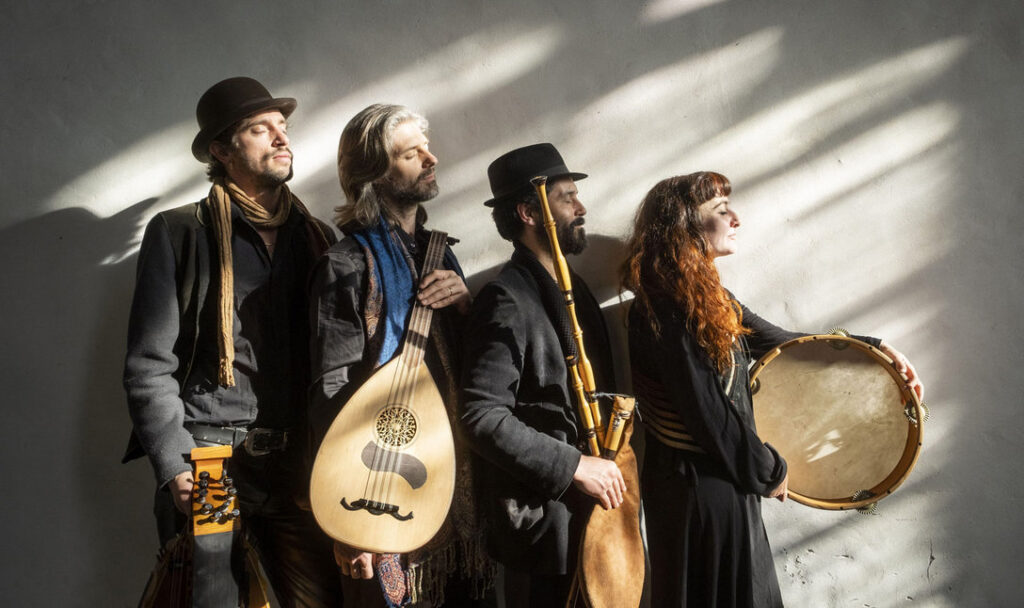
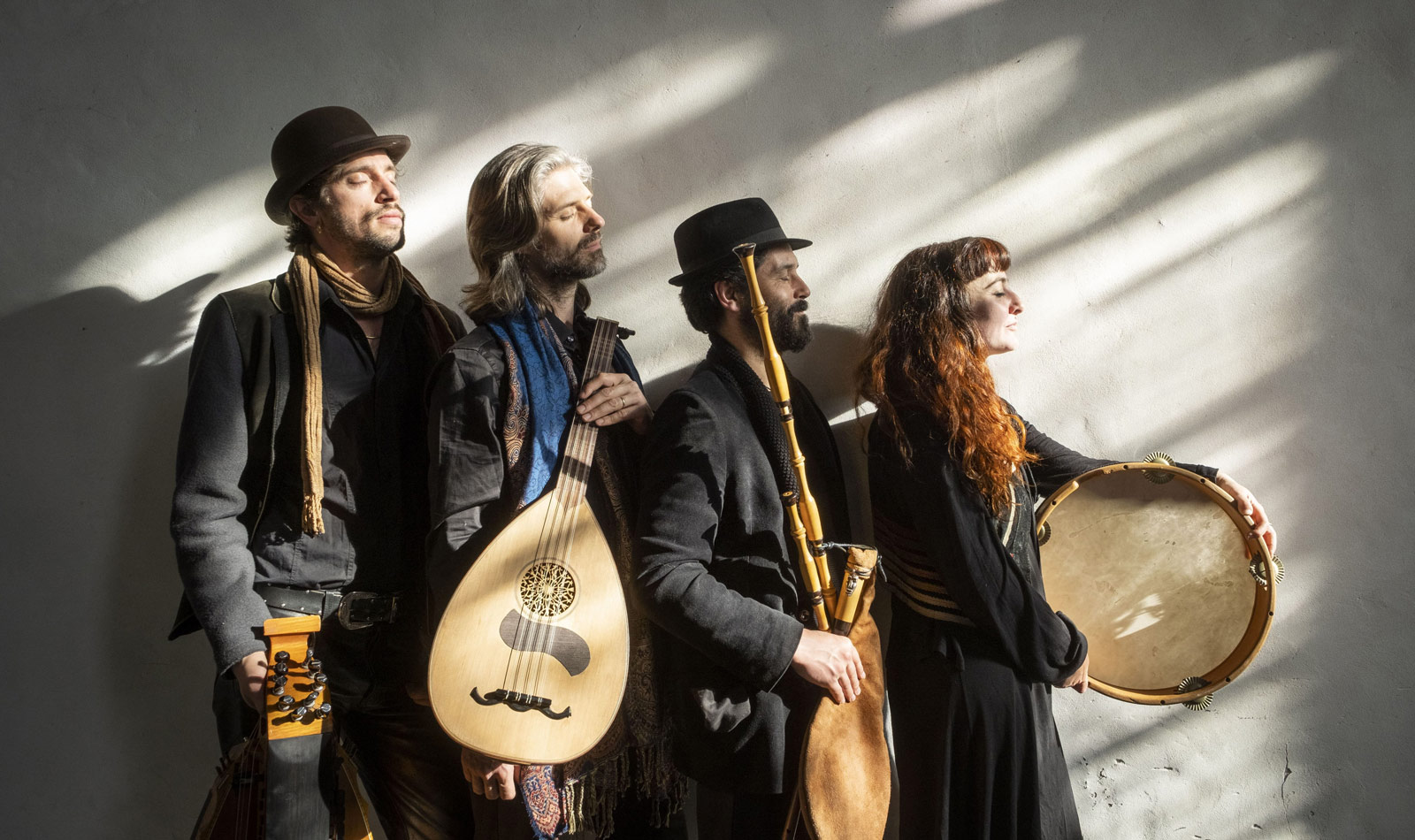
Led by Belgian oud player and musicologist Tristan Driessens, the band Taosaves makes music from a dizzying array of influences. Their 2022 album Zwerver was inspired primarily by Belgian singer-songwriter Wannes Van de Velde, who led the 1960s folk revival in Belgium by bringing together newly written songs with very old, sometimes medieval songs from manuscripts like the 16th-century Groot Liedboek. Here, they combine Van de Velde’s songs with original source inspirations and an array of other traditions with similar modalities, tied in part to Belgian immigrant communities like Eastern Europe and Sephardic fiddle and Afghani rebab. It’s a heady brew.
Dider Laloy & Kathy Adams
“Valse noire”
Brussels-born accordionist Didier Laloy represents the French influence on Southern Belgian music, and is considered one of the best diatonic accordionists in Europe. He’s influenced multiple generations of accordionists beyond his home country, and has paved a path for original and creatively diverse compositions on the button accordion. Performing as a duo here with Belgian cellist Kathy Adams, the two work carefully at blending the tone of each instrument through original melodies, Laloy with growling bellows and Adams with deep plucked strings and lofty, legato-bowed passages.
Hella
“XXXI”
This quartet of female vocalists are among the few singers in Belgian folk music working to revive the vocal traditions. On their debut album Meeremin, they meld lush, gorgeous harmonies and vocal cross rhythms with old folk songs from Sweden, Belgium, Scotland, France, and The Netherlands. Layered over eerie orchestration, these four voices held aloft together showcase the power of the voice at the crossroads that was old Belgium.
Linus Vandewolken
“Oude Geuze uit Niemandaal”
A rather surreal artist, Linus Vandewolken is the Dutch persona of an American musician, McCloud Zicmuse, living in Belgium. Zicmuse was entranced by the rare Belgian hommel, a kind of lap dulcimer or zither, when visiting the country with his father. The two worked together to build a hommel, and Zimuse has been creating original, idiosyncratic, and beguiling music on it ever since. An ancestor of the Appalachian mountain dulcimer, the hommel has a long history in Belgium dating back at least to the 1600s.
Tcha Limberger
“I Surrender Dear”
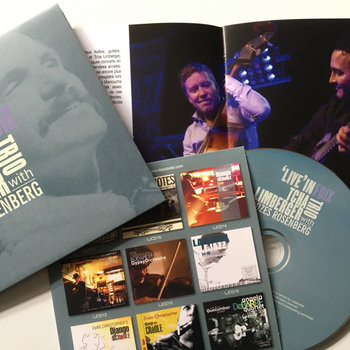
One of the great Romani violinists, blind Belgian multi-instrumentalist Tcha Limberger is revered in jazz manouche circles. He’s joined here by Dutch Romani guitarist Mozes Rosenberg and together they absolutely tear through a series of Django Reinhardt classics. Recorded live at a festival in France, the playing is dizzyingly virtuosic, but more than that it swings so hard.
Avalanche Kaito
“Lago”
Formed by Burkinabe griot Kaito Winse, French drummer Benjamin Chaval, and Belgian guitarist Nico Gitto, Avalanche Kaito blends Winse’s frenetic singing, drumming, and flute playing with crashing guitar and drums in a kaleidoscopic frenzy. Their music videos are surreal, grounded in Winse’s evocative dancing, and the music fires off like a machine gun around the internal rhythms of Winse’s songs and talking drum.