

Listen to this article
Estimated 5 minutes
The audio version of this article is generated by AI-based technology. Mispronunciations can occur. We are working with our partners to continually review and improve the results.
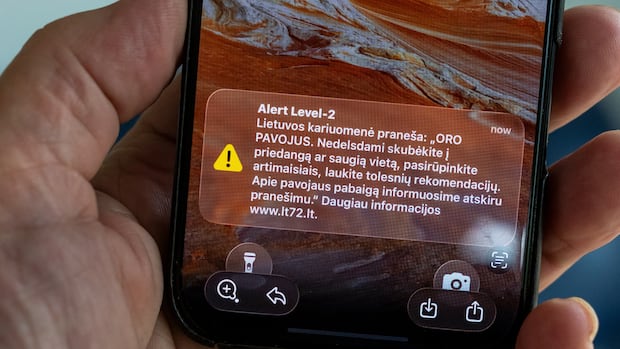
Lithuania’s president and prime minister were taken to safe locations Wednesday and residents of Vilnius were told to take shelter because of an alarm over drone activity near the border with Belarus, underlining jitters on NATO’s eastern fringe over incursions related to Russia’s war with Ukraine.
An emergency announcement from the military told people in the Vilnius region to “immediately head to a shelter or a safe place.”
The alert, which lasted for about an hour, also led to the closure of the airspace over the Vilnius airport. President Gitanas Nauseda and Prime Minister Inga Ruginiene were taken to shelters, and there was also an evacuation order at Lithuania’s parliament, the Seimas, the BNS news agency reported.
It was the first major alert that sent residents and political leaders in a European Union and NATO capital rushing to shelters since Russia’s full-scale invasion of Ukraine in February 2022.
NATO jets had orders to detect and destroy the drone but could not find it, the Lithunian army said.
“Based on the parameters we saw, it’s most likely either a combat drone or a drone designed to deceive systems and lure targets,” Vilmantas Vitkauskas, head of Lithuania’s National Crisis Management Center, said in a news briefing. “The electronic countermeasures here can’t tell us whether an explosive device detonated or not. It’s very, very difficult.”

People take shelter in an underground car park during the alert in Vilnius. (Vygintas Skaraitis/Lryt/The Associated Press)
Based on the altitude and speed, it was probably a drone, said Vitkauskas, “though we can’t say at this stage exactly what kind of drone it was or where it was launched.”
Lithuania borders Russia-allied Belarus to the east and Russia’s Kaliningrad exclave to the west. The alert on Wednesday came after the military said it detected drone activity in Belarus, but no drones were sighted over Lithuania.
On Wednesday, NATO Secretary General Mark Rutte commended the alliance’s reaction to several drone incidents in recent days, saying that they had been met with “a calm, decisive and proportionate response.”
Rutte said: “This is exactly what we planned and prepared for,” and he blamed Russia’s war on Ukraine for the problem.
Foreign ministers from NATO countries will meet Thursday and Friday in Helsingborg, Sweden.
Canadian Foreign Affairs Minister Anita Anand, speaking Wednesday in a video news conference from Estonia after meeting with her Estonian, Lithuanian and Latvian counterparts, said that “bolstering and protecting NATO’s eastern flank” will be a predominant topic in Sweden given the changes in the “threat environment” due to the drone warfare.
Drones heighten tensions
In recent months, Ukrainian drones aimed at Russia have crossed or come down in NATO territory on numerous occasions. Western officials have blamed what they say is likely Russian electronic jamming of the drones.
Russia, meanwhile, has renewed threats that it would retaliate if Ukrainian drones are launched from Baltic countries or if those countries are complicit in their use against Russia.
On Tuesday evening, Lithuanian Foreign Minister Kęstutis Budrys wrote on social media that “Russia is deliberately redirecting Ukrainian drones into Baltic airspace while waging smear campaigns” against Lithuania, Latvia and Estonia.
“It’s a transparent act of desperation — an attempt to sow chaos and distract from a simple reality: [Ukraine] is hitting Russian military machine hard.”
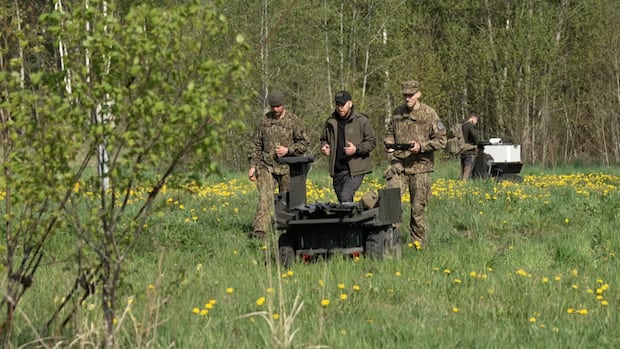
For the first time, Canadian and Latvian troops are conducting exercises on ground drones with the help of ex-Ukrainian soldiers who have already adapted to this new type of warfare.
Budrys’s comment came hours after a NATO jet shot down a Ukrainian drone over southern Estonia. Ukraine apologized for that “unintended incident,” without specifying what had happened.
Last week, Latvia’s government collapsed following an argument over the handling of multiple incidents involving stray drones suspected to be from Ukraine. The defence minister was forced to quit after his party withdrew its support for him, and the prime minister then resigned. The governing coalition had been under strain for months over several other issues.
Deadly drone attack inside Ukraine
In a recent escalation of aerial attacks, Russia and Ukraine have sometimes fired hundreds of drones a day at each other.
Ukraine’s air force said Wednesday that it shot down 131 out of 154 drones that Russia launched overnight. The ones that got past air defences killed three civilians and wounded 18 others, including two children, officials said.
Ukraine, meanwhile, continued its aerial campaign against Russia’s vital oil industry, with the military reporting its drones struck a major Russian oil refinery and a pipeline pumping station overnight.
Russian media reports also indicated that a chemical plant in the southern Stavropol region was hit and caught fire, although local officials didn’t confirm any direct hit.
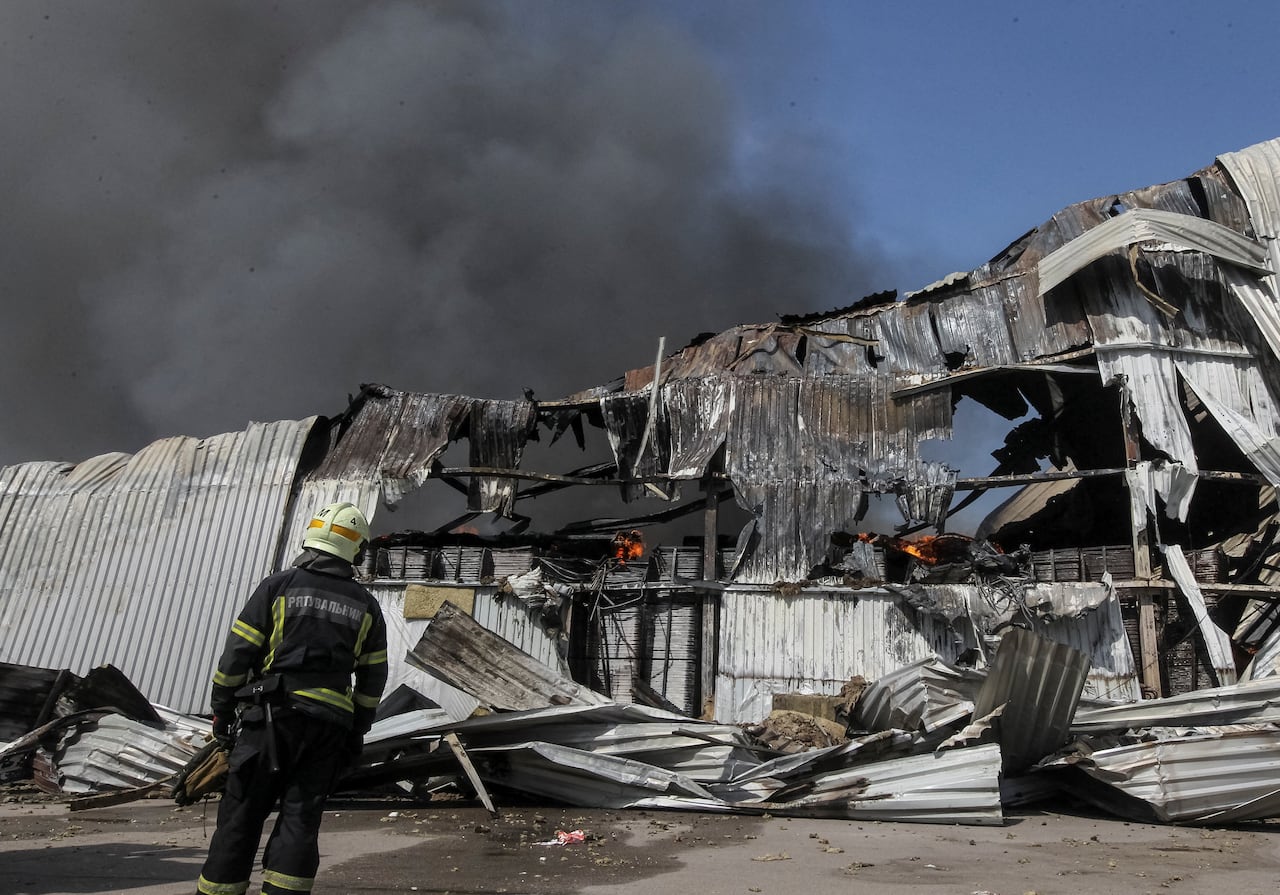
A firefighter works at the site of a Russian missile strike, in Dnipro, Ukraine, on Wednesday. (Reuters)