
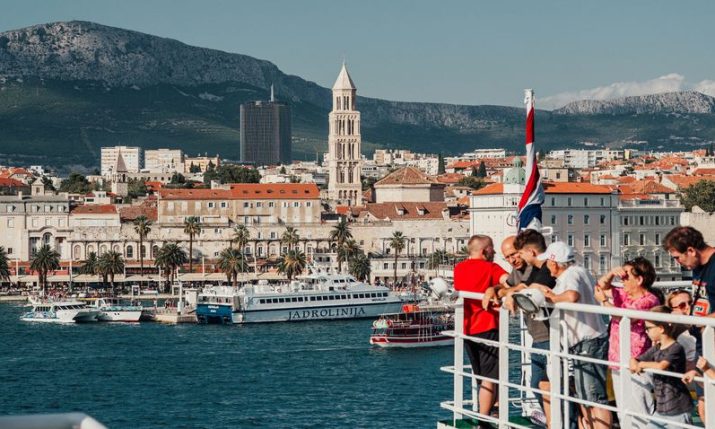
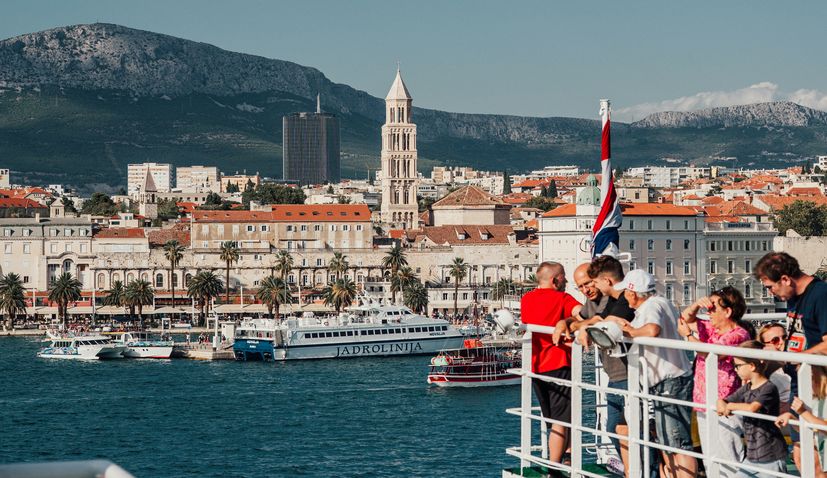
Split
ZAGREB, 20 May (Hina) – As many as 13,300 Croatians moved to Croatia in 2024, with preliminary data suggesting an even higher number in 2025, State Secretary Zvonko Milas said on Wednesday while presenting to parliament the annual report on the implementation of the law on ties with Croats living outside Croatia.
Milas stated that 2025 was marked by increased co-financing of programmes and projects, a more modern legal and institutional framework, stronger strategic steps, a total of 28 projects of strategic importance, and significant investment in young people and the preservation of their identity through scholarships, language learning and other initiatives.
For the needs and programmes of Croats outside the homeland, Croatia allocated nearly €161 million last year, which is 37% more than in the previous reporting period.
The Office for Croats Living Outside the Republic of Croatia operated within its annual budget of €35 million, implementing public calls for funding aimed at communities and organisations across all three categories of Croats abroad: the Croatian people in Bosnia and Herzegovina, the Croatian ethnic minority in 12 European countries, and Croatian emigrants worldwide.
Furthermore, €13 million was allocated for projects of strategic importance.
On return and immigration policies, Milas said the government took several steps in 2025, with the Ministry of Demography allocating more than €1.2 million, stressing that this is no longer theoretical policy but one that produces measurable results.
According to Croatian Bureau of Statistics data, 13,300 Croatian citizens immigrated to Croatia in 2024, the highest number since records began, and preliminary 2025 data suggest a continued upward trend.
He added that under the “Biram Hrvatsku” programme, around 1,800 applications had been approved by May this year, with more than 2,400 people employed.
For the 2025/2026 academic year, 500 scholarships for learning the Croatian language were awarded, with over €1 million secured, and more than 2,500 young people have participated in the programme so far.
Milas also noted that Parliament has declared a Week of Croats Outside Croatia, which will be marked annually at the end of May, with the first edition taking place next week in Zagreb County.
It begins on Monday, 25 May, with the opening of an exhibition of works by the renowned graphic artist Virgilije Nevjestić.
The official said the aim is to thank Croats and emigrants for their contribution to the development of Croatia, increase their visibility in public life, and strengthen unity.
HDZ MP Zdravka Bušić said that the report shows that the government is pursuing the policy that delivers tangible and visible results. ”It also confirms that the law is not being implemented selectively and that Croatia does not forget Croats beyond its borders,” she said.
HDZ MP Stipan Šašlin pointed to the difficult position of Croats in Vojvodina, while Jasna Vojnić, president of the Croatian National Council in Serbia, asked whether there are plans to resume dialogue through the intergovernmental committee with Serbia.
“We have sent five or six requests to finally hold a preparatory meeting related to the session of the intergovernmental committee. So far there has been no invitation, and this has been going on for seven years. I expect us to start talks as soon as possible because there are still many unresolved issues and agreements that we have signed, including Article 9 on the representation of Croats at all levels of government in the Republic of Serbia,” Milas replied.
Regarding Croats in North Macedonia, he noted that assurances have been received that at the first constitutional amendment, Croats will be included as a recognised national minority.
Opposition: Report doesn’t tell us about real effects
Irena Dragić, speaking on behalf of the Social Democratic Party (SDP) parliamentary club, said that the report represents yet another attempt to portray the state as fulfilling its constitutional and political obligations towards the Croatian diaspora and minorities.
However, once again raises questions about transparency, the measurability of impact, and accountability in the use of public funds, she said.
Marijana Puljak of the Centre party said the report very thoroughly lists how many calls for proposals were issued, how many projects were funded, and how many meetings were held, but provides very little information on the actual impact of all of it.
When asked by Dalibor Paus (IDS) about the results of all allocated financial support, the State Secretary highlighted Posušje as an example, pointing to the construction of a school and the return of an entire class of 30 students.
He said that natural population growth in that town in Herzegovina is higher than anywhere else and that Herzegovina can serve as an example of how to preserve its people. “Young people are coming, starting families and staying,” he said.
Marin Miletić of the Bridge party argued that the budget of the Office for Croats outside Croatia is too small.
“The City of Zagreb distributed €140 million over four years to associations, many of whose programmes are highly harmful, while for Croats abroad, who contribute around €4 billion, the budget is around €30 million,” he said, stressing the need for greater engagement in encouraging the return of the Croatian diaspora.