
By Kyu-seok Shim and Hyunjoo Jin
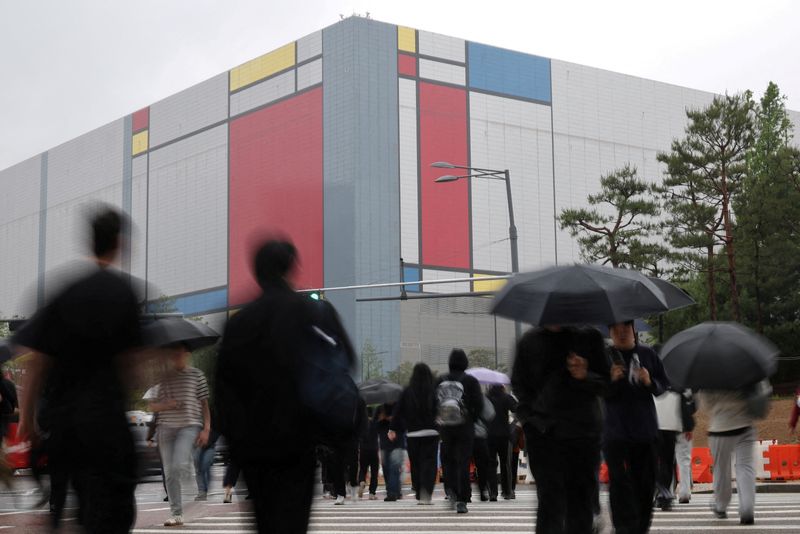
PYEONGTAEK, South Korea, May 21 (Reuters) – Around Samsung Electronics’ sprawling chip complex southwest of Seoul, workers and residents have met news of a last-gasp pay agreement to prevent a strike with both relief and concern.
The complex is the firm’s largest semiconductor production site, manufacturing a range of chips that have been in high demand from an artificial intelligence boom and generating record profits – but also stoking union demands for a fairer share.
The tentative pay deal has sparked relief in South Korea, given Samsung’s importance to the economy, while raising hopes among businesses in the neighbourhood around the complex.
“If employees receive performance bonuses as a result of this general strike, I think restaurants near Samsung will benefit greatly, including through company dinners and group meals,” said Lee Se-hee, who owns a fine dining restaurant in Pyeongtaek, a city of around 650,000 people.
The deal has, however, also exposed some divisions among employees, with some workers in the memory chip division standing to receive bonuses of around $416,000, sparking fears that workers in less lucrative units will be left behind.
“It’s a huge disappointment,” said a foundry engineer in Pyeongtaek who works in the foundry division that is focused on logic chips.
“It looks like those who can switch to SK Hynix will keep applying, while others will try to transfer internally to the memory division,” he said, asking not to be named publicly due to the sensitivity of the matter.
At rival chipmaker SK Hynix, some workers received three times more performance pay last year than Samsung workers, a disparity that helped drive the frustration among Samsung workers and the defection of workers to SK Hynix.
“The memory colleagues seem to be satisfied with the total amount, but a bit disappointed because they were paid in stock,” said the engineer, referring to Samsung’s plan to pay much of the performance bonuses in shares.
‘TRICKLE DOWN’
About 14,000 employees work at Samsung’s Pyeongtaek campus, though a real estate agent in the city said a trickle-down effect was unlikely unless more staffers based themselves in the city and because bonuses are due to be mainly paid in shares.
“For local subcontractors, this strike-and-bonus deal is like watching someone else’s feast,” said Kim Suk-joon, 66.
Another employee in the company’s contract chip manufacturing unit said he was inclined to agree to the deal even though it disproportionately favoured the memory business.