
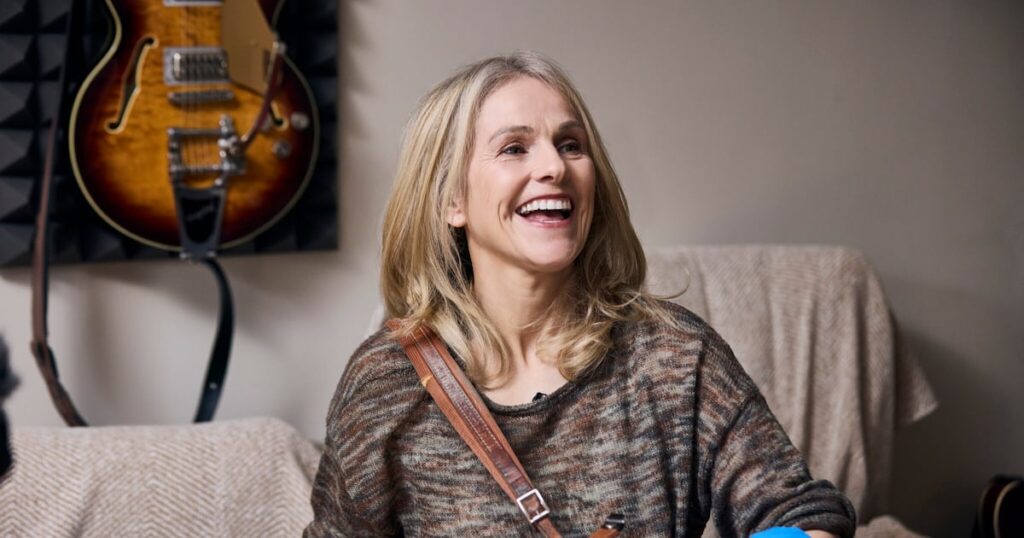
The first thing you notice about Sharon Shannon is her smile.
There are no half-measures; it’s a smile of sheer happiness and appears when Sharon is playing the button accordion on stage.
It’s what she was made to do, and it has made her famous for almost 40 years.
Other musicians rave about her ability.
U2’s Adam Clayton says he hated the instrument until he heard Sharon play it in an entirely different way.
The Waterboys’ Mike Scott becomes emotional when remembering a hungover morning after an all-night session in Kinvara when he overheard Sharon still going, playing a beautiful Scottish tune repeatedly, as light rain on a tin roof provided the percussion.
Sharon was born on a small farm in Co Clare, where “we were all shy,” she told this RTE documentary.
She had an idyllic, if remote, childhood playing outside with the animals.
It was her older brother’s idea to get instruments for each of the four siblings and to form a group.
An 11-year-old Sharon got the accordion and was delighted.
She quickly emerged as a talent and was invited on a tour to the US while only 14.
She later dropped out of college, to the consternation of her mother, but was convinced to take a one-year secretarial course in Limerick.
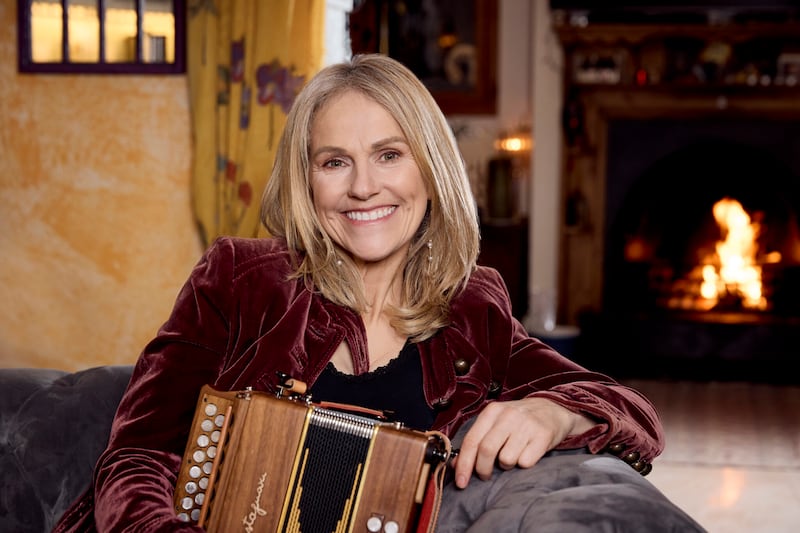 Sharon Shannon in Salthill, Galway in February 2026. PICTURE BRENDAN DUFFY (Brendan Duffy)
 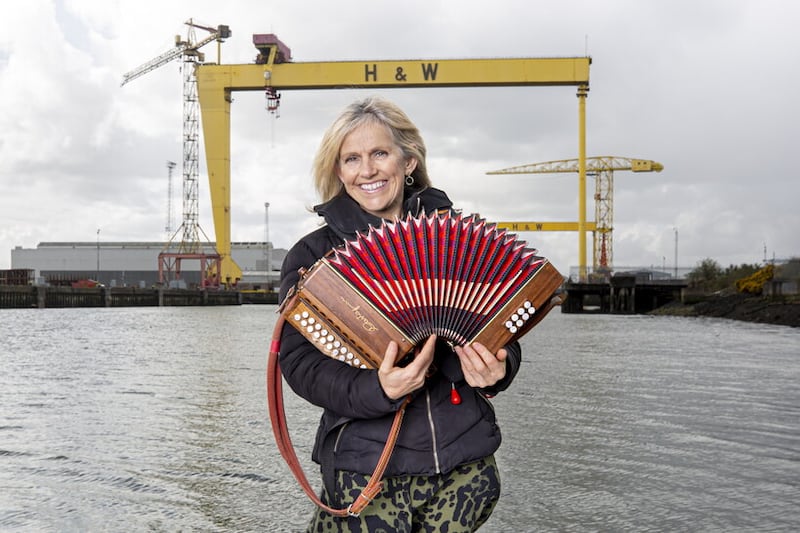 Sharon Shannon in Belfast in 2023
After that, she decamped to Doolin in west Clare to immerse herself in the music scene to the horror of her parents, who worried about a young woman hanging out in pubs all day.
It was here, having the time of her life, that other musicians convinced her that she could make a living from playing ‘the box’.
In the late 1980s, Mike Scott was so taken by her ability that he invited her to join his, then high-flying, band The Waterboys. She played Glastonbury with them and spent six months in Spiddal, Co Galway, recording the Room To Roam album.
In 1991, she released her debut album, and the following year collaborated on the massive hit A Woman’s Heart.
By 2008, she had already released a compilation – The Galway Girl: The Best of Sharon Shannon – where she performed with Mundy on the title track.
The point of Tradfluener, though, was not just nostalgia; it was to give us a glimpse of the offstage Sharon.
She admits that she is uncomfortable in the spotlight.
“I find it debilitating at times. I don’t know if shyness is the right word. Maybe a lack of confidence in how I can articulate myself. It causes me anxiety. That’s a part of my personality I find hard to deal with.”
She cites the RTE Late Late Show special dedicated to her in 1992.
Joined by almost every noted traditional musician in the country, Sharon was happy to play all evening but would only agree to do the show if she didn’t have to talk.
Presenter Gay Byrne knew this was unsustainable, so he threw a few softball questions at her anyway about her love of horses when she was growing up.
Sharon gave an embarrassed, clipped answer. Gay tried again, but with the same result.
“This one’s not much of a talker,” said Gay to the audience.
When Sharon started, there was a culture of seriousness in traditional music. There appeared to be no joy in the playing, and the stony faces were presumably meant to reflect the seriousness of maintaining Ireland’s cultural tradition.
Sharon Shannon changed that by her mere presence.
She brought talent and a joy in the music that couldn’t help but be reflected in her face.
It’s a remarkable story – a famous acoustic musician who hates the limelight.
Read more reviews:
Legends review: Amazing real-life story of ordinary civil servants who risked their lives to infiltrate drug gangs on behalf of Margaret ThatcherThe Cage review: Superior crime drama set in the corrupt underbelly of LiverpoolThe Young Offenders was one of Ireland’s great TV comedies but its time has passed