
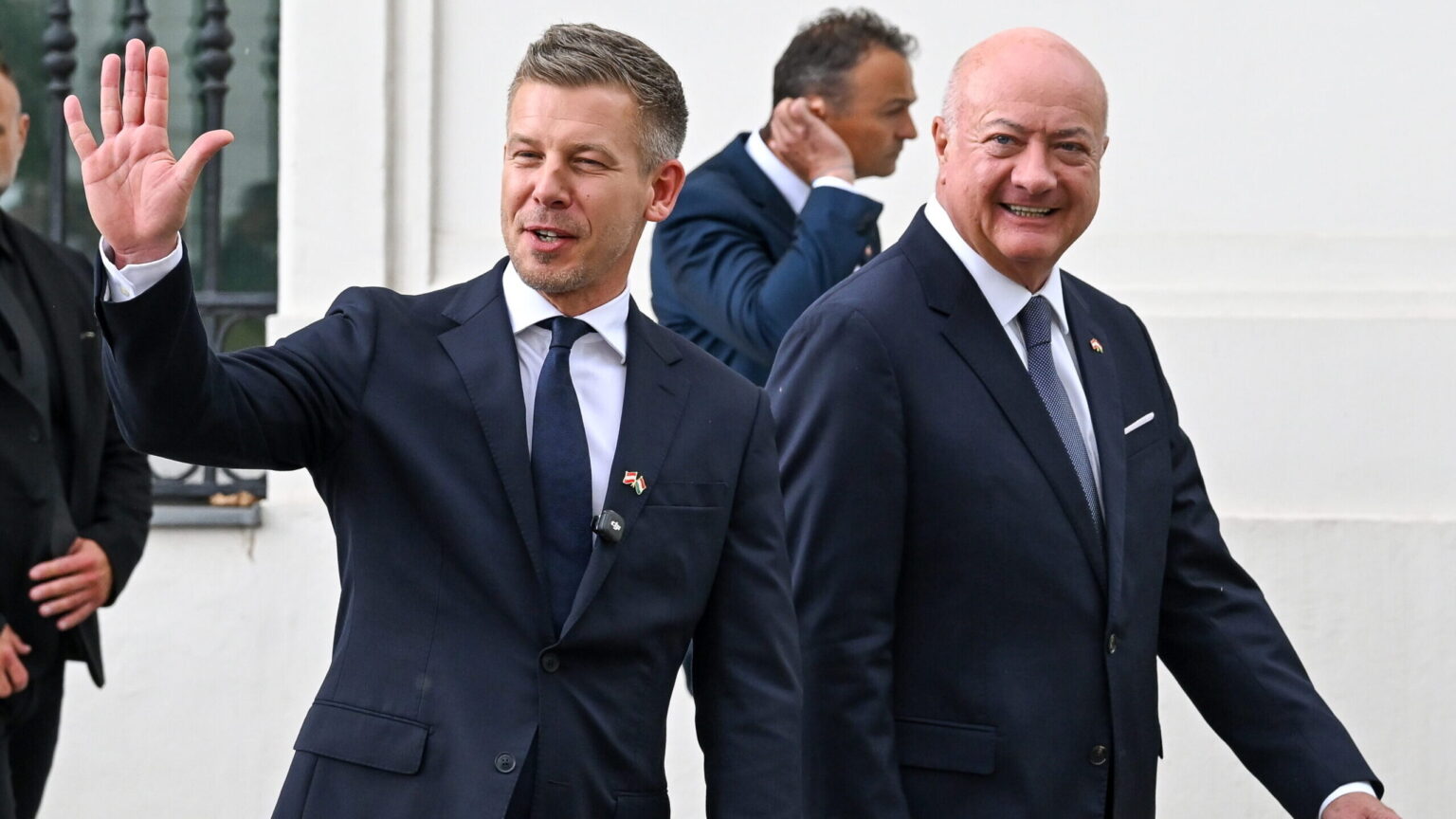
Hungarian Prime Minister Péter Magyar met Austrian Chancellor Christian Stocker in Vienna on Thursday during his first official visit to Austria since taking office, signalling what both leaders described as the beginning of a ‘new chapter’ in bilateral relations and Hungary’s return as a ‘constructive’ actor within the European Union.
Magyar arrived in the Austrian capital following a two-day official visit to Poland, where he held talks with Prime Minister Donald Tusk. In Vienna, he was also scheduled to meet Austrian President Alexander Van der Bellen and attend a working lunch with executives of Austrian companies operating in Hungary.
During a joint press conference, Stocker congratulated Magyar on his election victory and stated that Hungarian voters had rejected ‘blockade and isolation’ in favour of ‘European values’. The Austrian chancellor welcomed what he described as Hungary’s return as a ‘constructive member’ of the European Council under the new government.
Stocker emphasized the importance of deeper regional cooperation and highlighted the strong economic ties between the two countries. According to the Austrian chancellor, hundreds of Austrian companies currently operate in Hungary, employing nearly 70,000 people. He also raised concerns about Hungary’s sectoral windfall taxes, arguing that they negatively affect Austrian firms and should eventually be phased out.
The taxes were originally introduced by the government of Viktor Orbán in 2022 on sectors including banking, retail, energy, telecommunications, and airlines to help plug growing budget deficits and finance state support programmes during the energy crisis, with the government arguing that companies earning ‘extra profits’ from wartime inflation and soaring energy prices should contribute more to public finances.
Magyar acknowledged the issue, stating that his government intends to reform the taxation system and ensure equal treatment for domestic and foreign investors. However, he said the taxes could not yet be abolished because of the poor state of Hungary’s budget. The prime minister claimed that the previous government had failed to fully disclose the country’s fiscal situation and suggested that budget data may have been manipulated.
‘Hungary will be a constructive member of the European Council and the Council of Ministers,’ Magyar said, while stressing that his government would continue defending Hungarian national interests within the EU framework.
Both leaders stressed the need for stronger Central European cooperation. Magyar argued that ‘the heart and engine of Europe is Central Europe’ and called for expanding regional partnerships, including within the Visegrád Group framework. Stocker responded by expressing openness to closer regional cooperation stretching ‘from Poland to Croatia’.
The talks also focused heavily on EU competitiveness, energy policy, and migration. Stocker criticized elements of the EU’s emissions trading system and called for reducing bureaucratic burdens on businesses. Magyar similarly argued that Europe had ‘shot itself in the foot’ through overly ambitious environmental regulations that weakened the bloc’s competitiveness without significantly reducing global emissions.
Both sides also reaffirmed continued cooperation against illegal migration and pledged to maintain strong external border protection.
The Hungarian prime minister announced that Austria and Hungary would hold a joint government meeting later this year in Gödöllő as part of efforts to deepen bilateral cooperation. Referring to the upcoming 160th anniversary of the Austro–Hungarian Compromise in 2027, Magyar said he hoped for a ‘much more peaceful and supportive era’ in Austrian–Hungarian relations.
‘Austria and Hungary would hold a joint government meeting later this year in Gödöllő’
Magyar’s visit to Vienna came directly after a two-day official trip to Poland, where he met Prime Minister Donald Tusk in Warsaw on Wednesday. The Polish and Hungarian governments similarly framed those talks as the beginning of a new chapter in bilateral relations following years of tensions under Viktor Orbán, particularly over Russia and the war in Ukraine.
During the visit, Magyar emphasized rebuilding Central European cooperation as one of the key priorities of his government, proposed expanding regional partnerships around the Visegrád Group, and signalled a more constructive approach towards cooperation within the European Union while maintaining Hungary’s focus on national interests and strategic autonomy. He also announced plans to hold a V4 summit in Budapest towards the end of June.
Magyar’s trip to Austria was also overshadowed by controversies surrounding the prime minister’s agenda, with media reports alleging that several of his planned programmes had been cancelled and that the organization of the visit had been chaotic.
According to Hungarian media reports, Magyar significantly shortened his stay in Vienna and cancelled planned appearances at the Wachau Europe Forum in Göttweig Abbey—where he had reportedly been scheduled to speak—as well as a planned event at the Austrian Federal Economic Chamber. Officially, the changes were attributed to urgent government matters in Budapest.
Related articles: