
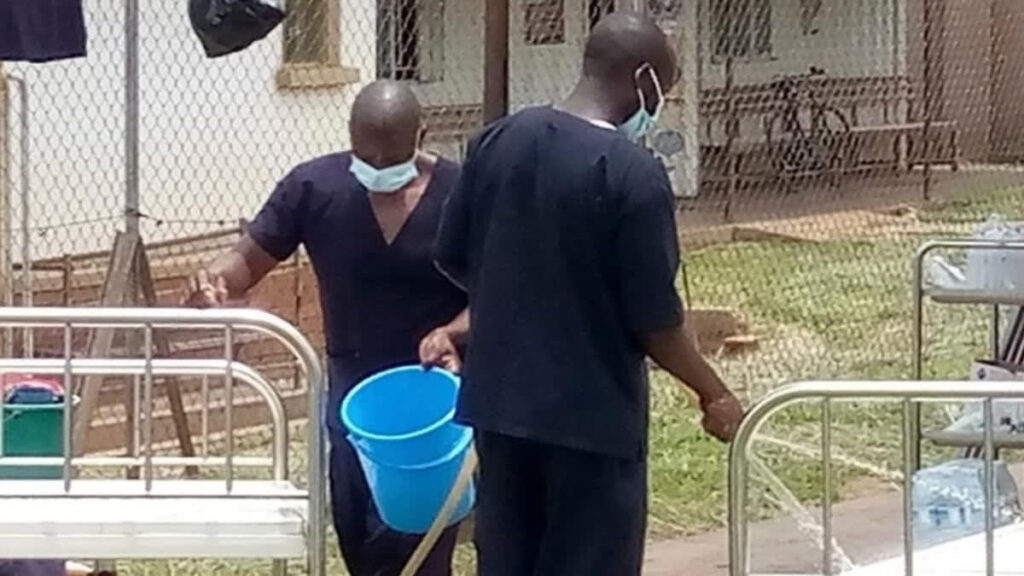
Medical workers perform disinfection for a demarcated Ebola treatment center at the Mubende Regional Hospital in Mubende District, Uganda, Sept. 21, 2022 (IANS)
New Delhi: A deadly Ebola outbreak in Central Africa has forced the postponement of the Fourth India-Africa Forum Summit (IAFS IV) scheduled from May 28 to 31 in New Delhi, underlining how public health emergencies can reshape diplomatic priorities and international engagement.
The outbreak, centred in the Democratic Republic of the Congo’s (DRC) volatile Ituri Province, involves the rare Bundibugyo strain of the virus, for which no approved vaccine currently exists. The situation has heightened fears of regional spread into neighbouring countries, including Uganda and South Sudan.
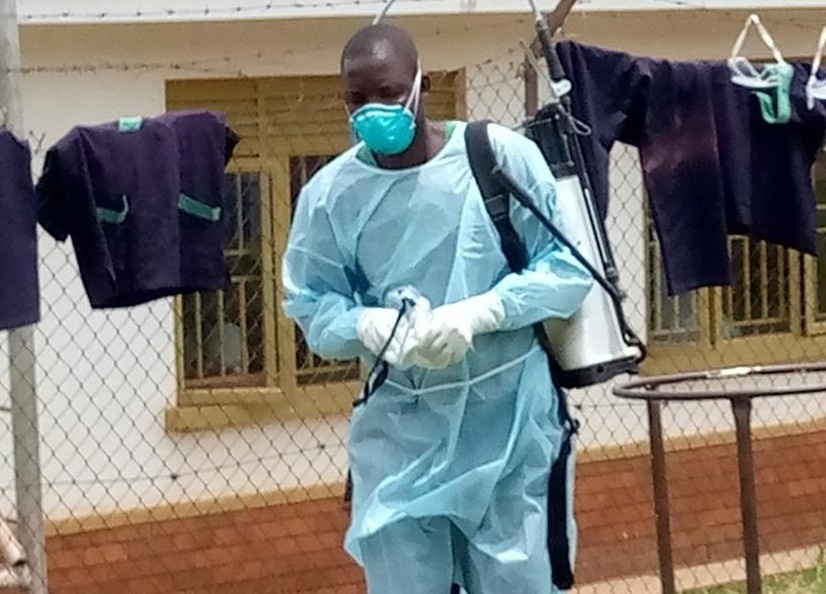
Medical workers perform disinfection for a demarcated Ebola treatment center at the Mubende Regional Hospital in Mubende District, Uganda, Sept. 21, 2022 (IANS)
“Recognising the importance of ensuring the full participation and engagement of African leaders and stakeholders, and mindful of the emerging public health situation on the continent, consultations were held between the Government of India, the Chairperson of the African Union, and the African Union Commission regarding the holding of the Summit and associated activities,” a statement issued by the Ministry of External Affairs on Thursday reads. “Following these consultations, the two sides agreed that it would be advisable to convene the Fourth India–Africa Forum Summit at a later date. New dates for the Summit and its associated meetings will be finalised through mutual consultations and communicated in due course.”
Meanwhile, the Directorate General of Health Services (DGHS) of the Ministry of Health and Family Welfare has also issued an advisory urging passengers with Ebola symptoms arriving in India from high-risk countries to report to the health authorities before immigration clearance.
According to the World Health Organisation (WHO), the outbreak was first detected in early May in Ituri Province in eastern DRC, particularly in the health zones of Mongbwalu, Rwampara and Bunia. The region is a conflict-affected and highly mobile mining belt near the borders with Uganda and South Sudan, making disease containment especially difficult. The first known suspected patient — reportedly a health worker — developed symptoms around April 24 and later died in Bunia.
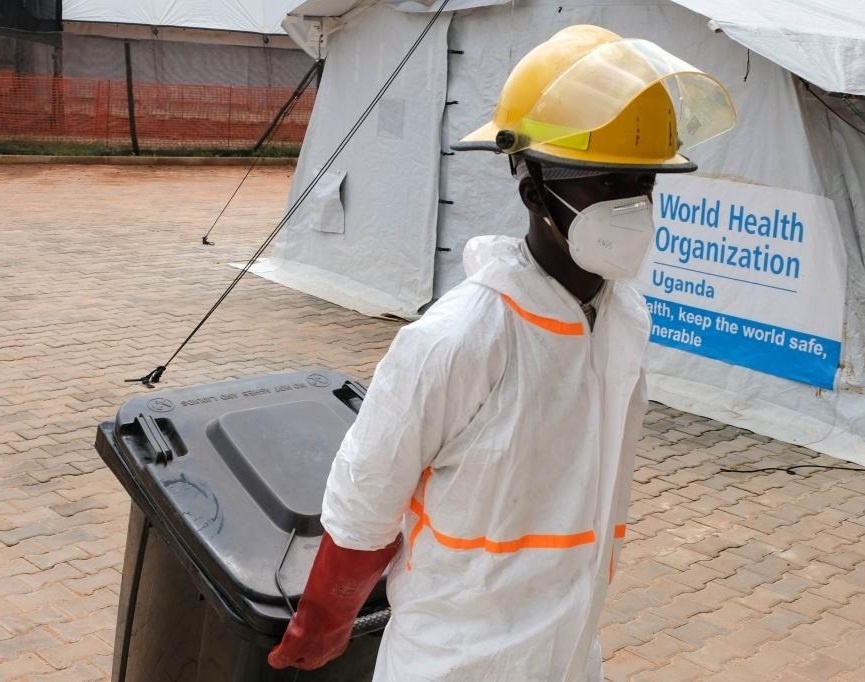
An Ebola isolation center at a hospital in the Central Region district of Mubende, Uganda, Jan. 11, 2023 (IANS)
Initial tests failed to identify Ebola because standard diagnostic kits were designed primarily to detect the more common Zaire strain of the virus. Samples later sent to Kinshasa confirmed that the outbreak involved the Bundibugyo virus species, a rare strain first identified in Uganda in 2007.
The Bundibugyo strain is particularly concerning because there is currently no licensed vaccine or approved virus-specific treatment against it. Existing Ebola vaccines were largely developed against the Zaire strain, which caused major outbreaks in West and Central Africa in the past decade. WHO officials said it could take six to nine months before experimental vaccines tailored for the Bundibugyo strain become available.
According to WHO data released on May 16, 246 suspected cases had been recorded in DRC, 80 suspected deaths had been reported in Ituri Province alone, and eight laboratory-confirmed cases had tested positive for the Bundibugyo virus.
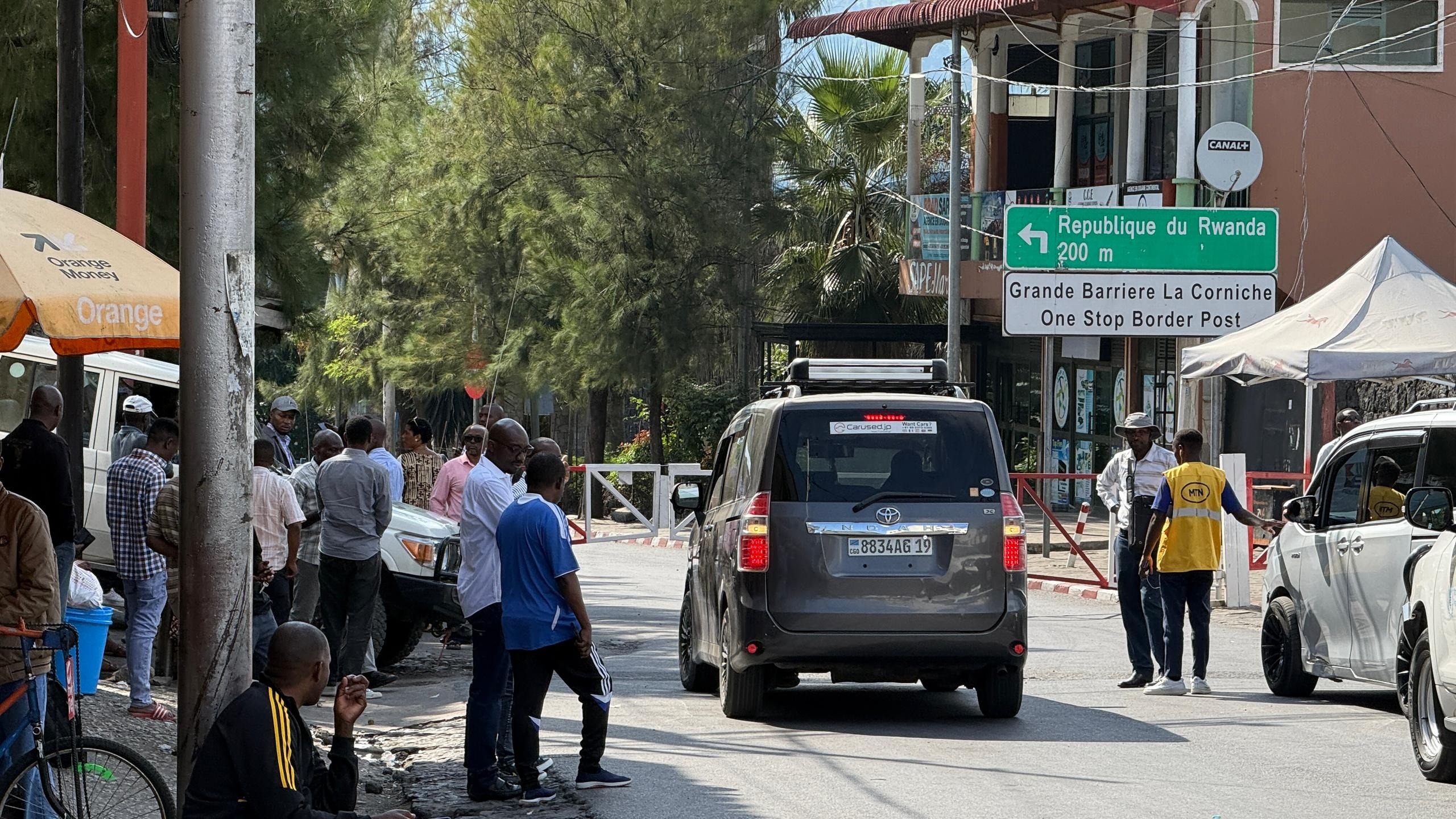
This photo taken with a mobile phone on May 17, 2026 shows the border post in Goma, the Democratic Republic of the Congo (DRC), leading to Rwanda’s Gisenyi (IANS)
On May 17, the WHO officially classified the outbreak as a Public Health Emergency of International Concern (PHEIC) under the International Health Regulations. The agency stressed that while the outbreak did not yet qualify as a pandemic emergency, the regional risk remained “high” because of cross-border movement and weak healthcare systems.
By May 20–21, international media reports citing WHO officials indicated that the numbers had risen sharply. Around 600 suspected cases had been identified across the DRC and Uganda, and at least 139 deaths had been recorded.
The postponement of IAFS IV due to the Ebola outbreak comes at a strategically sensitive moment for India’s Africa outreach. The gathering was expected to bring together dozens of African heads of state and government leaders with Prime Minister Narendra Modi to expand cooperation in trade, healthcare, defence, digital infrastructure, energy security and South-South development partnerships. Its deferment underscores how a regional public health emergency can rapidly evolve into a geopolitical and economic challenge with implications extending well beyond Africa.
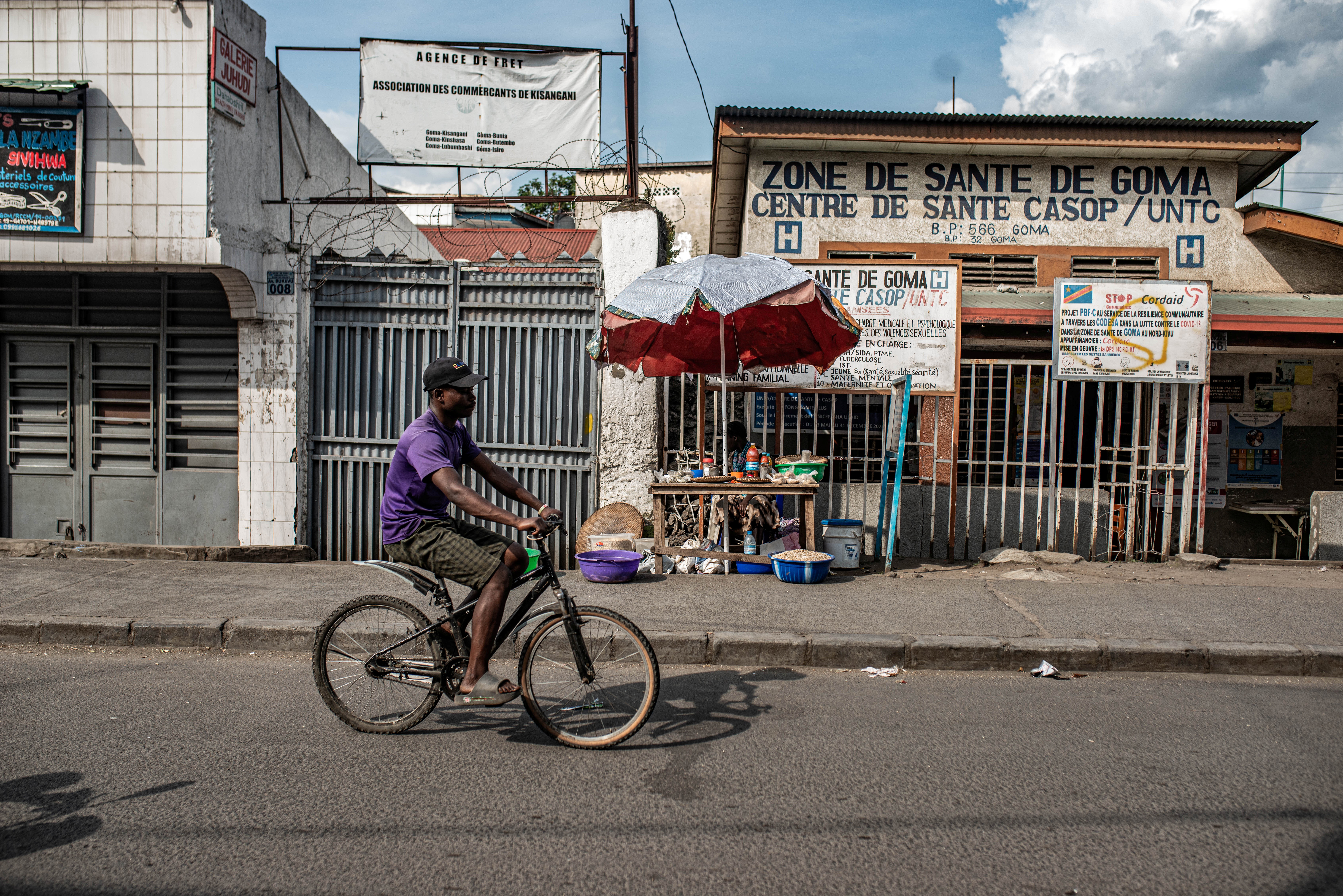
A local resident rides a bicycle in Goma, the Democratic Republic of the Congo (DRC), on May 17, 2026 (IANS)
The first IAFS was held in 2008, followed by subsequent editions in 2011 and 2015. The 2015 summit in New Delhi was particularly important because it saw participation from all the then 54 African countries, positioning India as a major development and strategic partner for the continent.
IAFS IV was expected to serve several key objectives: expanding India’s trade and investment footprint in Africa; strengthening cooperation in healthcare, pharmaceuticals and digital public infrastructure; increasing defence and maritime cooperation in the Indian Ocean region; competing more effectively with China, which has significantly expanded its economic and strategic influence across Africa through the Forum on China-Africa Cooperation (FOCAC); and reinforcing South-South cooperation amid changing global geopolitical alignments.
However, Samir Bhattacharya, Associate Fellow at the Observer Research Foundation think tank, who specialises on Africa, remains optimistic that IAFS IV will be held sooner than later this year.
“It is just that there is another Ebola wave in Africa,” Bhattacharya told ETV Bharat. “There have been several Ebola outbreaks. I think, if everything goes well, say in two weeks’ time or three weeks’ time, one month’s time, the Summit will happen. It is not cancelled. It is only postponed.”
He said that this year, India’s diplomatic calendar is quite full. There is the BRICS summit as well as possibly the Quad summit. There is also the International Big Cat Alliance (IBCA) summit coming up.
“It is just that there are discussions on why we did not do it (IAFS IV) virtually,” Bhattacharya said. “We could have done it virtually. But I think it is also to send a message that it has been 11 years since the last IAFS was held. Now we want to do it, and we want to do it big. I had the information that about 30 African head of the states were coming. So, it makes for a very good photo opportunity. You know, it will give a very symbolic message. We don’t want to ruin that by doing a virtual meeting.”
He said that after the proposed IAFS IV in New Delhi, the African leaders were supposed to travel to South Korea for a Korea-Africa foreign ministers’ meeting scheduled to be held in Seoul in early June. “I don’t know what the status of that meeting is given the latest developments,” Bhattacharya said.
At the same time, he said that IAFS IV is likely to be held by latest within two months. The fact of the matter is that both India and the African Union have emphasised that the postponement is precautionary rather than political. In their joint statement, the two sides reaffirmed their commitment to solidarity, mutual respect and South-South cooperation, while India expressed readiness to support Africa Centres for Disease Control and Prevention-led efforts to contain the outbreak.
Read More