
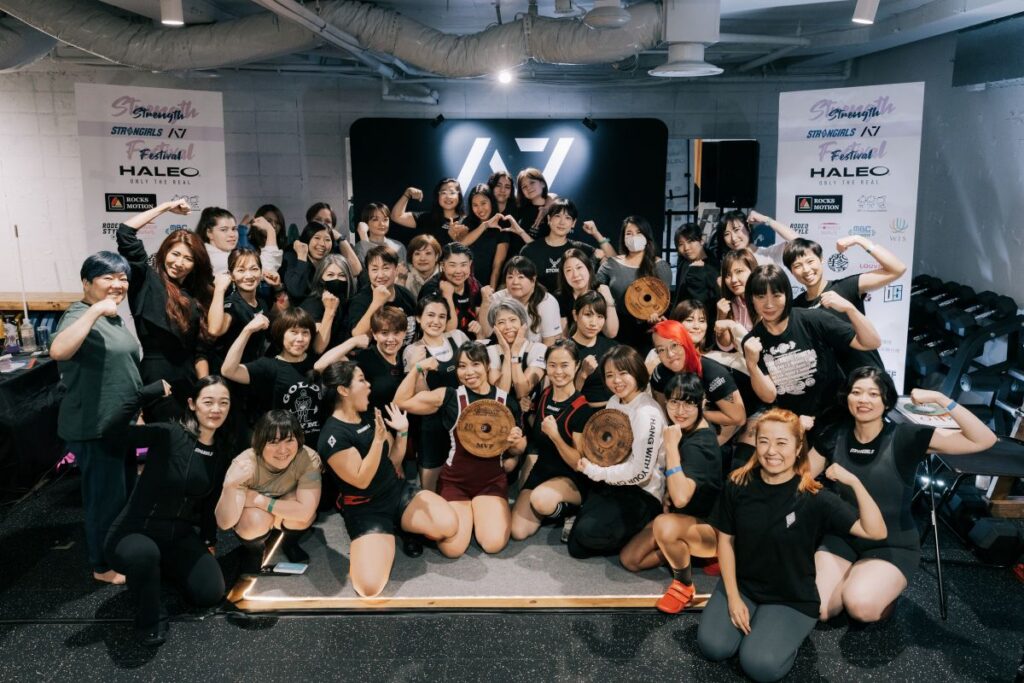
When I first came to Japan in 2014, the fitness industry barely existed. Powerlifting, a strength sport built around the squat, bench press, and deadlift, felt even more distant. Chain gyms were not everywhere; squat racks were rare, and many of the people who did go to gyms seemed to use them mainly for the saunas and showers.
There were designated women’s areas: small corners with brightly colored dumbbells, no weights over ten kilos in sight, and an unspoken assumption that women were there to tone, slim down, or avoid becoming “too muscular.” There were “women’s” protein powders that were marketed as if a pink package could reassure them that one scoop would not magically give them 24-inch biceps overnight.
A decade later, Japan’s fitness culture is changing (except for the protein). More women are stepping into weight rooms, strength training is spreading beyond bodybuilding circles, and powerlifting is beginning to attract people who once might never have imagined stepping onto a platform.
One group helping drive that change is Strongirls Japan, a women-focused powerlifting community founded by Kanan Kasai. Through competitions, events, education, and community-building, the group aims to make barbell training more accessible to women and challenge the idea that training is only about dieting.
Building a Community Around Strength
“Our activities are mainly about sharing education, knowledge, and information with women who want to get involved in barbell training or strength training,” Kasai told Japan Forward. “But the biggest part is events and community-building.”
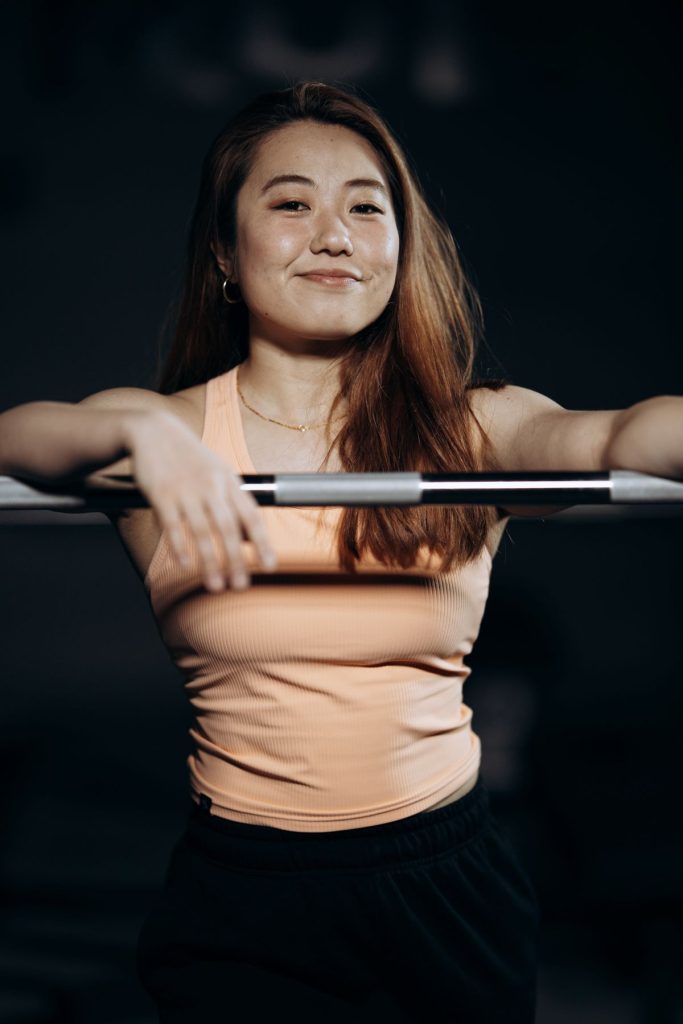 Kanan Kasai. (Courtesy of Kanan Kasai)
Kasai is a powerlifter herself. When she began the sport about nine years ago, she said, there were very few women involved. Information was hard to find, and the environment could feel isolating.
“When I entered that world, there were only men,” she recalled. “I remember feeling a real sense of loneliness.”
She was not intimidated enough to quit, but she realized many other women might never try powerlifting. Some assumed it was only for men, while others believed official competitions were for elite lifters only. Many were held back by the fear that lifting weights would make them bulky.
Kasai saw the same misunderstanding again and again: training was treated as a painful tool for dieting, not as something enjoyable or empowering.
“I wondered why everyone was suffering through training just to diet when training itself is fun,” she said.
A Tool for Empowerment
Strongirls Japan focuses on the three powerlifting movements—squat, bench press, and deadlift—but Kasai’s broader message is that training can help women build confidence, discipline, and a stronger relationship with their own bodies.
Kasai herself first began training with dieting in mind. But over time, she came to see that as too limited.
“If you train only for dieting, what happens when you reach that body shape?” she said. “You start wondering what all that training was for.”
Kasai argues that training should not be treated only as a tool for dieting, but as a habit that improves a person’s life.
That change is visible in her own family. Kasai’s mother, who had never been athletic, entered the first Strongirls Japan competition after Kasai encouraged her to take part. She is now 60 and has become so enthusiastic about training that, according to Kasai, dinner-table conversations with her father often revolve around lifting.
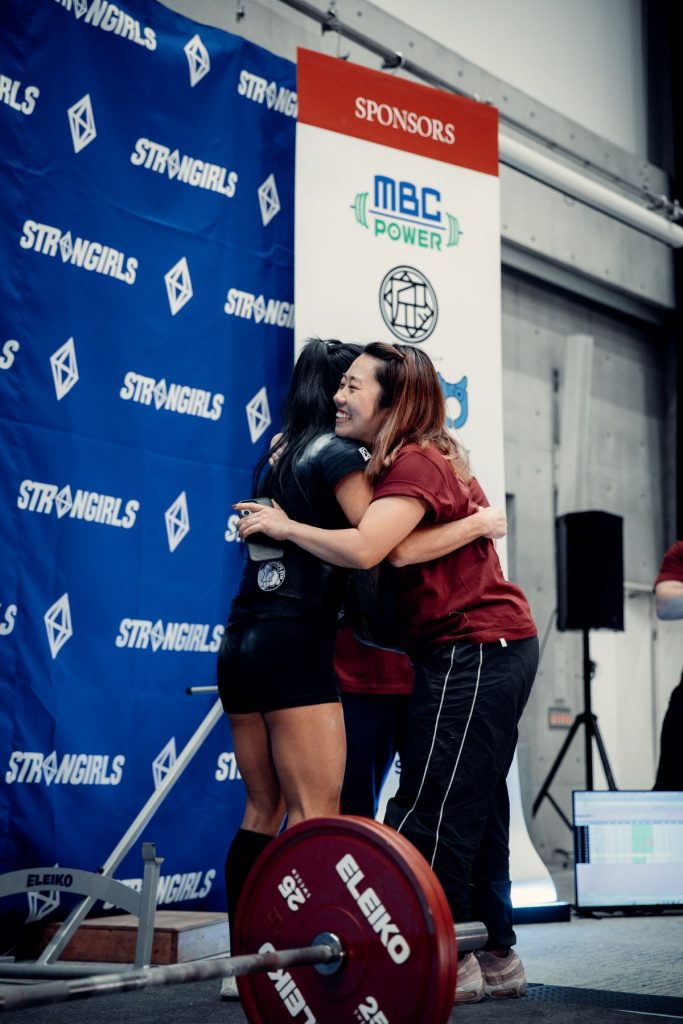 Kanan Kasai (right) hugs a competitor after a deadlift attempt. (Courtesy of Kanan Kasai)
“She started powerlifting, her personal records kept going up, she gained muscle, gained confidence, and discovered a new version of herself,” Kasai said.

Strength in Numbers
Powerlifting appeals to Kasai because progress is measurable. Lifters can see their improvement in numbers: a heavier squat, a stronger bench press, a deadlift that once seemed impossible.
Beyond technique, the sport teaches patience, problem-solving, and the value of steady effort.
Training is not easy, she added. In fact, it is supposed to be hard. But the process of choosing difficult work, consistently pursuing it, and seeing progress can change how people approach other parts of life.
“You become more positive about taking on challenges,” she explained. “You gain confidence. You also learn to think: Why can’t I do this? What should I try next?”
Center Stage for Female Lifters
Still, barriers remain. Kasai believes that one of the biggest stereotypes is the lingering idea that women who lift weights will become “too muscular.”
That is one reason women-only competitions matter. Traditional powerlifting meets, she said, have often had a “club activity” atmosphere and could feel male-dominated. When she first began organizing events, only a few women would enter official competitions.
“Women’s divisions often felt like an afterthought,” she shared.
Strongirls Japan tries to lower that barrier. Its competitions are designed to welcome beginners, including women who train the squat, bench press, and deadlift at the gym but may not yet see themselves as competitive powerlifters.
“If we say it’s a women-only competition and beginners are more than welcome, the hurdles start to fall,” Kasai said.
Redefining ‘Strong’ Women
Kasai is careful not to claim that Japanese ideas of beauty have changed completely. Speaking from her own experience, she said that thinness still seems to be treated as the default ideal for many women in Japan, even as attitudes begin to shift.
“I honestly think a healthier body is more attractive,” she said. “But people’s values are different.”
Strongirls Japan does not try to replace one ideal body type with another. Instead, Kasai wants women to discover what their bodies can do. That is why, when she talks about competitions, she does not focus only on who lifts the most.
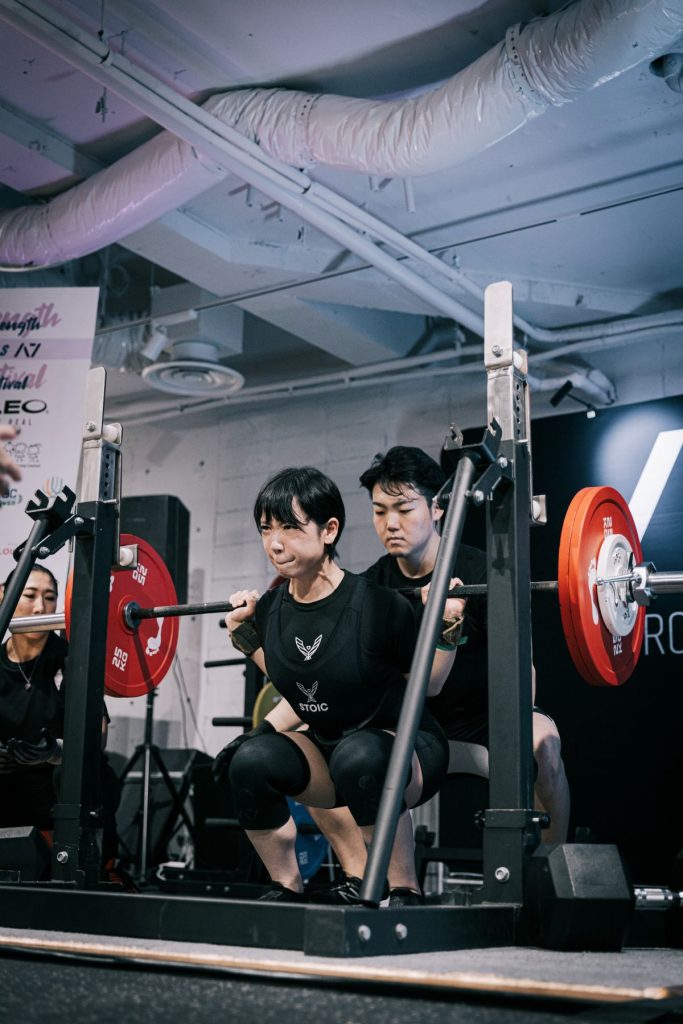 A competitor at a Strongirls powerlifting competition during a squat attempt. (Courtesy of Kanan Kasai)
“I don’t want them to focus only on the numbers,” she said. “I want them to use the competition as a place for growth.”
That growth might mean setting a personal record. It might mean entering a competition for the first time, talking to people in a new community, or overcoming fear.
The next Strongirls Strength Festival, the group’s sixth competition, will be held on July 12, 2026, in Yokosuka, Kanagawa Prefecture, at the gym Kasai operates. Entries have already closed, but spectators can attend on the day. The event will also include games during breaks and appearances by high-level lifters who support the community.
RELATED:
INTERVIEW | Kana Suzuki on Bodybuilding, Balancing Work, and Personal Growth
Author: Daniel Manning
Continue Reading