
I was the only person seated in the waiting room of an internal medicine specialty clinic for blood pressure issues. The day before the appointment I had completed the online registration, including demographics, past medical history, medications, allergies, etc.
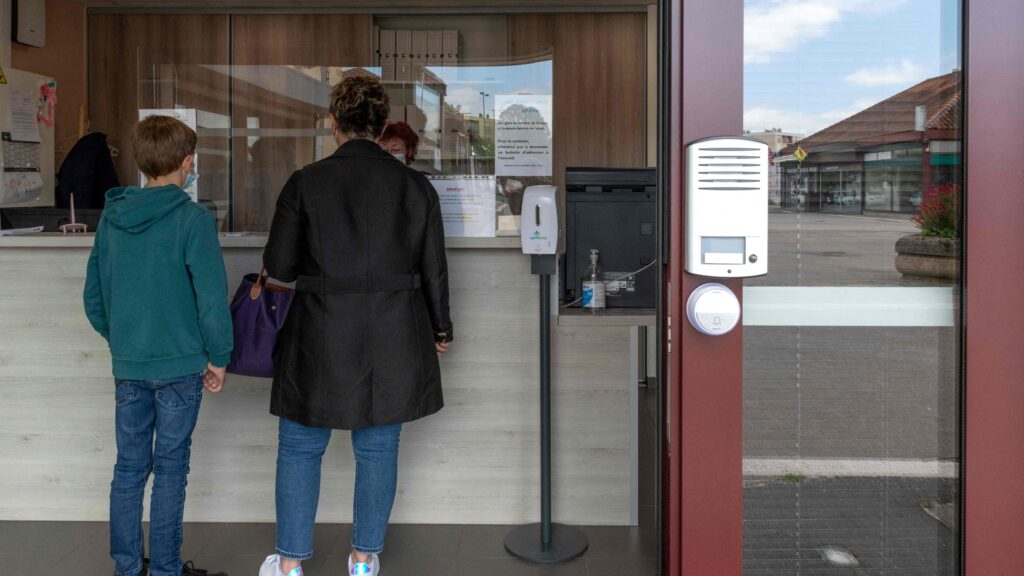
Upon arrival I was directed, as I am at the airport, to check in at a kiosk. However, instead of a person nearby to assist me to complete the process like at the airport, I then needed to go to the front desk, where the receptionist confirmed, again, the correct spelling of my name, my date of birth, insurance information, and queried about recent international travel. I was advised to sit in an adjacent room and wait.
After a few minutes, my name was called, incorrectly pronounced, but I didn’t see anyone. I stood up and walked to look around a nearby pillar. There was a person who I realized had called my name. I said, “it’s Jampel,” as I am used to letting people know how to correctly pronounce my last name, and I received a blank stare. Who was this person? Was she a medical assistant? There was no visible name tag. I asked her for her name. She told me — let’s call her Sandy — and then said, “I’m going to do your intake.”
Why exactly was I going through an “intake”? I’d completed the paperwork and was here solely to have a 24-hour BP monitor placed on my arm by a nurse practitioner.
I was told to stand on the scale. When I stepped off she said, “sit here,” pointing to the bench. There was no “please.” I suddenly could relate to how a dog must feel when being ordered to sit.

Can AI help ease medicine’s empathy problem?
I was beginning to think that I would have preferred to interact only with the kiosk.
Next, Sandy used the automated sphygmomanometer to measure my BP and pulse. Even though this was a BP specialty clinic, I was not instructed to optimally position myself for an accurate reading — that is, with my back supported and my feet flat on the floor.
Then Sandy, who had not related to me on any sort of human level, asked if I had had any falls in the past year. I told her I had not, although that was not entirely true. Because I both ice skate and hike, I have had several falls, information that is in my primary care physician’s record. I’ve had no falls from balance, gait, or vision issues. Just the usual catching a skate blade or tripping over a tree root.
Then with the same emotional vacancy, she asked me whether I had had any feelings of worthlessness, depression, or suicidal thoughts in the past two weeks. “No,” I said. I was then directed to the exam room, where I was again told to “sit” and wait for the nurse practitioner.
I had not felt worthless or depressed. Except for some ongoing annoying medical evaluations, including my erratic blood pressure and the state of the world, I was content.
If, however, I had had those feelings, I could not imagine confiding in a person who demonstrated no humanity or relatability.
Now I was confident I would have rather interacted with a chatbot.
The check-in and “intake” at one’s medical appointment should be restructured to function like the self-check-in at the airport or the self-check-out at the grocery store: by using a kiosk equipped with a chatbot, and if needed an available human nearby.
First, the patient would complete all required information, self-scanning necessary ID and insurance cards.
Second, the chatbot would provide directions to obtain vital signs — stand on a nearby scale, please, after removing shoes and coat. Then place your arm in the automated sphygmomanometer with instructions for correct positioning to obtain an accurate BP and pulse. These data would flow directly into your electronic health record.
A self-check-in would allow the screening questions to be personalized. For example, with me, there was no medical or bureaucratic need for depression and fall risk assessment. However, links with information about the 24-hour BP monitor and answers to frequently asked questions about the upcoming visit would have been welcome. Answering questions in privacy, particularly those about mental health, provides a chance for self-reflection in lieu of on-the-spot “box-checking” with a stranger.
Two-and-a-half years ago I retired from clinical medicine to study bioethics. My interest is in the everyday ordinary interactions between patients and the health care system that are the foundation for the ethical and caring treatment of patients. In the realm of tech bias and the adoption of artificial intelligence in clinical care, I tend toward the skeptical and believe we must proceed cautiously.
My automatic reaction to replacement of humans by AI — rather than augmentation, such as providing clinical support or functioning as an ambient scribe — has been no, not for me. Until, that is, my “intake” interaction with Sandy.
The use of AI in clinical medicine in inevitable, so why not direct it to tasks such as the intake? It can use an algorithm trained to gather standard, straightforward information in a neutral manner. Sandy was not neutral, but downright unpleasant and adversely affected my medical visit.
I am aware, of course, that she could have been having a bad day, or she was not adequately trained. But the fact remains: Sometimes, it’s much more pleasant and useful to interact with a bot than a human.
Risa Jampel, M.D., is a board-certified dermatologist with a master’s in bioethics and is involved in projects related to AI and ethics at the National Cancer Institute, Harvard Medical School Center for Bioethics, and Johns Hopkins University.