
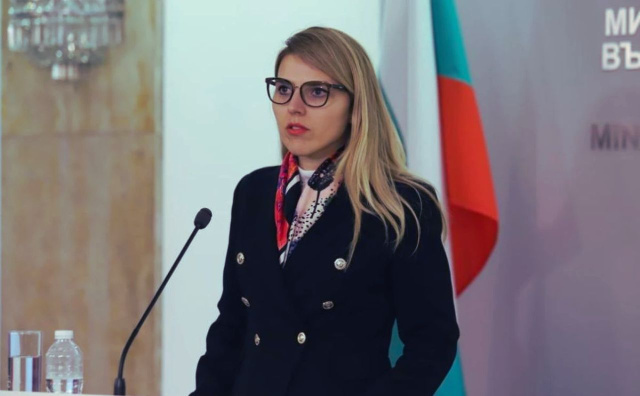
Foreign Minister Velislava Petrova-Chamova
Bulgaria has made clear that it will not accept any attempt to reopen or renegotiate the EU negotiating framework for North Macedonia, according to Foreign Minister Velislava Petrova-Chamova, who responded to a parliamentary inquiry, BGNES reported.
She emphasized that North Macedonia’s progress toward European integration is directly tied to the implementation of the EU consensus reached in July 2022. Sofia, she said, firmly rejects any efforts to bypass or reinterpret these commitments and is actively working through its diplomatic network in EU member states and in Skopje to prevent any deviation from the agreed terms.
Petrova-Chamova stressed that the Foreign Ministry’s central priority remains ensuring full compliance with the July 2022 framework, in line with parliamentary decisions adopted in June 2022 and May 2025 on North Macedonia’s EU path.
“Bulgaria categorically opposes attempts by the Republic of North Macedonia to circumvent or renegotiate them,” she said, underlining that all available diplomatic and institutional channels are being used to defend national interests. She added that the issue is consistently raised in bilateral meetings, EU formats, and political consultations with partners.
She also pointed to the status of the 2017 Treaty of Friendship, Good Neighborliness and Cooperation and its associated protocols, stating that any attempts to challenge them are incompatible with the agreed European framework. According to her, the ministry is systematically countering such moves through engagement with EU institutions involved in enlargement policy.
As part of this approach, the ministry and Bulgaria’s EU representation regularly communicate concerns regarding discrimination and institutional treatment of citizens in North Macedonia who identify as Bulgarian, as well as the situation of Bulgarian communities abroad. These issues, she said, remain a key foreign policy priority.
Sofia is also keeping EU member states and international organizations in Skopje, including the OSCE and the Council of Europe, informed about developments related to fundamental rights and the implementation of bilateral agreements. In parallel, the Foreign Ministry continues to submit updated assessments and non-papers to European institutions on the state of the accession process and compliance with agreed conditions.
Petrova-Chamova noted that Bulgaria’s Permanent Representation to the EU remains engaged in ensuring an accurate and consistent annual evaluation of North Macedonia’s progress within the European Parliament and the European Commission framework.
She reaffirmed that Bulgaria will maintain close coordination with European partners to safeguard its position throughout the enlargement process.
“I am convinced that by joining our efforts… we will ensure the highest protection of our country’s interests on this priority issue,” she said, expressing confidence in continued alignment with EU partners and parliamentary groups.
The statement comes in the context of the EU’s 2022 negotiating framework, under which the start of accession talks depends on constitutional amendments in North Macedonia, including the inclusion of Bulgarians among its recognized communities. The framework is also linked to the 2017 bilateral treaty and its implementation protocols, which outline commitments on good neighborliness, hate speech prevention, and historical and institutional cooperation.