

Key Takeaways:
- A citizen petition to abolish South Korea’s 22% crypto tax has surpassed 50,000 signatures, triggering a mandatory formal review by the National Assembly.
- Petitioners argue the levy violates “tax fairness” by penalizing crypto while offering relief to stock investors, specifically citing the lack of loss carryforwards as punitive.
- Officially referred to committee on May 21, 2026, the movement has forced a high-level political debate on whether to nurture or stifle the domestic digital asset industry.
Demanding Tax Fairness
South Korea’s growing public frustration with the taxation of its virtual asset investors has reached a boiling point. A petition that called for the repeal of the planned 22% tax on crypto assets has collected over 50,000 signatures and forced the legislative body to review the petition.
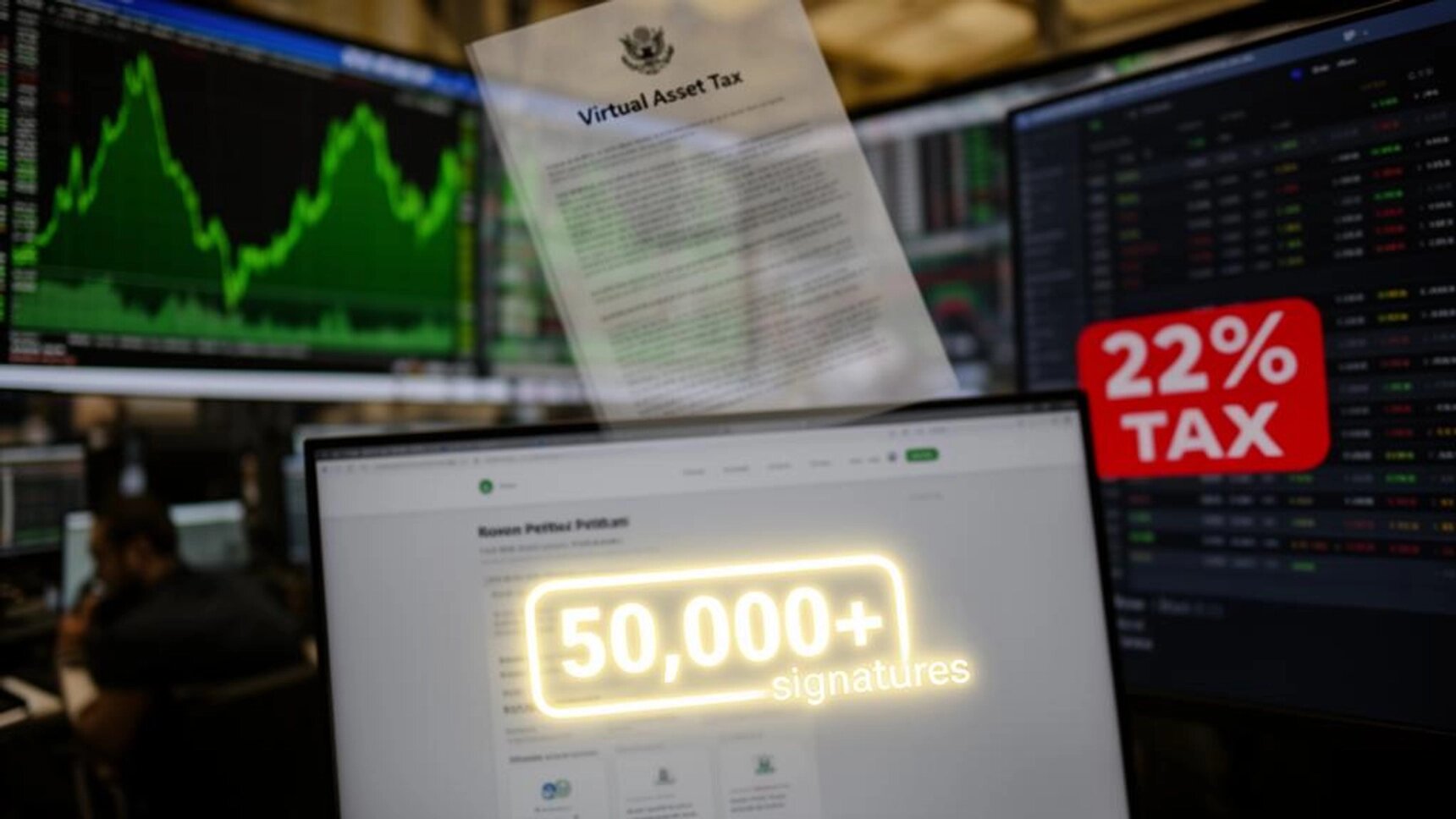
The petition gathered considerable momentum in the middle of May. The government had officially set 2027 as the year when the virtual asset tax would be implemented in South Korea. However, investors who were targeted by the tax were vocal in their demands for a revision of the tax on crypto assets.
More News: OKX Backs $380M Vietnam Crypto Exchange Push, Targets Regulated Trading Boom
The Disparity Between Crypto and Stocks
The petition makes a case for tax equity between virtual asset and financial market investors. Although virtual asset gains are classified as other income, the country is relaxing taxes on the income generated from financial market investments.
Individuals who invest in crypto assets have to pay a 22% tax on their gains that exceed 2.5 million KRW annually. They also suffer from the disadvantage that they do not have the opportunity to carry forward any losses made on their investments, unlike in the traditional financial market.
The Economic Case Against Taxation
Many of South Korea’s younger population has invested in virtual assets as one of the few ways out of the high cost of real estate and wages.
The petition argues that the government is rushing into taxing the digital assets without establishing an adequate framework to protect investors within the market. The lack of regulations governing the listing of digital assets, the lack of surveillance of market activities, and the lack of investor protection funds indicate the market is not yet mature enough to be taxed at such high rates.
Additionally, forcing the investors to pay such taxes while other countries are still adjusting the regulations for their virtual asset markets can result in the outflow of capital from the country’s domestic exchanges to the foreign exchanges.
Thus, with the petition officially in the hands of the National Assembly committee, the government will have to choose between leaving the current market as it is and overhauling the virtual asset policy to accommodate the growing investor sentiment regarding taxation.
More News: South Korea Captures 30% of Global Crypto Volume as Altcoins Dominate Local Trading
For more information on stablecoin adoption and blockchain innovation globally, keep checking Castlecrypto News.