
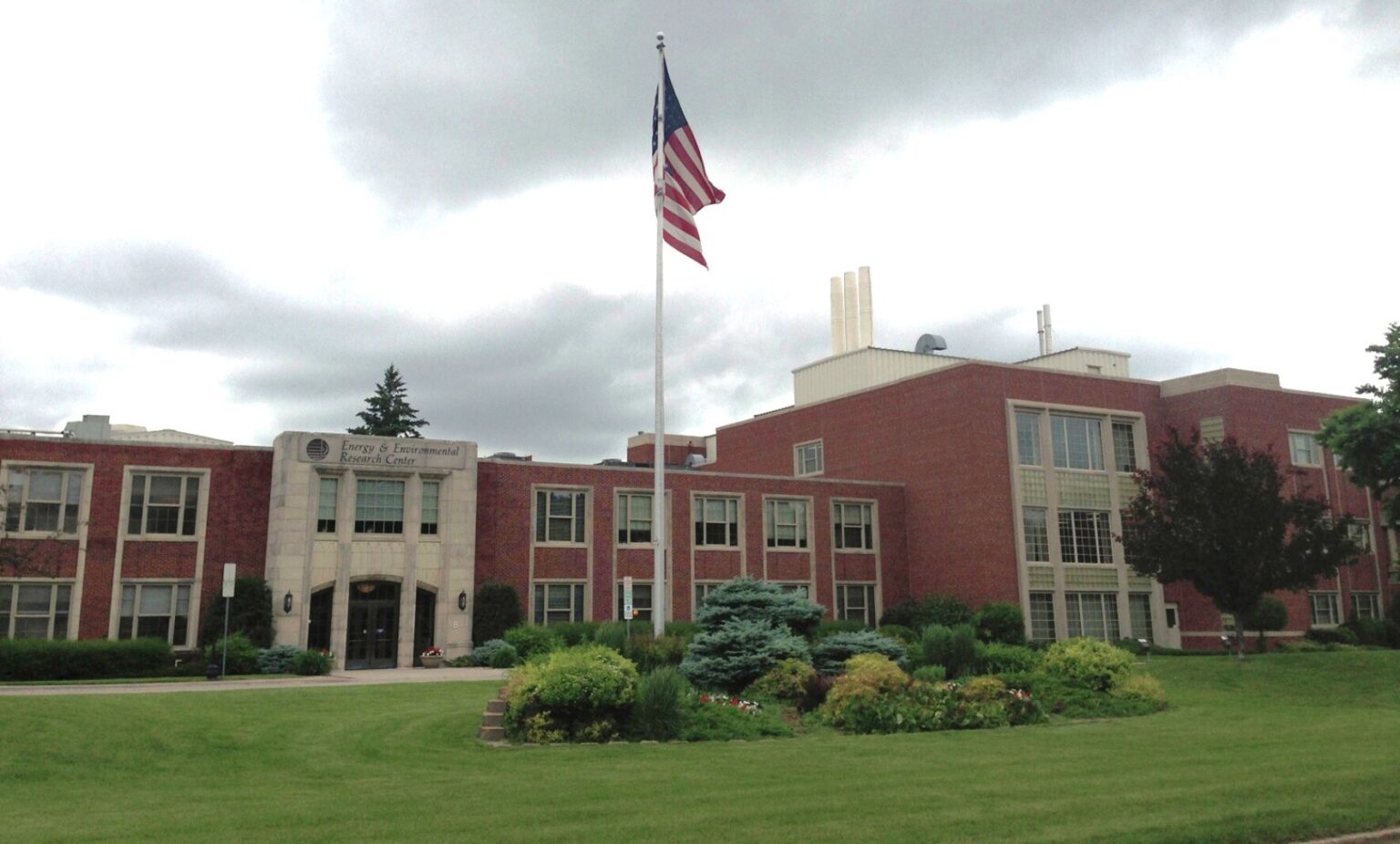
GRAND FORKS — The University of North Dakota’s Energy and Environmental Research Center and the U.S. Department of Energy have renewed their cooperative agreement, bringing $25 million over five years to support the center’s research projects.
The agreement has been in place since 1983, a press release from Sen. John Hoeven’s office said, since the organization was de-federalized.
“This $25 million, five-year agreement is a welcome support for the important work the EERC is doing to ensure our state remains a global energy powerhouse for years to come,” said Hoeven, R-N.D., in the release. “I appreciate Secretary (Chris) Wright and Under Secretary (Kyle) Haustveit for working with us to not only get a new agreement in place, but to provide short-term extensions of the prior agreement while these negotiations were ongoing.”
Hoeven worked with Wright and Haustveit on advancing a new five-year funding award, after the 1983 agreement was not renewed by the Biden administration, the release said. The new agreement continues the support of the EERC’s research projects, such as the work being conducted regarding enhanced oil recovery (EOR) in the Bakken, it said.
The EERC has been working alongside
, an initiative to boost EOR. In February, the EERC received
for phase one of the initiative, focused on developing pilot projects to advance the viability of methods to increase oil recovery. Earlier this month, Hoeven secured $36 million in federal funding specifically to support Crack the Code 2.0’s first phase, the release said.
“With phase one of Crack the Code 2.0 fully funded following this month’s $36 million award, this cooperative agreement provides a necessary supplement to support EERC, including as the organization looks ahead to the future phases of our initiative to both double oil recovery in the Bakken and double the life of our coal-fired power plants,” Hoeven said.
Our newsroom occasionally reports stories under a byline of “staff.” Often, the “staff” byline is used when rewriting basic news briefs that originate from official sources, such as a city press release about a road closure, and which require little or no reporting. At times, this byline is used when a news story includes numerous authors or when the story is formed by aggregating previously reported news from various sources. If outside sources are used, it is noted within the story.