
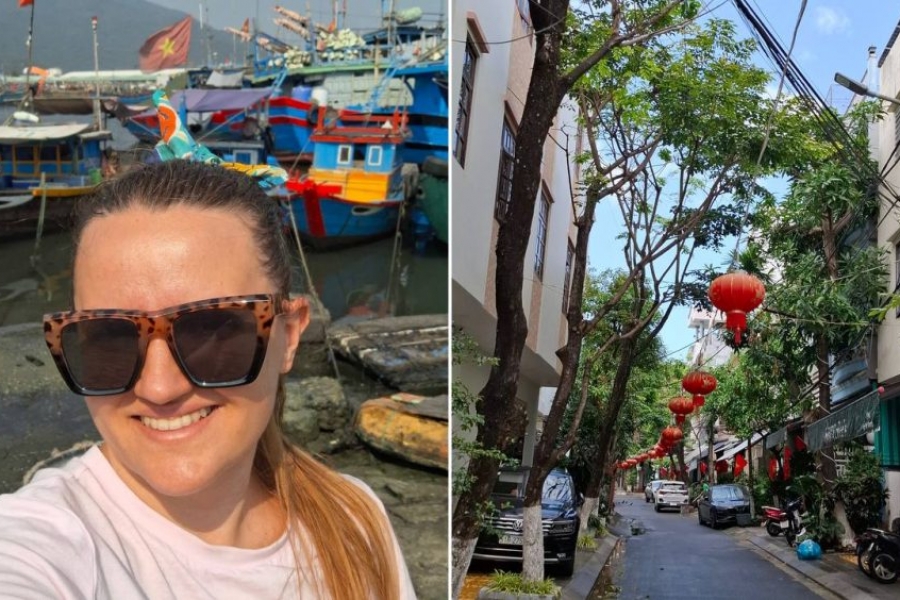
Nadezhda is not a typical “all-inclusive” tourist. The Belarusian woman has relatives who moved to Vietnam, so she had the opportunity to see the country from the inside and delve deeper into its culture.
“My brother and his family moved to Vietnam for work 2.5 years ago, and they live in the central part of the country in Da Nang. Da Nang is located by the sea; it’s one of the largest cities, a city of millions. Relatives didn’t choose it; the company office where my brother worked was located there, they offered to move from remote work to the office, so they decided to try it.
During this time, I’ve been to Vietnam twice for a month each, in the autumn of 2024 and in the spring of this year. In 2024, Belarusians could still stay in Vietnam without a visa for 45 days, but after new agreements, it’s 30 days,” Nadezhda explains.
The girl admits that getting there was difficult. To fly to Da Nang, it takes 3 flights — about a day on the road. The first time, the Belarusian flew the route “Minsk — Moscow — Hong Kong — Da Nang”, the second — “Minsk — Beijing — Hong Kong — Da Nang”.
— I preferred going through Beijing because there’s a transit zone, and you pass airport control much faster. No confusion, everything is efficient. Of course, a direct flight would be much simpler,” the interviewee says.
— How much does such a flight cost?
— 700-1000 dollars one way. With luggage, of course.
— Wow, like to Japan!
— It’s already close to Japan from there. Last time, my brother told me I could have gotten a visa in Minsk and rushed to Japan from there, but I didn’t think I would be completely free.
“I thought the whole country was rice fields and jungles…”
Do you have any idea about Vietnam? Surely each of us, recalling geography lessons at school, would imagine rice plantations. Perhaps someone might remember it as a country where dogs are eaten. Our heroine had roughly similar associations.
“I thought the whole country was rice fields and jungles, and it was a third-world country. But now Vietnam is developing. Yes, the consequences of the war are still felt. The water here is bad; tap water cannot be drunk, and even bottled water can taste bitter.
People still suffer from the sprayed Agent Orange, like we do from the Chernobyl disaster. In the forests, you cannot stray from the paths, as there might be unexploded mines and grenades from the war, which is particularly relevant in the central region.
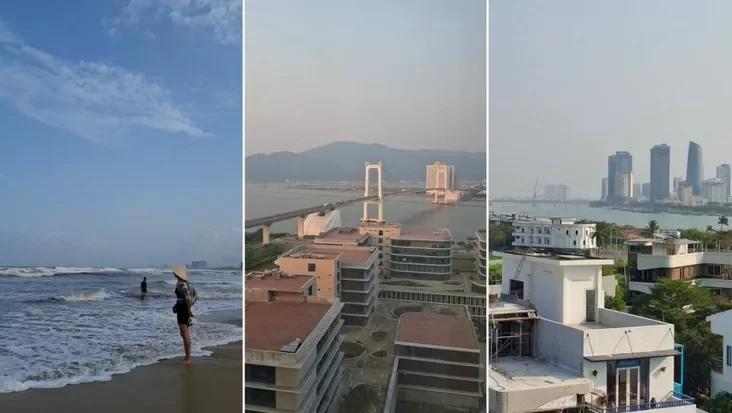
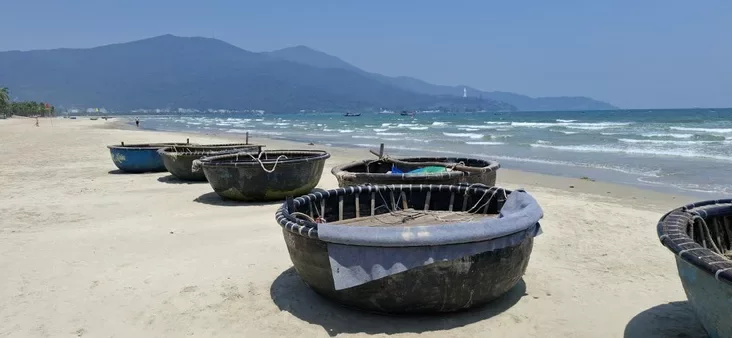
But in the city, there are essentials for life, modern housing, delivery and taxi services, many cafes for every taste, and what’s important for Belarusians — warm sea! Da Nang beach has a long coastline and fine sand,” Nadezhda debunks stereotypes.
Павялічыць
The Belarusian woman believes that the sea is totally cool, even if you’re not a fan of swimming. You can come in the morning and observe what the fishermen have caught, look for shells and corals, breathe the salty air, or do as the locals do: bury yourself in the sand and enjoy the new day. And if you suddenly get bored in Da Nang, not far from it are Ba Na Hills park in the mountains (that same bridge with giant hands holding it), the ancient cities of Hoi An and Hue, the My Son ruins, and, of course, Monkey Mountain with a statue of the Goddess of Mercy and a viewpoint offering a magnificent panorama.
The girl’s relatives live in a non-touristy area of Da Nang, quite far from the popular beach, but with a view of the river and the city’s longest bridge. Another seaside promenade is nearby — Da Nang Bay, where mostly locals go to relax.
Of course, the girl was asked what surprised and impressed her most during her trips. Nadezhda admitted that she had never been to Asia before these journeys. Therefore, many things still seem unusual to her.
Павялічыць
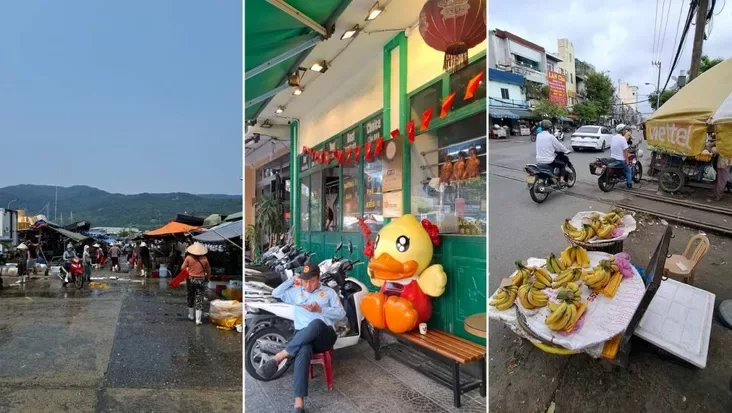
For example, Vietnamese people have an unusual daily routine. They wake up very early — at 4:00 AM they are already exercising, running, and dancing on the embankment. They sleep during the day and sit in beer gardens in the evening. Usually, these are mainly men, but on any given day, there are many visitors in bars until 11:00 PM.
“I couldn’t get used to the fact that the sidewalk is part of the road, a parking lot for bikes, a space for trade, for cafes, for anything you want, but not for pedestrians. That it’s always noisy on the street, all bikes and cars are constantly honking, and traffic lights are a rarity, and even their presence doesn’t mean a driver will let you pass on the appropriate signal. Besides the sidewalk being occupied by tables and bikes, in the evening you have to watch your step so as not to step on a rat or a beer bottle — in restaurants, Vietnamese are accustomed to drinking beer by the crate and throwing trash under the table,” the Belarusian woman recounts.
The number of rats is explained by the peculiarity of local beliefs. According to our heroine, there are about 30 Catholic churches and many Buddhist temples in Da Nang, but most Vietnamese honor the cult of ancestors and the spirits of the deceased. Therefore, many altars with flowers, fruits, and other food can be seen on the streets, which rodents feed on. Altars are found in most shops, hotels, by trees on the street, in restaurants, and services. Only one thing is reassuring here — the rats are not aggressive.
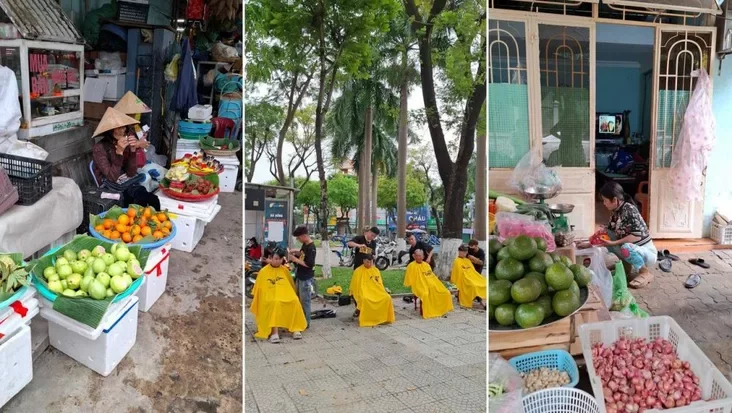
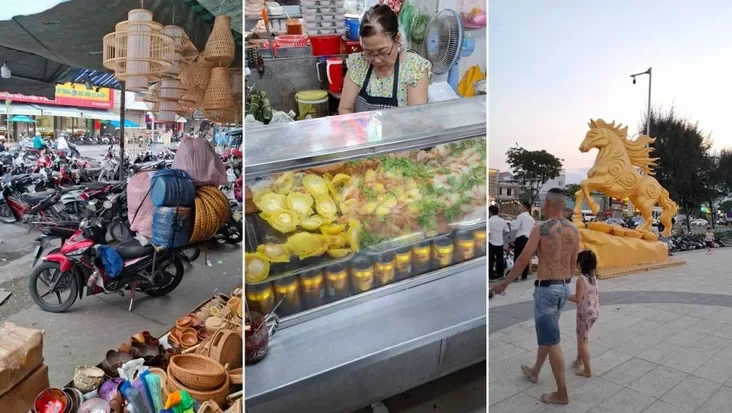
Another interesting observation is how ordinary people live. Vietnam, let’s remember, is a communist state. Mostly, Vietnamese have narrow two- or three-story houses, where the first floor hosts some kind of business. Most people run a cafe with one or two dishes on the menu or a small shop. It could also be a place offering massage services, hairdressing, repairs, crafts, and so on.
Павялічыць
“In small cafes, if you go deep inside to the restroom, you enter their private toilet, where clothes hang and a shower is installed. By the way, there’s a bidet shower everywhere, but not always toilet paper.
If there’s no business on the first floor, then there’s a wooden sofa and a TV, fans. The doors are open because it’s hot; in the evening, the whole family gathers and sits on the floor or sofa, eats noodles, and watches television. Fans are everywhere here, and those who are wealthier have air conditioners.
Outside, it’s very hot and extremely humid. This was the very first impression when you leave the airport in September, like entering a sauna. The phone showed +37 degrees Celsius, but it felt like +43, with humidity approaching 90%,” Nadezhda recalls.
What dangers can await in Vietnam?
We have already touched upon the topic of landmines in the jungles, dirty water, road conditions, and rats on the sidewalks. We also learned whether one needs to specially prepare for the trip and what else might be dangerous in Vietnam.
Regarding vaccinations, Nadezhda said she didn’t get any because the decision to travel was made quickly, and there was no point in getting them.
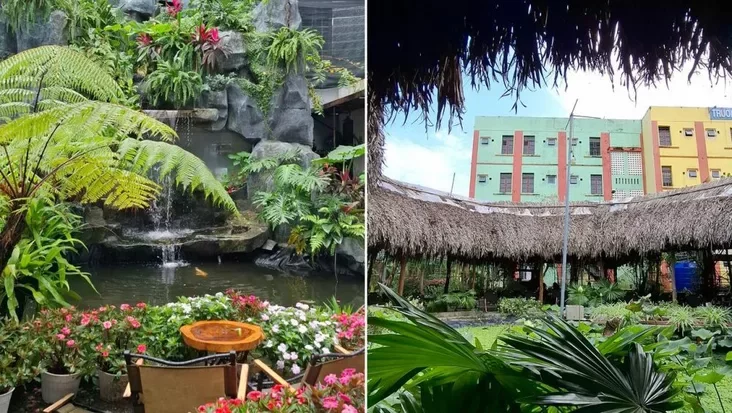
“Among important things, you need to know which insects are dangerous. Cockroaches fly but don’t bite; mosquitoes bite, but rarely. And then there are rove beetles (tamkat). A rove beetle is a predator that eats parasites on rice; it’s not interested in humans but is attracted to light. Its hemolymph is poisonous, comparable to hogweed sap.
So, the danger is that you might reflexively crush it on yourself, and then burns that heal slowly will appear on the skin from the crushed beetle. Rove beetles crawled into our apartment several times, or we brought them in from the street, and when we noticed them, we carefully removed them with paper and disposed of them,” the girl explains.
Павялічыць
But even this is not the most extreme thing. Nadezhda called menthol feminine pads a real “awful thing”:
“They say you can get used to them. And maybe they are different, because the first one I tried there was okay, not too strong, and didn’t feel as intense in the heat. But then I tried one here in Belarus and it didn’t work out — I lasted 5 minutes. My brother’s wife immediately warned me not to buy them because she didn’t know, and everything was burning for her.”
What you need for a comfortable stay
To navigate the city calmly, Nadezhda advises getting a SIM card at a Viettel office. It costs approximately 7 dollars per month — for internet only, 6 gigabytes per day.
You can call a taxi by installing the Grab or Xanh SM app. The Belarusian woman only used the first option; her “Priorbank” card was linked, and payments always went through. You can call a car, but it’s cheaper to travel by motorbike — then trips to the shop or the beach cost a dollar or two, but it’s considered good manners to give a tip, as motorbike drivers earn very little. Traveling by car is also inexpensive, especially if you go as a pair or a group. In addition, Nadezhda notes the comfort, quietness, and coolness in the car’s interior. Local taxi drivers almost never play music.
In Winmart+ and GO! grocery stores, an “Alfa-Bank” card in Belarusian rubles worked, and she also managed to use it in a stationery store, H&M, and some cafes. In all other places, cash has to be used — in most cafes, markets, small shops, museums.
Nadezhda advises exchanging money in jewelry stores. The approximate exchange rate: 1 dollar — up to 26,000 dong, you can feel like a millionaire again.
Павялічыць
“I looked for dogs, but never saw a single fried one…”
And finally, let’s touch upon the most delicious topic. One can imagine how many exotic dishes there are to taste in a distant Asian country. But not everything might be appealing.
Павялічыць
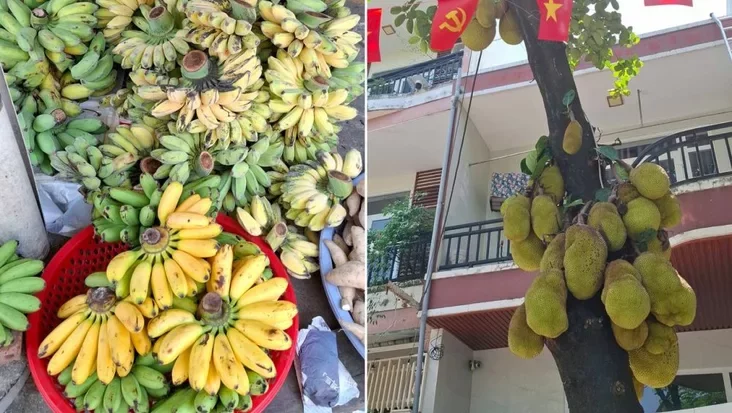
“I’m not too keen on trying everything exotic because I have a sensitive stomach, but on the very first day, I accidentally bought durian ice cream. What garbage! We now have ice cream with the taste of a ‘Belarusian draniki’ (potato pancake), but that has the taste of dried onion from flat crisps. Durian, in my opinion, is purely green onion, both in taste and aroma. I tasted it later, both dry and fresh — my opinion didn’t change. I don’t like onions, so durian goes into the same category,” the heroine shared.
Павялічыць
As for other exotic fruits, in Nadezhda’s opinion, they are mostly very sweet and lack a distinct flavor. However, Vietnam has very tasty and juicy pineapples, pleasantly sweet and slightly astringent small bananas, delicious dragon fruit in season (similar to sweet boiled beetroot and kiwi), lychees, and mangosteens. And, of course, mangoes.
“On the streets, there are many carts where you can get freshly squeezed juice. I liked getting mango-passionfruit for 1 dollar or orange juice. Sugarcane juice is also quite good. Because it’s hot outside, iced coffee is very welcome; hot coffee is less common. Black tea is almost nowhere to be found, but the menu for coffee and fruit tea is very extensive.
My favorite coffees are egg coffee and salted coffee. The egg is whisked with condensed milk into a sweet cream and poured over the coffee, while the salted coffee has a layer of filter coffee at the bottom and whipped cream with salt on top. Any coffee costs from 0.5 to 3 dollars,” Nadezhda recommends and adds that often in cafes, the free and unlimited green tea served in large teapots or thermoses — either plain green, or with lotus or jasmine — turned out to be tastier than the ordered drink.
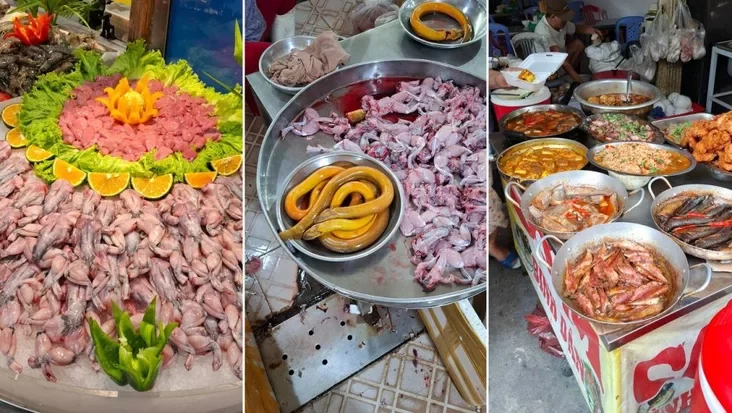
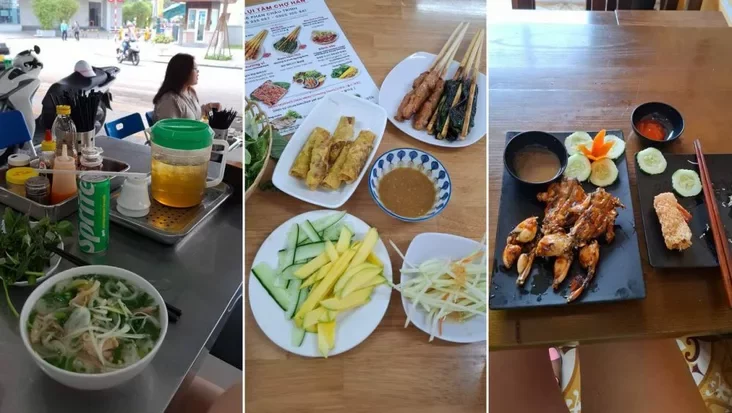
Regarding food, the Belarusian woman tasted traditional soups, noodles, deep-fried pancakes (banh xeo), nem (spring rolls), crab and shrimp, octopus, other small shellfish, pho bo and pho ga soup. Her favorite street food is the banh mi baguette sandwich. Traditionally, pâté and various hams, herbs are placed in a sliced small baguette, and then the baguette is toasted in a grill. Nadezhda points out that if you don’t like spicy food, you should ask for non-spicy. Seafood is spicy everywhere, but with many other dishes, chili is served separately.
Павялічыць
“I persistently looked for dogs, but never once saw a fried one. However, I know they are still cooked; my relatives have seen them. Among meat dishes, fried frogs are considered a common dish here. I tasted them — it was okay, really like chicken, but apart from the legs, there’s nothing much to eat; the spine is made of tiny bones, and there’s hardly any meat. It serves as one of the snacks with beer. What I couldn’t get used to was sweet sausage and other meat dishes. Vietnamese like the combination of sugar with meat, while fruits are often eaten with salt,” the girl concludes.
Nadezhda definitely recommends discovering an Asian city like Da Nang. It’s not as huge as the capital Hanoi. Da Nang is a city of bridges. The presence of the wide Han River adds to its picturesqueness; in the evening, it’s pleasant to walk along the embankment or go see the show on the Dragon Bridge. There are museums, beautiful cafes made of concrete and metal, non-touristy markets where you can find literally everything, and inexpensive massage salons. Vietnamese people are very polite and friendly; they greet you on the street, smile, try to help, and the crime rate in the city is low.
Павялічыць