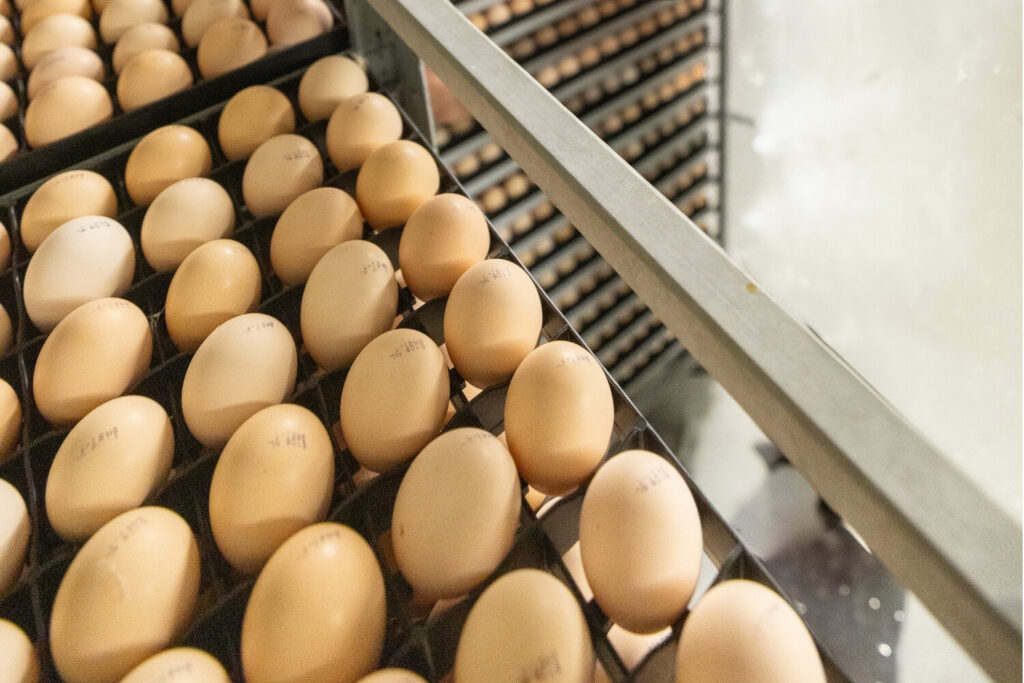
 The department calculates the self-sufficiency rate for eggs at 95%. Photo: Koos Groenewold
Austria’s young farmers have criticised local branches of the international supermarket chain Spar for selling foreign eggs imported from abroad.
Viktoria Hutter from the Austrian Young Farmers’ Association (Österreichischen Jungbauern) says, “This is a completely wrong signal for our own laying hen farmers. There are sufficient Austrian eggs available; therefore, foreign fresh eggs should not end up on our supermarket shelves.”
Investments in Austrian egg production
Over the last few years, laying hen farmers in Austria have invested heavily in quality, control, traceability and modern chicken sheds. This was possible because they could fully trust that grocery retailers in the country would only sell Austrian eggs.
“Our farmers have delivered. They have invested, further developed themselves and built up standards that Austria can rightly be proud of. That a large food retailer then suddenly puts foreign eggs on the shelves is completely unacceptable to us,” Hutter adds in a statement on the Austrian farmers’ union website.
ALSO READ: AI X-rays could fast‑track stronger bones in laying hens
She emphasises that young farmers in particular need reliability, planning certainty, a willingness to invest and fair prospects: “Somebody who invests in a farm today takes responsibility for many years to come. Young farmers must be able to trust that their products will also have a place in Austrian retail channels tomorrow. Retailers who buy imported products take away the future prospects for us young farmers.”
Austria’s egg self-sufficiency
In 2024, Austrian egg production amounted to about 2.2 billion eggs, according to figures from the Department of Agriculture. Just over 56% of hens were kept in enriched cages, 31% of eggs were free-range and 13% organic. The department calculates the self-sufficiency rate for eggs at 95%. For about 90% of eggs, quality and other production data from the producer are registered in a voluntary national database that is freely accessible to consumers.