
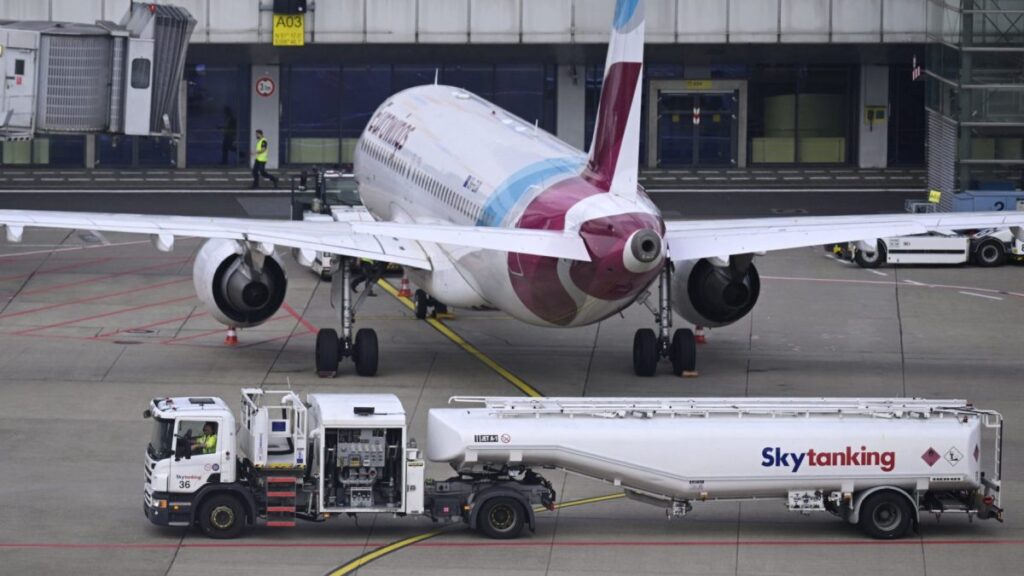
The UK and Europe could face a “significant” decline in jet fuel from the Iran war towards the end of this year, which may lead to flight cancellations, experts have warned.
Airlines have struck a bullish recent tone about holiday travel, with easyJet CEO Kenton Jarvis insisting there were “no issues” with fuel supply and Ryanair boss Michael O’Leary saying the airline’s fuel suppliers expect no disruption until the middle of July.
The main trade body, Airlines UK, said carriers are operating normally and aren’t experiencing problems with stocks, and that passengers should be “reassured” that flights will be protected over the summer. Flights to popular European summer destinations are also being offered at cheaper rates to boost demand.
But there are warnings of problems later in the year if the Strait of Hormuz, a key route for Europe’s jet fuel supply, remains effectively closed.
The US-Iran conflict – which has upended global shipping, oil supply and economics – remains at a stalemate, with few vessels leaving the Strait of Hormuz since the war began in late February.
James Noel-Beswick, head of commodities at market intelligence firm Sparta Commodities, told The i Paper: “Unless we get a resolution in the Middle East, there’s no supply solution to this.
“So we, as we move into September, have to see more flights being cancelled to solve this.”
However, he added that it was unclear whether “demand destruction” from higher-ticket prices may have deterred enough passengers from booking flights to mitigate the impact caused by jet fuel shortages.
Spain, Italy, Greece, France and Portugal are the top foreign destinations for Brits, according to YouGov.
Aviation analytics company Cirium shows airlines have ramped up cancellations in May, axeing 296 departures from UK airports this month as of Tuesday, equivalent to 0.75 per cent of the total number of departures.
Surge in jet fuel imports – for now
Noel-Beswick pointed to a surge in imports of jet fuel to Europe from Nigeria, India and the US that have helped plug gaps since the US-Israel attacks on Iran, while the Government has asked the UK’s four remaining refineries to boost supply.
Supplies from Nigeria to Europe soared by 365 per cent and 405 per cent in March and April respectively, compared with the same months in 2025, he reported, citing Sparta Commodities internal tracking.
This means that Nigeria supplied 25 per cent of Europe’s jet fuel in the past two months, up from just one per cent in March and April 2025.
Imports to Europe from the US, meanwhile, grew by 665 per cent and 460 per cent in March and April. The US overall share of European jet imports grew from 25 per cent in March and April last year to 37 per cent.
But while refineries race to boost production to record levels, global shortages of diesel and gasoline could also lead to cuts in jet fuel.
“As we go into the summer, now we’re seeing that actually the shortage is becoming worse in gasoline and diesel,” said Noel-Beswick.
“That means that refiners in those countries are having to turn the dial to make more diesel and gasoline.
“So essentially they don’t really know yet how much jet production will be in those locations, and then how much they will be able to send to Europe.”
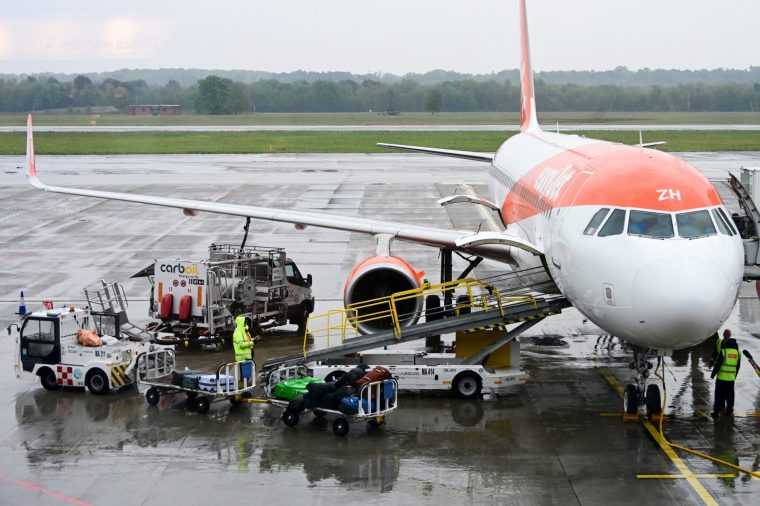 Airlines have been offering cheaper flights to some destinations in Europe but there have been warnings that the jet fuel crisis will lead to price rises and cancellations this summer (Photo: Stefano Rellandini/AFP)
Commodities analysts at Argus Media found that if disruptions to the Strait of Hormuz continue through August, the European market is expected to balance, but the situation will be precarious.
“Assuming Europe is able to meet rising seasonal demand before summer, it should meet declining seasonal demand after summer,” said Amaar Khan and Sarah Raffoul.
“However, this adjustment will come at the cost of lower inventories. Jet fuel stocks are likely to decline significantly by year-end.”
Jet fuel stocks at the key Amsterdam-Rotterdam-Antwerp (ARA) region, Europe’s primary oil refining and trading hub, have plummeted to six-year lows.
But unplanned outages could quickly derail supply, while prices are also expected to remain elevated for the rest of 2026, said Khan and Raffoul.
“There will be a global undersupply of jet fuel as long as the Strait of Hormuz is shut,” they said. “Even after it reopens, it will take several months for flows to resume to pre-war levels.”
‘Don’t panic about it’
EasyJet said bookings for summer flights are below the same point last year because of uncertainty caused by the Middle East conflict. However, short-notice bookings in the month of departure are up year on year, the budget airline said.
Asked if the airline industry was nervous about fuel supplies, easyJet boss Jarvis said the airline had seen “absolutely no issues with fuel supply” across its UK and Europe airports.
He added: “We stay in very close contact with our fuel suppliers, airports, governments and they are equally raising no issues looking forward.
“I would absolutely say don’t panic about it.”
The Government has said there is “no current need to change upcoming travel plans”.