
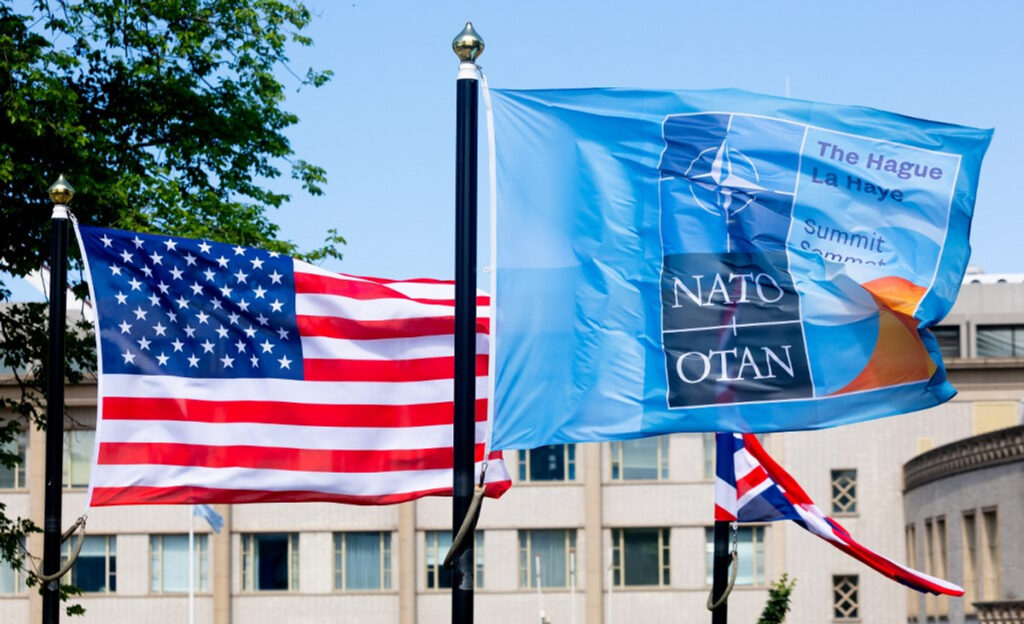
European policymakers gathered at the GLOBSEC Forum in Prague to confront growing uncertainty over the future of the transatlantic security architecture, focusing heavily on Europe’s deep industrial reliance on American weapons systems following Donald Trump’s return to the White House.
According to Politico, the policy debate was injected with fresh urgency following a series of conflicting, unilateral announcements from Washington regarding US military deployments to Poland. Warsaw has spent years anchoring its defense strategy on a bilateral partnership with the United States, purchasing tens of billions of dollars in American hardware and consistently insulating Washington from continental criticism.
Follow our coverage of the war on the @Kyivpost_official.
However, delegates noted that this financial and political alignment failed to protect Poland from unpredictable, uncoordinated shifts in American deployment scripts.
Anxieties over unilateral US decisions
Addressing the policy shift during a specialized session, Czech President Petr Pavel emphasized that the primary concern for eastern flank allies is not merely the potential drawdown of American personnel, but the complete breakdown of institutional communication.
Pavel noted that while NATO partners were historically given ample advance warning and consultation regarding changes to the US military footprint on the continent, the recent decisions regarding Polish troop levels were executed entirely over the heads of the alliance’s command structure. This lack of transparency has forced frontline capitals to reconsider how to protect the alliance’s borders without relying on predictable American security guarantees.
Other Topics of Interest
EU Lawmakers Reach Compromise on Transatlantic ‘Turnberry’ Trade Deal
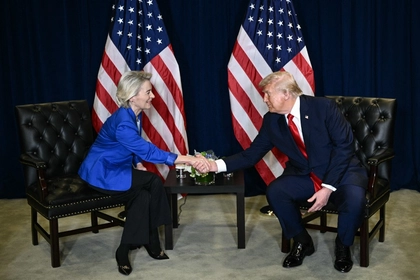
European Union institutions have reached a provisional agreement to legally implement the “Turnberry” trade pact with the United States, aiming to head off President Donald Trump’s threats of a full-scale trade war. Following an intense, overnight trilogue bargaining session, the European Parliament secured several compromise safeguards, including a December 2029 expiration date and legal mechanisms empowering the European Commission to suspend EU tariff cuts if Washington fails to respect its own commitments on steel and aluminum duties.
The strategic disconnect arrives at a critical juncture for the alliance. NATO Secretary General Mark Rutte is moving to convene an emergency assembly with the chief executives of Europe’s leading defense conglomerates – including Rheinmetall, Saab, and Airbus – to aggressively scale up continental assembly lines. The push aims to finalize concrete, multi-billion-dollar weapons procurement packages before the alliance meets for its high-stakes July summit in Ankara, Turkey.
Under intense pressure after bowing to Trump’s demands to elevate defense spending targets to an unprecedented 5% of individual member GDP, European leaders are racing to establish self-sustaining conventional deterrence frameworks to insulate the continent from a potential partial US withdrawal.
The debate over ‘European Preference’
The reality of these supply deficits triggered an institutional divide at GLOBSEC regarding how the European Union should structure its upcoming defense procurement funds. Swedish Defense Minister Pål Jonson spoke out firmly against a rigid “European preference” policy in defense manufacturing.
Jonson argued that the overriding priority for European militaries must be the immediate procurement of operational combat power to fill emerging security gaps, regardless of whether those systems originate within the EU, the United States, or Asian security partners.
Conversely, other frontline states expressed a desire to balance immediate security requirements with localized industrial development. Romanian Foreign Minister Oana Toiu clarified that while Bucharest actively seeks to expand its domestic defense manufacturing base to generate high-tech manufacturing jobs, it has no intention of severing its deep procurement pipelines with Washington. Romania’s current multi-year acquisition roadmap allocates over $2 billion for advanced American equipment.
German Foreign Minister Johann Wadephul acknowledged that Berlin and its partners are working systematically to assemble new autonomous defense capabilities for Europe. However, Wadephul noted that the structural shift is accelerated by the reality that Washington’s long-term geopolitical attention is irreversibly shifting away from the European theater toward containing China in the Indo-Pacific region.
As a result, balancing the integration of European defense markets with the political necessity of preserving baseline US support within NATO is expected to serve as the central debate when heads of state convene at the Ankara summit this July.