
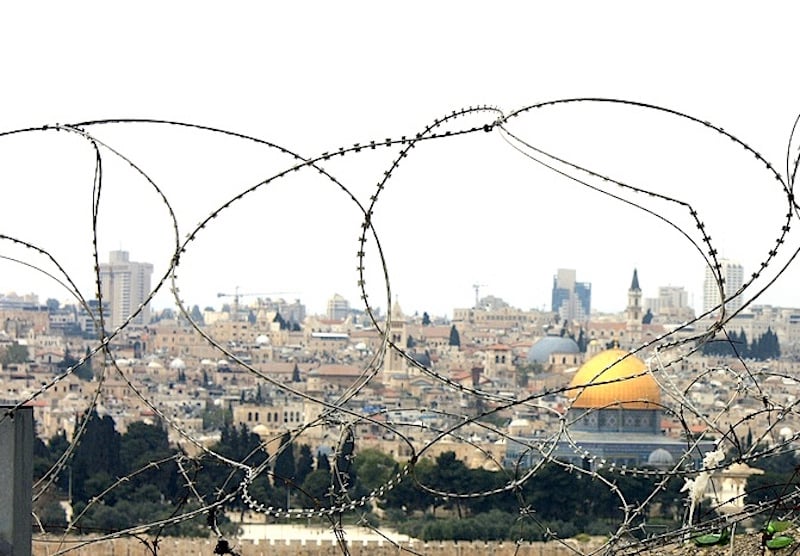
The momentum for EU sanctions on Israel is growing, but will the US try to bully Europe out of taking action?
France imposed a visa-ban on extremist Israeli security minister Itmar Ben-Gvir on Friday (22 May) as stories continued to come out in French, Italian, and Spanish newspapers of EU activists on an aid flotilla to Gaza being beaten, sexually assaulted, and electrocuted, making Ben-Gvir de facto persona non grata in the Schengen free-travel zone.
The Netherlands banned trade with Israeli settlers the same day, while Italy has called for EU foreign ministers to put Israel sanctions on the agenda of the next EU foreign ministers’ meeting in Luxembourg on 15 June.
France, Germany, Italy, and the UK, as well as Canada, Australia, and New Zealand also warned in a statement on Friday that Israeli firms who took part in construction of the ‘E1’ settlement in the West Bank “should be aware of legal and reputational consequences” of doing so.
The E1 settlement is to cut the West Bank in two, ending hope of a Palestinian state, and the road, water, and electricity infrastructure is already being built, liberal Irish MEP Barry Andrews, who toured the area in early May, told EUobserver.
The level of violence the West Bank was “unprecedented” the group of seven Western powers also said.

The last time there was momentum for EU action on Israel (over Gaza), it was ended by US president Donald Trump’s ceasefire, which has left Israel free to kill at will in the strip, occupy ever-more land, and leave people starving in rat-infested camps.
The far-right Israeli government and settler movement are not going to stop destroying Gaza or ethnically cleansing the West Bank due to EU threats. On the contrary, based on past form, they will escalate and call the EU’s bluff, for instance by starting to hang Arabs and annexing more land.
“This [the problem] is not Ben-Gvir. This is established government policy. And empathy for the Palestinians or other victims is by and large absent across most of the political spectrum [in Israel],” said Claudio Francavilla from Human Rights Watch.
So the EU should get ready to counter-escalate in return: blacklisting other top Israelis, including judges involved in hangings, suspending free trade and high-level diplomatic meetings, imposing an arms embargo – it’s a familiar playbook.
And it is only a matter of times before it all hits Trump’s desk, in another anti-EU fight he will just love, as it will energise the Zionist Christian right in the run-up to mid-term elections.
So instead of repeating the same mistake as with the Gaza pseudo-ceasefire, the EU should be prepared to take him on as well, if it is serious about winning this fight.
“We expect the Israeli government to ensure that Israeli civil society organisations are insulated from illegitimate foreign sanctions, and we hope that the United States will not go along with this outrageous attempt to silence a legitimate voice that continues to be a respected contributor to Israel’s public debate,” said Naomi Linder Kahn, a spokeswoman for Regavim, a pro-settler organisation set to go under an EU visa-ban and asset-freeze next week, following an earlier decision.
Regavim told EUobserver that its founder, Meir Deutsch, did not really care if the EU listed him, “as neither Regavim nor Mr. Deutsch hold assets in Europe and rarely visit the continent”.
But whatever happens next, one thing was clear from Regavim’s long and considered response to EUobserver’s questions – they care about keeping their EU access and sense of legitimacy more than they might admit.
“The larger issue is the impact on freedom of speech, and the freedom of European citizens to support or even explore Regavim’s work, to hear a voice of dissent … the European Union is apparently attempting to criminalise dissent with the EU’s two-state policy,” Linder Kahn claimed.