
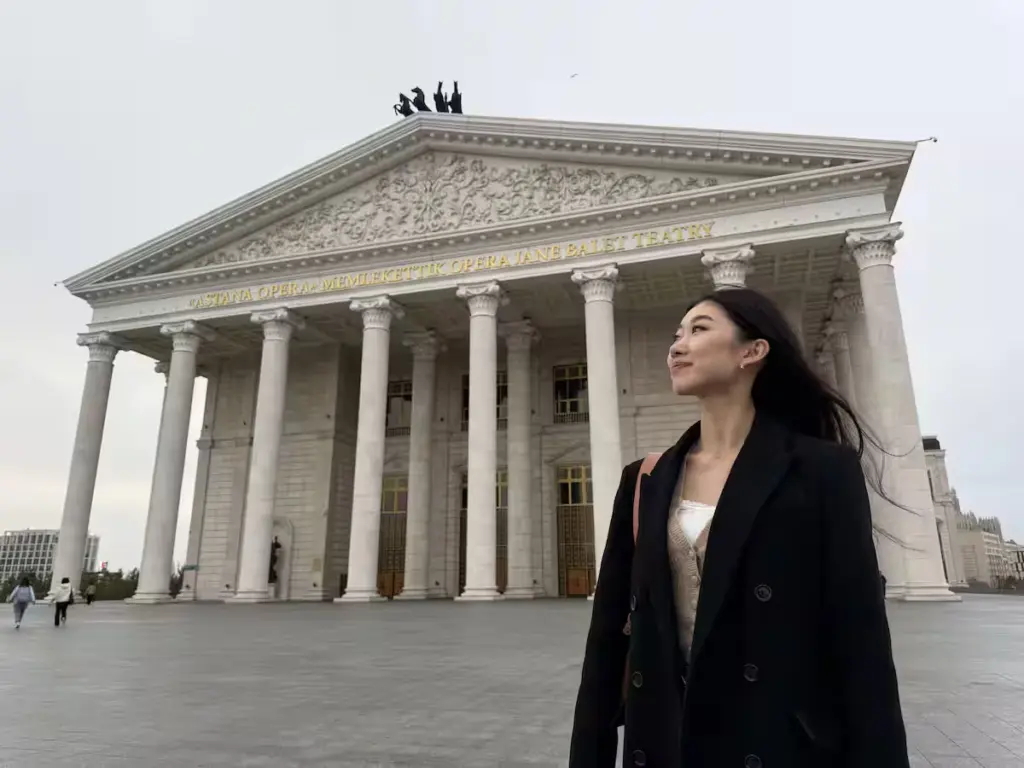
Far from the ballet halls of Russia where she began her career, 27-year-old Japanese ballerina Madoka Yano has found a new stage in Kazakhstan.
Yano once performed at one of Russia’s leading ballet institutions. But after the Russian invasion of Ukraine in 2022, she decided that same year to leave for Kazakhstan, where she now belongs to Astana Opera.
Many artists have left Russia since the invasion. Yano hopes the war will end soon, saying it has “closed the door to the wonderful world of Russian art.”
Finding A New Stage
Astana Opera opened in 2013 and is the largest opera house in Central Asia. Talented singers, musicians, and dancers gather there from the former Soviet bloc, Europe, and Asia. Standing before the theater’s imposing white building, Yano described its appeal.
“It has a significance unique to the Kazakhs, a Turkic people with nomadic roots,” she said.
According to Seika Tonosaki, a former ballet dancer who helps students study ballet in Kazakhstan, the country also has theaters in Almaty, its largest city. Students included, there are several dozen Japanese people involved in ballet in Kazakhstan, and interest in the country is growing, she said.
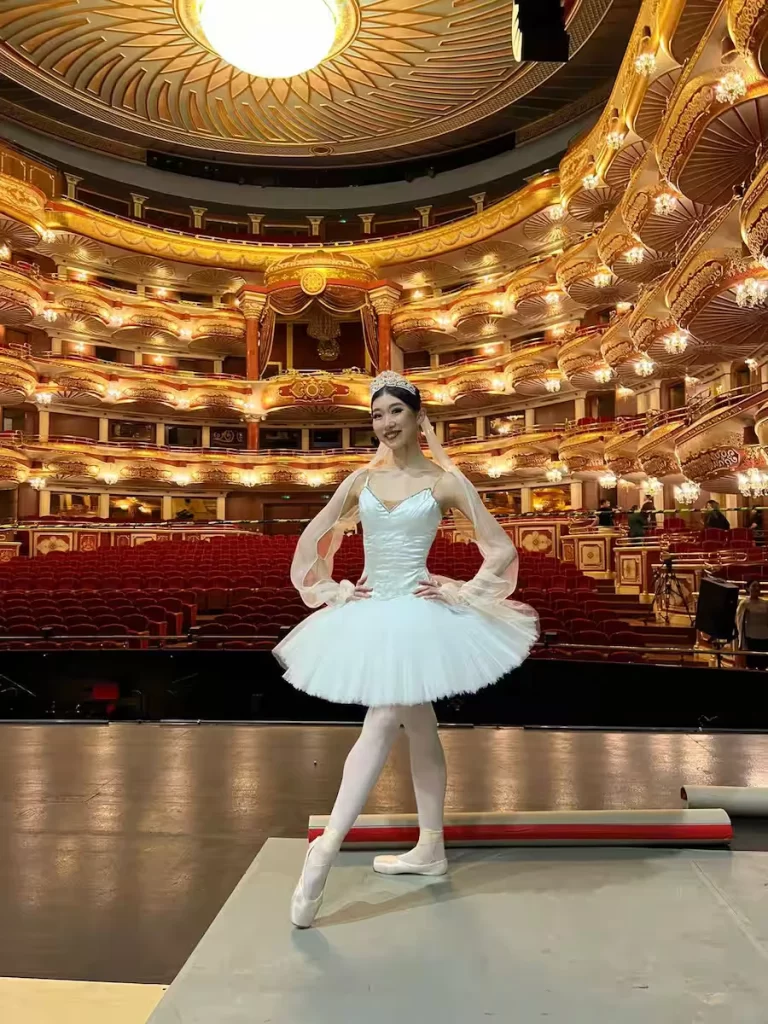 Madoka Yano performing at Astana Opera, the largest theater in Central Asia. (Photo courtesy of Yano)
Yano is a member of the corps de ballet, which performs group pieces, but she has also appeared as a soloist.
“Here, you can find not only Russian-style beauty but also the strength and breath of Central Asia,” she said. “It’s demanding because we dance more than three productions a month, yet that also becomes experience. I’m glad I came here.”
The Stage She Left Behind
Yano began her professional career in Russia. While studying ballet in Portugal as a second-year high school student, a Russian teacher encouraged her to audition for the Primorsky Stage of the Mariinsky Theatre, a prestigious ballet company in Vladivostok in Russia’s Far East.
She passed the audition and spent nearly five years from 2017.
Russia is also known as a sacred place for ballet, home to some of the world’s finest institutions, including the Bolshoi Theatre.
“Russian ballet has many classical works and places great emphasis on long, elegant lines and visual beauty,” Yano said. “It has a kind of appeal that is different from Western ballet, where modern works are more common.”
“I have never lost my respect for Russia,” she added.
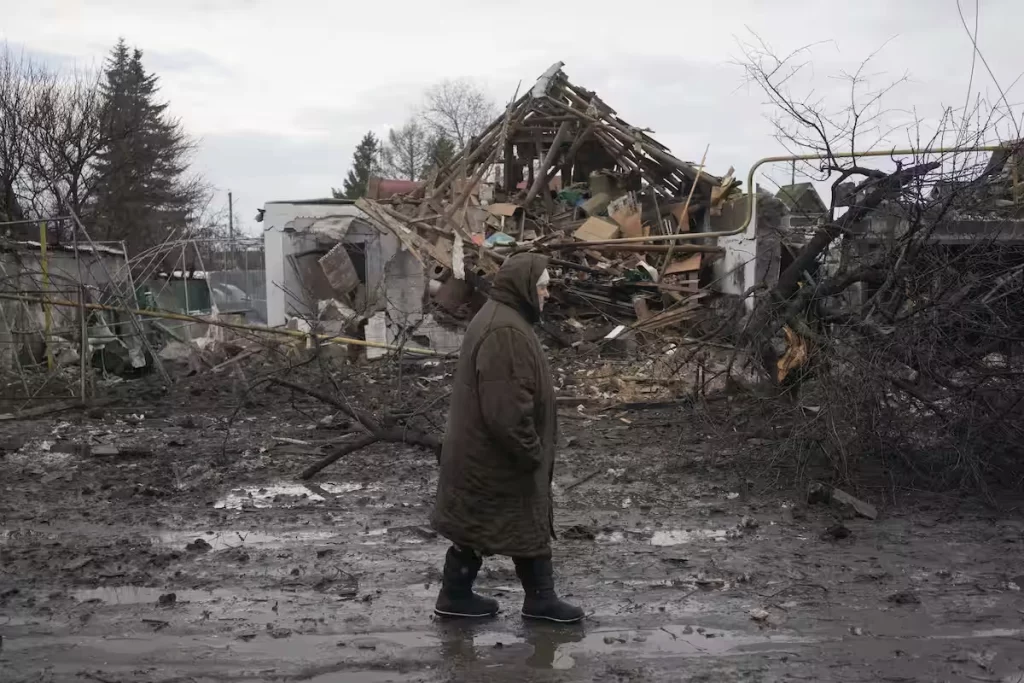 A person walks past a house destroyed by a Russian drone in Zaporizhzhia, southern Ukraine. (©Getty/Kyodo)
Russia’s invasion of Ukraine in 2022, however, forced Yano to reconsider her future there. In Russia, dancers are treated as state employees and receive government salaries.
“I felt uncomfortable receiving a salary from the country that had started the invasion,” she recalled. “I had already begun thinking about moving elsewhere, but the invasion became the decisive reason for leaving Russia.”
Many performers left Russia after the invasion. Olga Smirnova, a former prima ballerina at the prestigious Bolshoi Ballet whose grandfather was Ukrainian, moved to the Dutch National Ballet. Other dancers and musicians also shifted their careers abroad.

Art Beyond the Battlefield
In Ukraine, efforts to shed Russian cultural influence have accelerated. Some theaters have also sought to remove Russian-style works from their repertoires.
Yano laments that trend. “That feels wrong, too. Art itself is not guilty,” she said.
“It’s truly sad that wonderful Russian culture has been closed off by the war and pushed away from the world,” she added.
Some Japanese dancers remained in Russia even after the invasion. Four years on, some have begun to return, while many others have chosen not to. The war continues to force each performer to confront a difficult question of where to build a future.
Still, works and beautiful movements passed down over many years will not simply disappear because of war.
“I hope peaceful times will return, when civilians and art are no longer divided by war,” Yano said.
With that wish in her heart, Yano continues to dance in Kazakhstan, drawing strength from the experience she gained in Russia.
RELATED:
Author: Tomo Kuwamura, The Sankei Shimbun
(Read this article in Japanese)
Continue Reading