
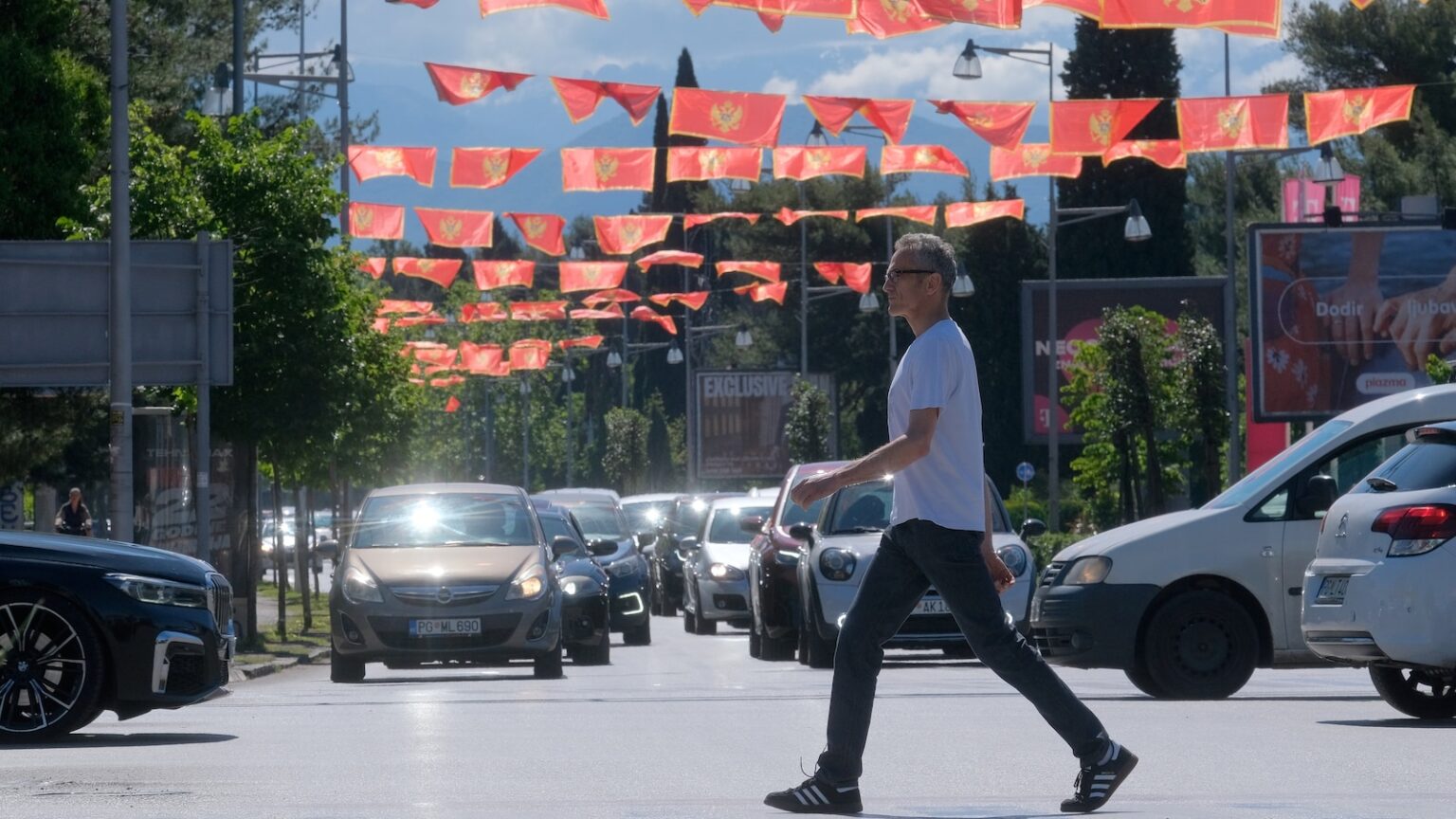
Red and gold flags blanketed Independence Square as citizens celebrated exactly twenty years since voting to break free from Serbia. Yet beneath the fireworks, a bitter diplomatic feud with Belgrade serves as a stark reminder of unresolved historical wounds.
As Montenegro commemorates two decades of sovereign existence, the tiny Balkan nation stands at the absolute precipice of a monumental geopolitical transformation. Having already secured NATO membership, the state is aggressively pursuing integration into the European Union by the end of the decade. For a region deeply scarred by war and political paralysis, Montenegro’s rapid ascent serves as a vital blueprint for democratic transition—even as the shadows of its former union violently resist its forward momentum.
Two Decades of Complex Sovereignty
The modern state of Montenegro was birthed through a highly contested, razor-thin democratic mandate. On May 21, 2006, precisely 55.5 percent of the voting public opted to dissolve the State Union of Serbia and Montenegro, narrowly surpassing the strict 55 percent threshold mandated by international observers to validate independence. The vote effectively erased the final remnants of the former Yugoslavia from the political map of Europe.
The immediate post-independence era was characterized by the suffocating dominance of the Democratic Party of Socialists, led by entrenched political strongman Milo Djukanovic. For fourteen years, the nation navigated severe accusations of institutional corruption, state capture, and deep entanglements with transnational organized crime. However, the nation proved its democratic resilience in 2020, executing a peaceful, electoral transfer of power that ousted the old guard and radically accelerated the pace of vital anti-corruption reforms.
Today, President Jakov Milatovic operates from Podgorica with a mandate to finalize the nation’s Western integration. Speaking from the presidential office during the anniversary festivities, Milatovic categorized the nation’s 2017 accession to NATO as the foundational pillar of its national security architecture, providing the essential stability required to pursue complex economic modernization.
The ’28 by 28′ European Horizon
The absolute central focus of the Montenegrin government is the fulfillment of a highly ambitious diplomatic campaign dubbed “28 by 28″—the quest to become the 28th member state of the European Union by the year 2028. The slogan is so deeply ingrained in the national consciousness that it has been physically painted onto the fuselage of the state’s national airline.
Within the notoriously sluggish bureaucracy of Brussels, Montenegro is universally recognized as the absolute front-runner among the six Western Balkan candidate nations. The nation has successfully negotiated vast swaths of the accession process, recently unblocking critical chapters related to financial control and judicial reform. The European Union has specifically assembled a dedicated task force to begin drafting a formal accession treaty, signaling that integration is no longer a distant aspiration, but an impending administrative reality.
The statistical metrics driving this unprecedented expansion are meticulously tracked by European diplomats:
- Montenegro operates with a population of approximately 623,000 citizens, presenting a highly manageable economic integration profile for Brussels.
- The state has successfully closed 13 of the 33 highly complex negotiating chapters required for EU entry.
- The 2006 independence referendum was secured by a margin of just 0.5 percent above the internationally mandated minimum threshold.
- The government projects a complete closure of all outstanding European regulatory frameworks by the end of 2026.
Belgrade’s Bitter Refusal
While Podgorica gazes toward Brussels, the view from Belgrade remains deeply hostile and consumed by historical grievance. The 20th anniversary celebrations triggered a vicious diplomatic meltdown, highlighting the enduring inability of the Serbian political elite to psychologically process the loss of their access to the Adriatic Sea.
Serbian President Aleksandar Vucic sparked absolute outrage by publicly declining an official invitation to the festivities in Podgorica. Utilizing highly inflammatory rhetoric, Vucic declared that attending the event would be akin to “spitting in the face” of his own people, framing the celebration not as the birth of a nation, but as a tragic secession from the Serbian motherland. The Montenegrin Foreign Ministry responded with calculated restraint, refusing to escalate the feud while firmly reiterating that Montenegro restored a historic sovereignty that preceded any union with Serbia.
Lessons for Emerging Nations
The geopolitical tug-of-war playing out in the Balkans holds profound relevance for state-building exercises across the Global South. Nations across the African continent—most notably South Sudan, which achieved independence via referendum in 2011—often look to the Balkans as a case study in managing post-separation statehood.
Montenegro’s trajectory proves that escaping the orbit of a deeply aggrieved former partner requires immense institutional discipline and the rapid anchor of international alliances. By immediately aligning its military structures with NATO and its economic destiny with the European Union, Montenegro successfully insulated itself from the worst forms of regional destabilization. As the fireworks illuminate the Adriatic coastline, the tiny republic stands as a powerful testament to the enduring triumph of democratic resilience over historical resentment.