
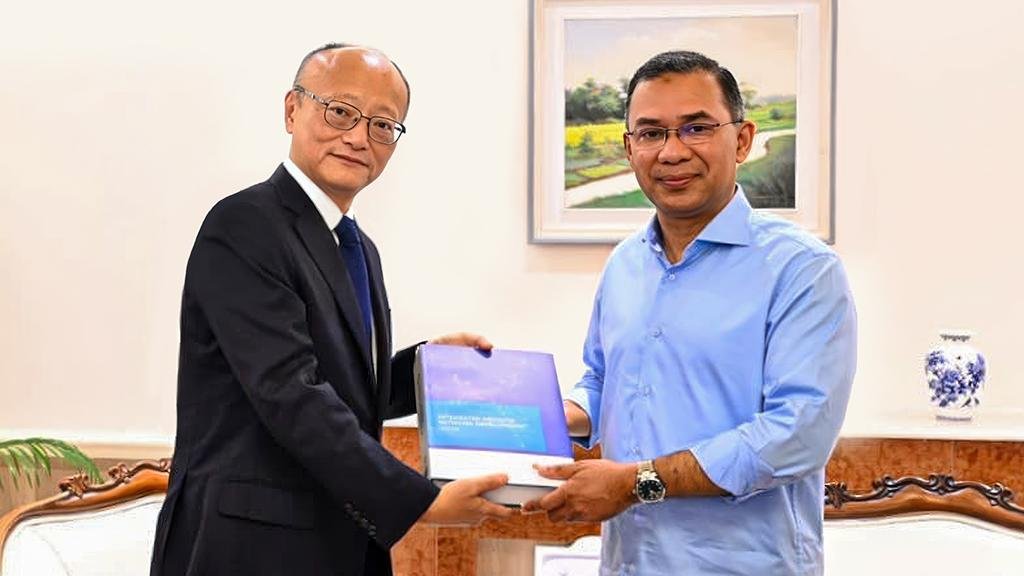
Dhaka (TDI): The Asian Development Bank has pledged a $5 billion, five-year financing package to Bangladesh, announced during a visit by the bank’s President, Masato Kanda, to Dhaka on Monday.
Kanda met Prime Minister, Tarique Rahman, to discuss Bangladesh’s development priorities in a visit that highlighted the landmark funding commitment. The announcement marks one of the most significant multilateral financing pledges to the country in recent years.
The package was announced under the Integrated Growth Network Development Initiative and is designed to expand investment, create jobs, improve connectivity, and support economic diversification.
At approximately $1 billion a year, it will be integrated into ADB’s enhanced annual sovereign commitment envelope for Bangladesh.
As part of the visit, ADB signed roughly $1.4 billion in loans under its 2026 annual commitment program. The $1.4 billion will be channeled into four projects: the Strengthening Economic Management and Governance Program, the Second Strengthening Social Resilience Program, the SASEC Dhaka-Sylhet Corridor Road Project, and the Narayanganj Green and Resilient Urban Development Project.
Read More: ADB President Offers the Philippines $1.75B in Crisis Support
Bangladesh’s import-dependent economy is grappling with the fallout from the US-Israeli war on Iran, which has pushed up prices of fuel, liquefied natural gas, fertilizer, and shipping.
Inflation remains elevated, while the banking sector faces ongoing liquidity stress. In response, ADB scaled up support by $250 million to help address financing gaps linked to those economic pressures.
ADB also pledged to raise its annual sovereign commitments by 20%, from about $2.0 billion to $2.4 billion, and said it would work with the government and development partners to mobilize additional financing and private investment, while helping diversify Bangladesh’s energy sources, exports, and institutions.
ADB will also provide $2 million in technical assistance to support the preparation of Bangladesh’s medium-term development framework and align its forthcoming country partnership strategy with government priorities.
Read More: WFP to Strengthen Food Security for Rohingya Refugees in Bangladesh
Kanda also met Finance and Planning Minister Amir Khosru Mahmud Chowdhury, with discussions centered on Bangladesh’s reform agenda, macroeconomic pressures, external financing needs, and ADB’s support for the government’s growth and resilience priorities.
He also met with key private sector leaders to discuss investment opportunities and constraints. “Bangladesh is entering a critical new phase,” said Kanda.
“ADB will help the country protect hard-won stability, unlock new sources of growth, and build a more diversified and resilient economy that delivers better jobs and wider opportunity.”
The financing will support Bangladesh’s development priorities, including investment-led growth, job creation, economic diversification, stronger governance, and a smooth transition from least developed country status.
