
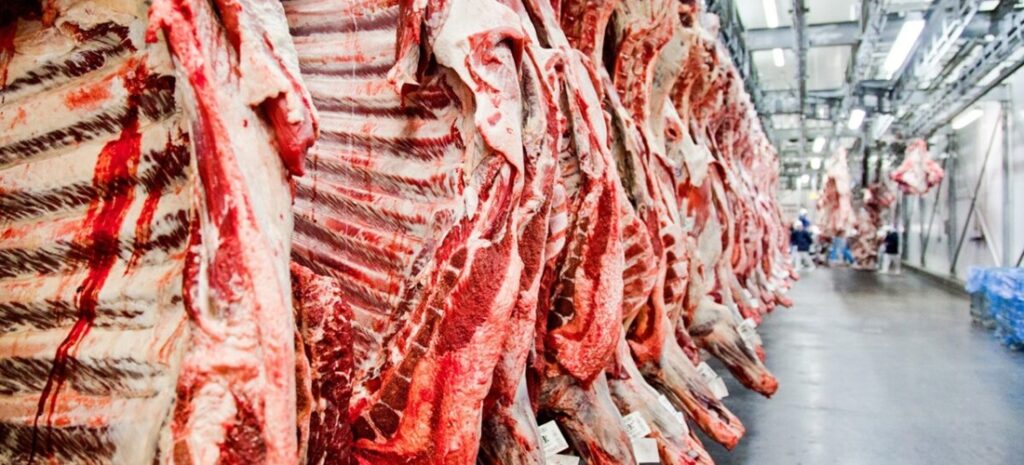
The European Union’s decision to remove Brazil from the list of countries authorized to export meat, poultry, eggs and honey has reignited a debate that goes beyond trade protectionism: the use of antimicrobials in animal production. Although the dispute is tied to negotiations over the Mercosur-European Union agreement, experts say concerns over bacterial resistance are real and are becoming increasingly important in international trade.
Researchers from São Paulo State University’s School of Veterinary Medicine and Animal Science say antimicrobials, including antibiotics, are used in animal production to treat disease, prevent infections and also as growth promoters — the practice at the center of European criticism.
“The European Union’s main point of concern today is precisely the use of antibiotics as growth promoters,” said Professor Fábio Sossai Possebon. “The issue is not so much the treatment of sick animals, but the indiscriminate use of these products to improve production performance.”
According to the researchers, the main problem is the increase in bacterial resistance: the more intense and frequent the use of antibiotics, the greater the chance that microorganisms will emerge with resistance to drugs used in both veterinary and human medicine. In practice, Europe’s concern involves the presence of antibiotic residues in food and the advance of so-called “superbugs.”
Brazil’s Ministry of Agriculture maintains residue-monitoring programs for meat, milk and eggs, but experts say controls are still based on sampling and that the country needs to make progress in monitoring bacterial resistance throughout the entire production chain.
“Brazil has one of the best inspection systems in the world, and that needs to be valued. But historically, we have been more permissive than Europe in the use of these compounds,” said Professor Juliano Gonçalves Pereira. “The international market is sending a clear message that antimicrobial resistance will become increasingly decisive in trade relations.”
Check below the evolution of Brazilian beef exports to the European Union in recent years. The chart, prepared with DataLiner data, shows the behavior of containerized shipments to the European bloc and helps illustrate the relevance of the European market for Brazil’s animal protein sector.
Brazilian Beef Exports to the European Union | 2023-2026 | TEUs
Source: DataLiner (Click here to request a demo)
The researchers stress that the situation does not necessarily mean Brazilian food is unsafe. Products subject to federal, state or municipal inspection follow strict sanitary standards and pose low risk to consumers.
Antimicrobial resistance emerges when bacteria survive contact with antibiotics, a process accelerated by the excessive or improper use of these medicines.
“The problem is that bacteria evolve faster than we can develop new antibiotics,” Possebon said.
This process can directly affect human health, as resistant bacteria present in food can cause infections that are difficult to treat and increase deaths from bacterial diseases. Beyond animal production, the indiscriminate use of antibiotics in humans and the improper disposal of medicines also contribute to the problem.
To reduce risks, the experts recommend the rational use of antimicrobials, always under technical supervision by veterinarians and qualified professionals.
“The main recommendation is to use these products in a technical way, with professional guidance, respecting doses, duration of use and withdrawal periods,” Possebon said.
They warn that many producers still rely on empirical practices or use antibiotics as growth promoters to compensate for shortcomings in animal management, housing conditions and farm health standards.
“Sometimes producers use antibiotics as a crutch for management problems or a lack of technical sophistication,” Juliano said. “The path now is to invest in animal welfare, health and production efficiency.”
Another point highlighted by the researchers is the proper disposal of packaging and residues from veterinary medicines. Contact between antibiotic residues and the environment can select resistant microorganisms.
“Even the improper disposal of bottles can influence the problem,” Juliano warned.
In late April, Brazil’s Ministry of Agriculture and Livestock published a new ordinance further restricting the use of antimicrobials as growth promoters. The measure is seen as a move toward alignment with international requirements.
“This ordinance signals harmonization with what is already done in Europe,” Possebon said. “It affects the way production is carried out, but the Brazilian sector is already technically advanced enough to absorb these changes.”
The professors argue that the debate should not be reduced to a trade barrier. In their view, there is a legitimate concern involving public health, food safety and the sustainability of animal production.
“Of course there is an economic and political component to this discussion, but antimicrobial resistance is a real problem,” Juliano concluded. “Those who fail to adapt to the new requirements of the international market will end up falling behind.”
Source: Agrimidia, featuring information by Mapa/Unesp/Canal Rural