
Jo Harper
26 May 2026•Update: 26 May 2026
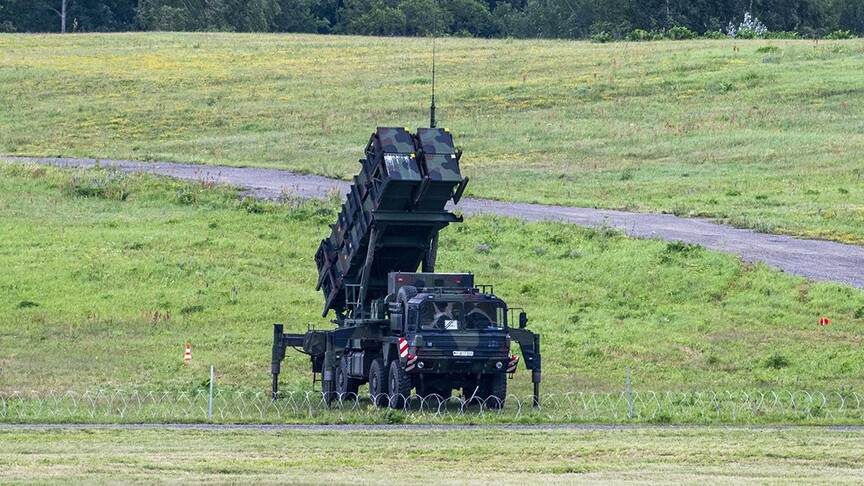
Poland received preliminary approval from the US State Department to begin domestic production of PAC-3 MSE missiles used in the Patriot air defense system, Deputy Defense Minister Cezary Tomczyk said Tuesday, suggesting a possible breakthrough in Warsaw’s long campaign to localize advanced weapons manufacturing.
Tomczyk told TVN24 that US officials had shifted their position after talks in Washington.
“The Americans were initially skeptical about Poles being able to produce PAC-3 missiles for Patriots … now everything is open and we have received preliminary approval,” he said.
The move would strengthen Poland’s role in NATO’s defense supply chain as Washington is under pressure to replenish stockpiles and reassure allies about long-term military commitment in Europe.
If implemented, it would also mark a significant departure from American reluctance to transfer production capability for one of its most sensitive air-defense technologies.
The development comes at an unusual moment in US-Polish relations. After weeks of debate about US troop deployments in Europe and renewed discussion in Warsaw about strategic dependence on Washington, the announcement suggests that military cooperation may increasingly move beyond troop presence and procurement toward industrial integration.
Poland has become one of Europe’s biggest buyers of American defense equipment — acquiring Patriots, Abrams tanks, Apache helicopters and HIMARS launchers — but Polish governments across the political spectrum have increasingly argued that purchases should create domestic capability and industrial know-how rather than long-term dependence.
Tomczyk suggested discussions extend beyond Patriot missiles. US officials also expressed interest in scenarios in which Poland could manufacture long-range munitions for HIMARS systems and Hellfire missiles used by Apache helicopters, according to his comments.
For Washington, the calculation appears increasingly shaped by supply constraints. Production of PAC-3 MSE interceptors remains limited, while demand has surged following military aid to Ukraine, growing procurement by European allies and efforts to rebuild US inventories after recent operations in the Middle East.
Defence24 reported that annual output stands at roughly 700 missiles, with US ambitions to increase production substantially by the end of the decade.
Countries once treated primarily as customers are increasingly presenting themselves as production partners. Germany has also sought a role in Patriot missile production, while European governments, more broadly, have pushed for greater localization of strategic manufacturing following lessons from the war in Ukraine.
Poland’s defense sector has already expanded in recent years, and Warsaw has repeatedly argued that its geography, close to Ukraine and NATO’s eastern flank, strengthens the case for locating production in Poland.
The question is whether the proposal develops into full manufacturing capability or remains limited to selected components and servicing.