
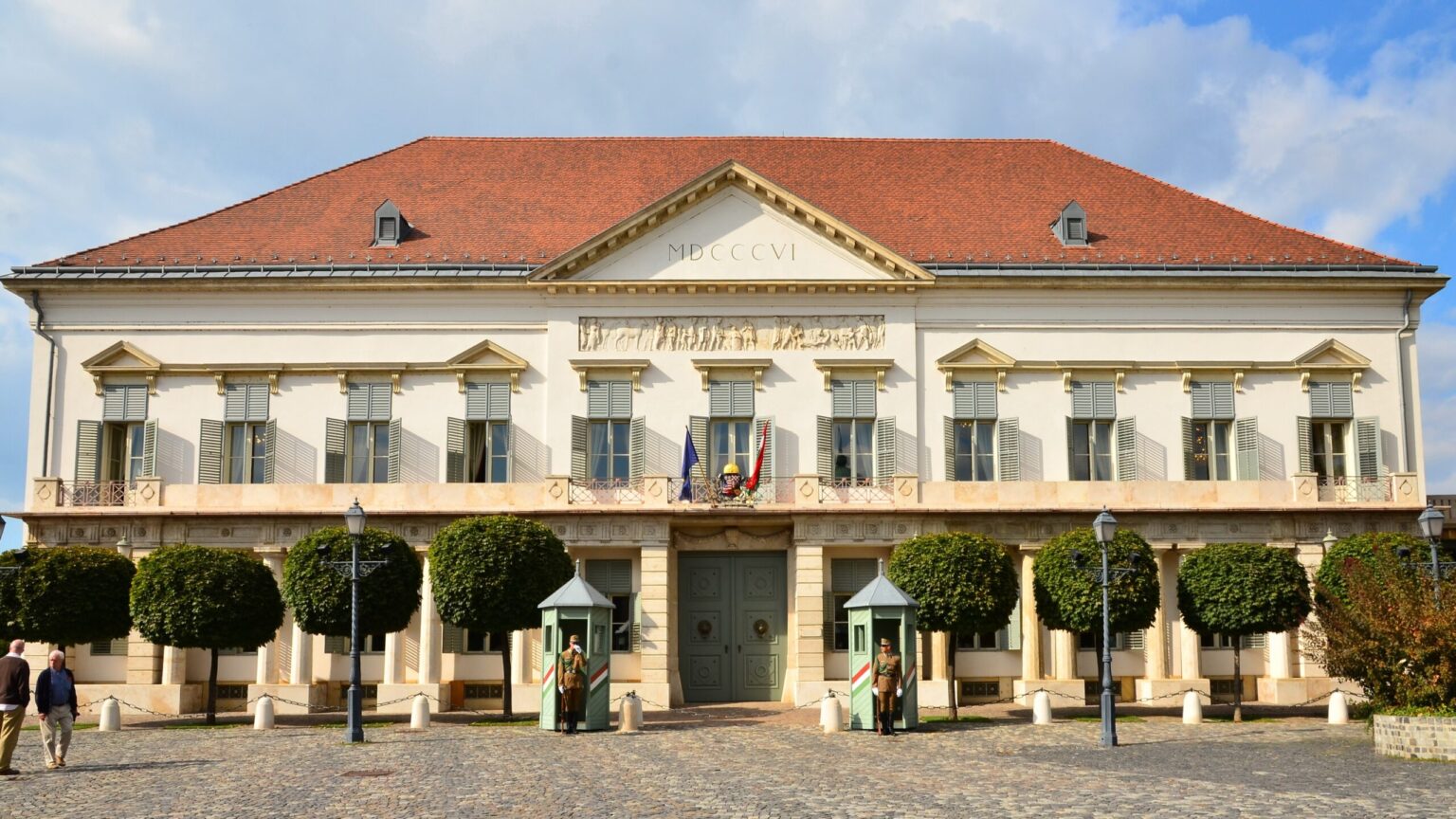
In the heart of the Castle District of Budapest, overlooking the Danube from Szent György Square, stands one of Hungary’s most emblematic historic buildings, the Sándor Palace. The palace has witnessed the rise and fall of empires, revolutions, wars, and governments.
The Legend of the Reform Era
The palace was commissioned by Count Vince Sándor and completed in 1806. Historians still debate whether the architect was the Viennese Johann Aman or the Hungarian architect Mihály Pollack, designer of the Hungarian National Museum.
Count Móric Sándor, born in the palace in 1805, became one of the great legends of Reform Era Hungary. Frail as a child and reportedly kept away from horses by his overprotective family, he developed an obsessive passion for riding after his father’s death. He neither drank nor gambled, nor was he known for romantic scandal; horses became the sole consuming force of his life.
Recently, Péter Magyar visited the Sándor Palace and reflected on the building’s most legendary former resident in a social media post. Magyar shifted attention away from the palace’s current resident and toward its aristocratic past, writing: ‘Allow me this time not to write about the temporary resident of the Sándor Palace, but about the true former owner of this magnificent building.’
He recalled how the young count had been a weak and frail child who, by his own account, was not even allowed near horses until after his father’s death. Yet, as Magyar noted, ‘his only passion was riding.’
Nickname Given by an English Observer
Móric Sándor rode with fearlessness. According to contemporary accounts cited by Magyar, he vaulted over obstacles bareback, jumped onto moving ferries from the riverbank, galloped up staircases leading into Buda Castle, and rode into aristocratic salons and inns alike.
In Pest, he famously leapt between moving carriages in the city streets. In England, he reportedly tamed a horse considered unrideable and then proceeded to win races with it.
An English observer supposedly remarked after witnessing one of his feats: ‘This is not a man, this is a devil.’ The nickname remained with him for the rest of his life.
The ‘Devil’s Horseman’ became one of the great celebrity figures of the 1820s and 1830s. His exploits circulated in newspapers throughout Europe, illustrations of his performances appeared in shop windows, and his wagers with Count István Széchenyi became the stuff of Hungarian legend.
Horse Racing Culture in Hungary
Beyond spectacle, however, Sándor also contributed to the modernization efforts of the Reform Era. Alongside Széchenyi, he supported the development of Hungarian horse racing culture, and according to Széchenyi’s own diary, Sándor was among the first to suggest constructing a permanent bridge between Buda and Pest, the future Chain Bridge.
Yet his passion carried a heavy price. He gradually sacrificed much of his fortune for horses and riding. In 1831, he sold the Sándor Palace itself to the Pallavicini family, one of the great aristocratic dynasties of the Habsburg realm.
A few years later he married Leontine von Metternich, daughter of the powerful Austrian statesman Prince Klemens von Metternich, binding the Sándor family to the highest circles of imperial politics.
Ironically, the man who spent his life mastering danger was ultimately destroyed by it. In 1850, near Linz, Sándor suffered a catastrophic head injury after falling from a carriage during a high-speed ride. The injury likely contributed to severe mental decline in his later years. He spent years in psychiatric institutions in Prague and Döbling before dying in Vienna in 1878.
Related articles: