

27
May 2026
Nearly 7,000 travelers were caught overstaying their welcome in Europe’s Schengen area during the first six months of the European Union’s new digital border system.
The figure comes from the annual State of Schengen report, released the week of May 20, 2026. The Entry/Exit System (EES) flagged the overstays after launching last October.
Numbers tell story
Overstayers are people who stayed longer than their permitted time limit. That usually means travelers who blew past visa limits or broke the “90-day rule,” which lets many non-EU visitors stay a maximum of 90 days in any 180-day period.
The EU did not break down why the roughly 7,000 were classed as overstayers. Penalties range from a fine to a ban on entering the EU.
The broader numbers show how busy Europe’s borders have been. More than 66 million entries and exits of non-EU nationals were recorded since October.
About 32,000 people were refused entry to Schengen territory in that span. Nearly 800 were stopped because they were considered a threat to internal security.
Travel demand stayed strong through it all. The Commission noted that the Schengen area remained the most visited destination in the world in 2025, drawing more than 790 million travelers.
Stamps out, scanners in
EES is the EU’s replacement for manual passport stamping. It digitally records the entry, exit, and refusal of entry of non-EU nationals traveling to the Schengen area for short stays.
The system shares that information in real time across Schengen countries. It went live on October 12, 2025, with a gradual roll-out, then became fully operational across the area on April 10, 2026.
The tech does the math automatically. It calculates length of stay from entry and exit dates, so overstayers get flagged the next time they try to cross an external border.

(Image courtesy of Pressmaster via iStock)
First report lands
eu-LISA, the EU agency that runs the system, published its first quarterly statistics report on May 18, 2026. It covered October 12 to December 31, 2025, and was the first report required under Article 63(4) of the EES Regulation.
The quarter logged 8,180 refusals of entry, 283 revoked authorizations for stay, and 479 extended authorizations. Another 492,345 travelers were exempt from giving fingerprints.
Refusals by nationality were led by Ukraine at 2,455, followed by Albania at 968 and Moldova at 606. The most common reason for a refusal was that the purpose and conditions of the stay were not justified, which accounted for 2,576 cases, or 31.49% of the total.
Revoked authorizations clustered among a few nationalities. Belarus topped that list at 43, with Türkiye at 36 and Moldova at 35.
Two reports, two pictures
The quarterly report and the six-month Commission figures don’t line up neatly, and the totals differ.
The quarterly report covers only the roll-out period and pulls data from border crossing points that were operational at the time. That means it doesn’t show the full operational picture.
It also reported no data on overstayers or duration of stay. The automated tools couldn’t produce reliable numbers while the system was still being phased in.
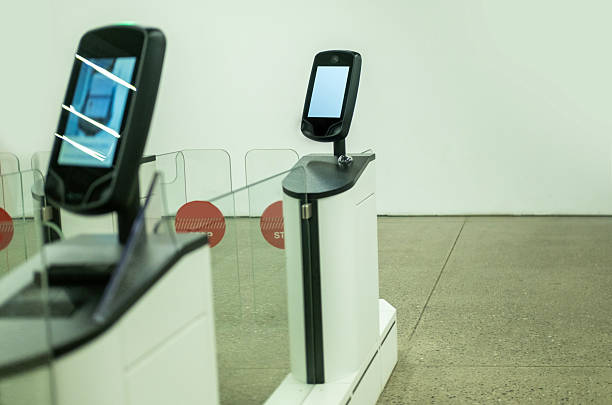
(Image courtesy of Victor Golmer via iStock)
Bumps along the way
The roll-out has hit snags. As of April 10, 2026, the system was supposed to be fully operational, but it remained out of action for travelers in many places, especially the main entry points to France from the UK.
The Commission said that most Schengen states implemented EES effectively and surpassed required registration thresholds. It also acknowledged trouble spots.
Some countries “experienced challenges related to infrastructure, for example with the functioning of self-service systems, the capacity to fully register the biometric data, and the congestion of flights in specific time slots,” the Commission stated.
The option to pause EES was used sparingly. “The option to temporarily suspend the operations of the EES, either fully or partially, was exercised only on a limited number of occasions,” the report noted.
Airports and the travel industry have raised flags. They warned of possible delays and asked for flexibility heading into the busy summer season.
Pushback at borders
The 90-day rule has stirred real friction on the ground. In early February 2026, drivers from the Western Balkans blocked Schengen border crossings over concerns that stricter enforcement would make regular work in the EU impractical.
UK transport and logistics groups pushed back too. They urged the Commission to suspend penalties tied to the 90/180-day rule, warning of driver shortages and supply-chain disruption.
The Commission has signaled some openness. In January 2026, it announced it would look into letting certain non-EU professionals stay beyond the current 90/180-day limit.
So the roughly 7,000 overstayers and roughly 32,000 refusals cited in the State of Schengen report come from the wider six-month figures. They are separate from the quarterly report’s 8,180 refusals.

(Image courtesy of krungchingpixs via iStock)
Next stop, ETIAS
The Commission’s priorities for 2026 and 2027 include launching the European Travel Information and Authorization System (ETIAS). It is expected at the end of 2026.
ETIAS will require visa-exempt short-term visitors to get a travel authorization before they depart. The Commission framed early coordination as essential to getting it right.
“Preparations are progressing, with coordinated efforts underway at EU and national levels to ensure ETIAS’ effective roll-out. Early involvement of travel industry stakeholders is crucial for the success of this endeavour,” the report stated.
For now, EES is the system reshaping how millions cross Europe’s borders. The first six months suggest that the digital net is already catching people the old paper stamps used to miss.