
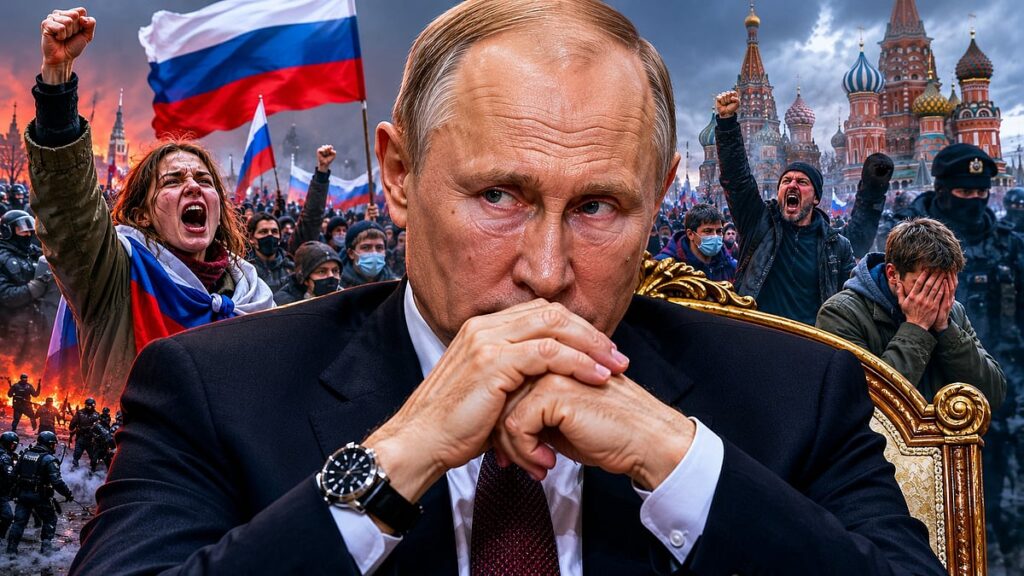
A former banker. A partisan sabotage group. A resistance movement embedded inside Russia’s most powerful institutions. What was once dismissed as fringe dissent is beginning to look like a structured challenge to Vladimir Putin’s grip on power. The anti-Putin movement is now making bold public claims, carrying out verifiable attacks on energy infrastructure, and recruiting from within the Russian elite.
Igor Volobuev, a former vice president at Gazprombank, defected to Ukraine in 2022 and has since emerged as the public face of Black Spark, a covert anti-regime group. He calls for the violent removal of Putin and the dismantling of Russia’s imperial structure, framing it not as rebellion but as liberation, as per MSN news.
Black Spark reportedly comprises professionals, activists, and combat veterans embedded in influential positions across Russia, including inside state-linked energy firms. The group’s stated strategy prioritises targeting Russia’s oil sector to drain the financial engine powering the Kremlin’s war machine.
The pro-Ukrainian partisan group Atesh claimed it sabotaged communication towers and a transformer substation in Novorossiysk on 23 May, disrupting air defence systems ahead of a Ukrainian drone strike. Ukraine’s military confirmed subsequent attacks on two major oil terminals, causing fires and degrading Russia’s ability to detect low-flying drones.
Both Black Spark and Atesh are focusing deliberately on oil and energy assets, which fund a significant portion of Russia’s federal budget. Sustained disruption of fuel supply chains could compound the economic pressure already building from Western sanctions.
Lukashenko stated his forces would only join the war if Belarus were directly attacked, while offering to meet Zelenskyy. Kyiv rejected the overture, citing Minsk’s role in facilitating Russia’s 2022 invasion.
The anti-Putin movement remains limited in public profile and reliant on clandestine operations. But verified sabotage, elite defections, and insider access suggest the Kremlin’s vulnerabilities run deeper than Moscow is willing to admit.
(With inputs from yMedia)