
The call was made following a new report and survey out today (May 27, 2026) from Make UK which shows manufacturers’ widespread dissatisfaction with the current system, which it describes as ‘not fit for purpose’, is overly complex and is leading to delays and increased costs. The report shows that these factors are actively deterring business investment.
In response, Make UK is calling for much faster and bolder action than is currently taking place with the Planning and Infrastructure Bill, in particular giving stronger strategic or mayoral powers to improve delivery and align land, infrastructure and industrial priorities. Furthermore, Make UK is calling for strategic manufacturing and other major infrastructure projects to be fast tracked.
In a statement, Faye Skelton, head of policy & campaigns at Make UK, said: “In the context of an industrial strategy focused on productivity, regional growth and the energy transition, ensuring the planning system supports manufacturing investment is essential. Yet, the current system is not fit for purpose and is too often a source of friction rather than a driver of growth.
“While government has recognised many of these challenges and is pursuing a significant programme of planning reform, the experience of manufacturers suggests a gap between policy intent and reality. Many still encounter a system that is slow, cumbersome and difficult to navigate. If government is to deliver on its number one mission to boost growth it must now go further and faster, ensuring planning shifts from being a barrier to a driver.”
According to the report 46 per cent of companies believe the current planning system is hampering the UK’s economic potential with 14 per cent believing the current system supports growth.
Furthermore, 43 per cent of manufacturers say the planning system slows their ability to grow or invest. According to Make UK this shows that planning isn’t just influencing investment decisions, it’s slowing them down.
The biggest barriers are the complexity of regulations (48 per cent), the cost of compliance (44 per cent), and inconsistent decisions across authorities (38 per cent). To help address this, 65 per cent of companies say coordinated regional planning would make it easier to expand, while 53 per cent say lower application and compliance costs would make it easier for businesses to invest.
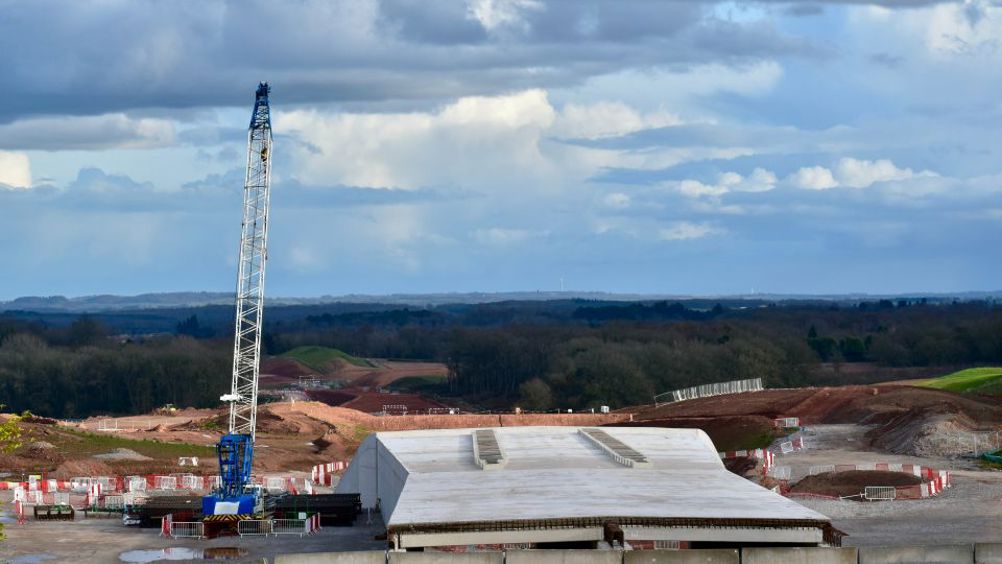
Environmental requirements are also a growing source of friction in the planning system. Over half of manufacturers (54 per cent) say they create obstacles at least occasionally, with 14 per cent experiencing this frequently. While not universal, the impact is significant, particularly in sectors facing more stringent requirements. Make UK pointed to the estimated £100m spend on a tunnel on the HS2 project to protect bats.
Make UK has made five recommendations to address barriers in the current planning system. The organisation is calling for the introduction of a “Manufacturing Growth Test” to assess whether planning reforms are reducing costs, complexity and uncertainty for businesses seeking to invest, expand and decarbonise. It also wants strategic manufacturing projects and regions, particularly those linked to productivity, net zero and supply chain resilience, to be fast tracked through the planning process.
In addition, Make UK is urging the government to end what it describes as ‘postcode planning’ by introducing stronger national rules to reduce uncertainty and inconsistency between local authorities. The organisation also wants the cost and complexity of planning applications to be reduced in order to speed up and simplify the process for businesses. Finally, it is calling for environmental processes to become more predictable and proportionate, moving away from what it says is a case-by-case negotiation approach.
The survey of 196 companies was carried out between 20 March and 10 April.