
SULLIVAN’S ISLAND, S.C. (WCSC) — Sea turtle nesting season is officially underway in South Carolina, and students at Sullivan’s Island Elementary School are already stepping up to help protect Sullivan’s Island’s first sea turtle nest of the 2026 season.
The nest was discovered just steps from the school last Friday, turning beachside lessons into hands-on conservation work for students and teachers.
At the coastal environment partial magnet school, students regularly learn outdoors along the shoreline. Now, they are using those lessons to help sea turtle hatchlings safely make their way to the ocean.
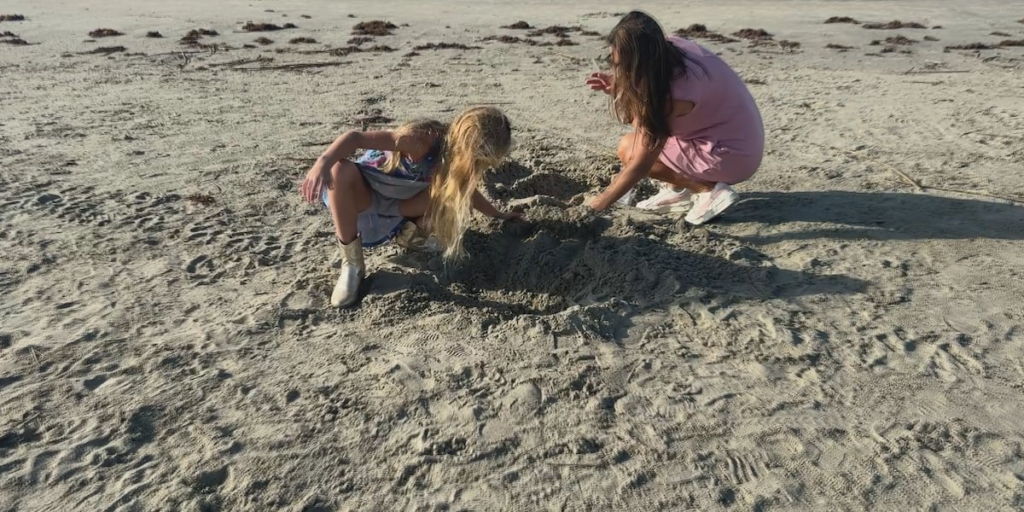
Since the nest was discovered, students have been picking up litter, filling in holes in the sand, knocking down sand castles and moving beach equipment that could block hatchlings after they emerge. Students and teachers also remind beachgoers to give marked nesting areas plenty of space and avoid disturbing sea turtles along the beach.
Sea turtles are considered a threatened and endangered species depending on the population, and conservation efforts along the coast are critical to improving their survival rates.
South Carolina’s sea turtle nesting season runs from May through October, with loggerhead sea turtles making up the vast majority of nests found along the coast. Sea turtles are protected under both state and federal law, and, according to experts, artificial lights, beach debris, deep holes in the sand and getting too close to nesting turtles can all create dangers for sea turtles and hatchlings.
Science teacher Meghan Galipeau said the school’s location gives students a unique opportunity to become environmental stewards while also educating others in the community.
She said that proximity to the beach allows students to learn that stewardship in a very direct way.
“One of the things we really try to teach our students is that because of our proximity to the beach, we have this really special opportunity to be environmental stewards and raise the next generation of environmental stewards,” Galipeau said.
Galipeau added that those lessons extend beyond the classroom and into the community.
“So helping these kids see this up close and personal and see firsthand that this beach is not just for us, it’s shared by all of the animals that live here and how important it is for us to protect it,” she said. “Not only can they learn that, but they can inform their community on how to help protect the beach as well.”
She said students’ enthusiasm for science plays a major role in their engagement.
“These students are really awesome. They love science. They’re really involved and engaged in science,” Galipeau said.
Galipeau said that hands-on learning makes the lessons more meaningful and lasting.
“One of the reasons is because they get to come out and see it happening in real life, and that’s a really powerful experience,” she said. “Our hope is that not just when they’re at school, but also when they’re home during the summer on the beach, they think of the beach environment not just as a place to play, but as a place to learn and a place to protect and teach others to protect as well.”
She also emphasized the risks sea turtles face in the wild.
“The chances of them surviving in the wild are low and it’s very challenging just due to natural causes,” Galipeau said. “When you add in human causes and factors that make it even harder, that really can reduce their success in the wild.”
Even small actions, she said, can have a big impact.
“So any small thing that we can do, it may seem small like picking up one piece of trash or knocking down one sandcastle,” she said. “Those things may seem small, but they have a huge impact on that population as a whole.”
Student Annabelle Rosen said her connection to sea turtles goes back to childhood. She said seeing hatchlings reach the ocean left a lasting impression.
“I grew up with them and on our beach, we saw baby turtles hatch and walk to the sea,” Rosen said. “They were so cute and so special.”
She said those experiences are part of why she feels motivated to help now.
“It was so nice to see the little babies crawl to the sea,” she said.
Rosen said protecting animals on the beach is also about respecting shared space.
“I want to make sure all the animals are safe here too because they’re really my neighbors,” she said. “We have to take care of them if we share the beach with them.”
She also encouraged beachgoers to be mindful of their impact.
“I would say if you want to protect animals, you should pick up all the trash,” Rosen said. “You should never go on dunes in case there’s animals living there. And you should knock down sand castles. If sea turtles are your favorite animal, you should never do anything to affect them.”
South Carolina typically sees thousands of sea turtle nests each season, and coastal communities often remind beachgoers to keep lights off at night, remove chairs and tents before leaving the beach, give nesting turtles space and fill in large holes to help protect nesting turtles.
Students at Sullivan’s Island Elementary said conservation starts with small actions, including keeping beaches clean, respecting marked nesting areas and giving wildlife room along the shoreline.
Anyone who spots a sea turtle nest is encouraged to contact the South Carolina Department of Natural Resources or local sea turtle monitoring groups such as the Sullivan’s Island Turtle Team.
Copyright 2026 WCSC. All rights reserved.