
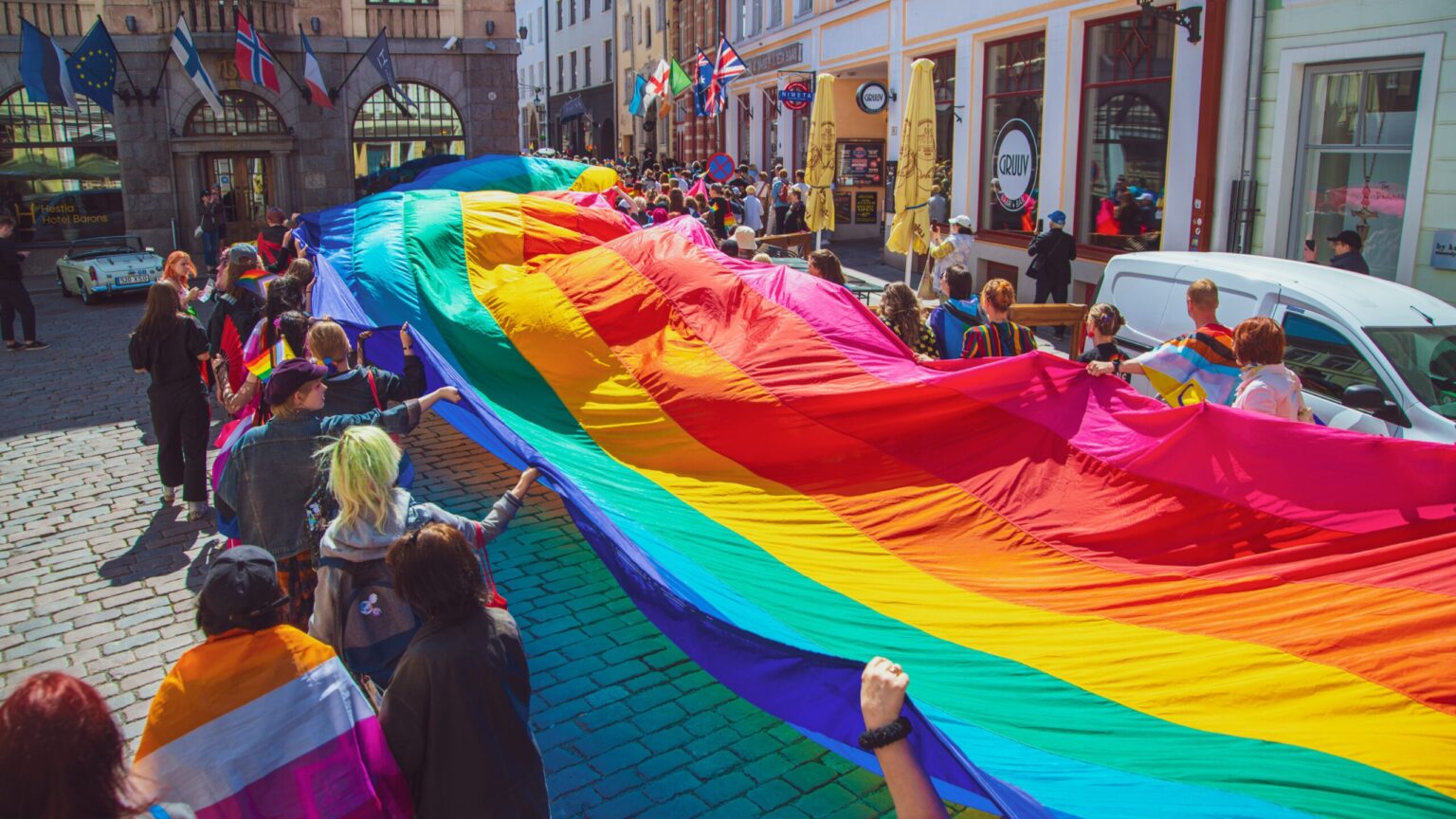
The Estonian Human Rights Centre is backing a legal challenge against the city of Viljandi after its conservative-led government blocked a short public gathering built around a rainbow-coloured artwork about school bullying.
OÜ Põnts, a cultural events company, had planned to unfurl a large rainbow-coloured fabric at the Viljandi Song Festival Grounds on 1 June. The work, created by artists Karl Joonas Alamaa and Lisette Sivard, was part of an exhibition drawing attention to school bullying and was expected to last less than half an hour.
The organisers say they had booked the venue and registered the event with the Police and Border Guard Board as a public meeting. Police permission had been granted. But on 18 May, Viljandi city government decided the gathering could not take place on city-owned land, saying it did not suit “the context of the city of Viljandi” or meet “the expectations of the community”.
Linked to Baltic Pride
Viljandi, a small southern Estonian city known for its folk music festival and the University of Tartu’s Viljandi Culture Academy, has since late 2025 been governed by a coalition of Isamaa and the Conservative People’s Party of Estonia, or EKRE. The city’s mayor, Jaak Pihlak, is from Isamaa, while EKRE holds one of the deputy mayoral posts.
Pihlak has argued that the event was unsuitable for Children’s Day and did not reflect the values of the local community. He has also said that “adult sexual relationships” should not be brought into public space. The organisers reject that framing, saying the artwork was about inclusion, solidarity and the prevention of bullying.
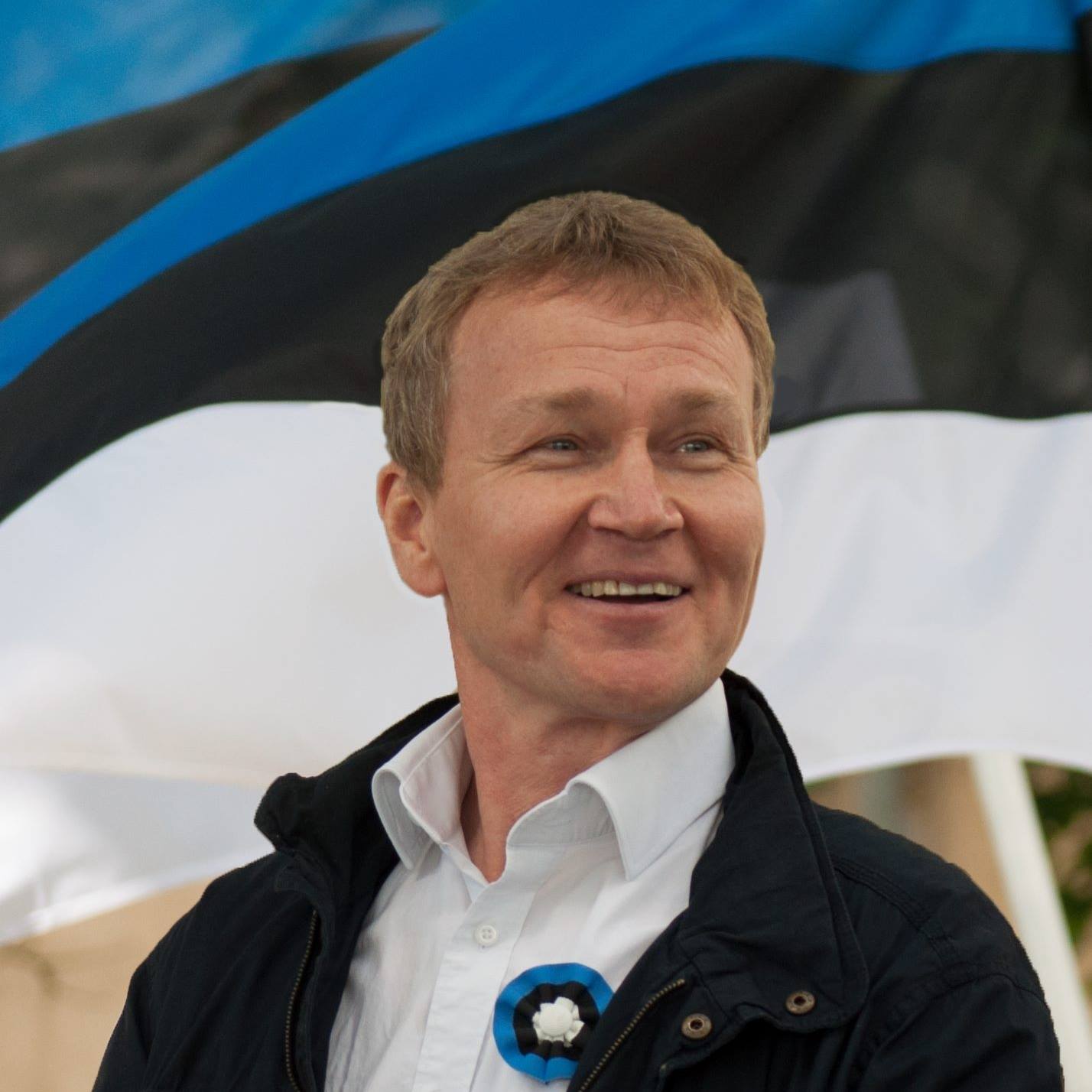 Viljandi mayor Jaak Pihlak. Photo from Jaak Pihlak’s Facebook page.
The dispute is linked to Baltic Pride, the LGBT+ cultural and human rights festival held in Estonia, Latvia and Lithuania since 2009. This year’s events are taking place from 1 to 7 June, mainly in Tallinn, with related actions involving the same rainbow-coloured fabric also planned in Viljandi, Tartu, Tallinn and Narva.
The Estonian Human Rights Centre and Kalle-Kaspar Sepper, the sworn advocate representing OÜ Põnts, say the ban has no legal basis, contradicts the Estonian constitution and amounts to an abuse of public power.
“The fact that a small and peaceful presentation of an artwork addressing school bullying was banned by the city government came as a surprise,” said Eva Maris Küngas, a representative of OÜ Põnts. “I have lived in Viljandi for some time now and have not noticed the community being in any way hostile towards minorities – quite the opposite, I have felt very much at home and safe in this small town.”
Freedom of assembly at stake
The Human Rights Centre said the city’s decision, issued after the necessary approvals had been secured and without substantive justification, undermined the principles of legitimate expectation and legal certainty.
“Such conduct by public authorities has a chilling effect on the exercise of freedom of assembly,” said Kelly Grossthal, the centre’s expert on freedom of expression and equal treatment. “Going to court is necessary and of fundamental importance in order to ensure that all minority groups recognised by law continue to have a genuine opportunity to exercise their constitutional freedom of assembly.”
The centre argues that the city’s decision identified no threat to public order, safety or security – the usual grounds on which a public gathering might lawfully be restricted.
 Viljandi Folk Festival in 2022. Photo by Janar Puuram.
Sepper said freedom of assembly was guaranteed to everyone under the Estonian constitution, regardless of age, political preference, disability, sexual orientation or other protected characteristics.
“Restrictions on this freedom are permissible only on the grounds provided by law, in pursuit of a legitimate aim, and must be proportionate,” he said. “A local authority’s competence to manage public space does not entitle it to disregard Estonian law.”
The Human Rights Centre said it was prepared for a long legal battle and called on the public to help cover court costs.