
This story was supported by the Pulitzer Center.
DAMASCUS, Syria—The past month has marked a dramatic turn in the history of Syria, a nation racked by years of civil war that only ended in December 2024. Sixteen months after dictator Bashar al-Assad fled to Moscow, Syria’s transitional authorities are finally turning to arresting top officials of the former regime responsible for the war’s most horrifying crimes. It could be a turning point for the fledgling government, but it’s very unclear in what direction.
In the past six weeks, security forces have arrested Adnan Abboud Hilweh, a general accused of orchestrating the 2013 sarin attack on Eastern Ghouta; Jayez al-Moussa, Assad’s air force chief of staff and an EU-sanctioned figure tied to chemical weapons attacks; Major General Wajih Ali al-Abdullah, who ran Assad’s brutal military affairs office for 13 years; and Amjad Yousef, the intelligence officer accused of leading the 2013 Tadamon massacre, in which at least 41 civilians were marched into a pit and shot, documented on video by the killers at the time.
The arrests were announced in a blizzard of social media posts and on Syrian TV. The names are well known to most Syrians, the “big fish” of a brutal system of repression. The arrests also coincided with the opening of the trial for Atef Najib, a symbolic first choice because he’s known as the man whose violent torture of young Assad opponents helped sparked the 2011 uprising that led to his downfall more than a decade later.
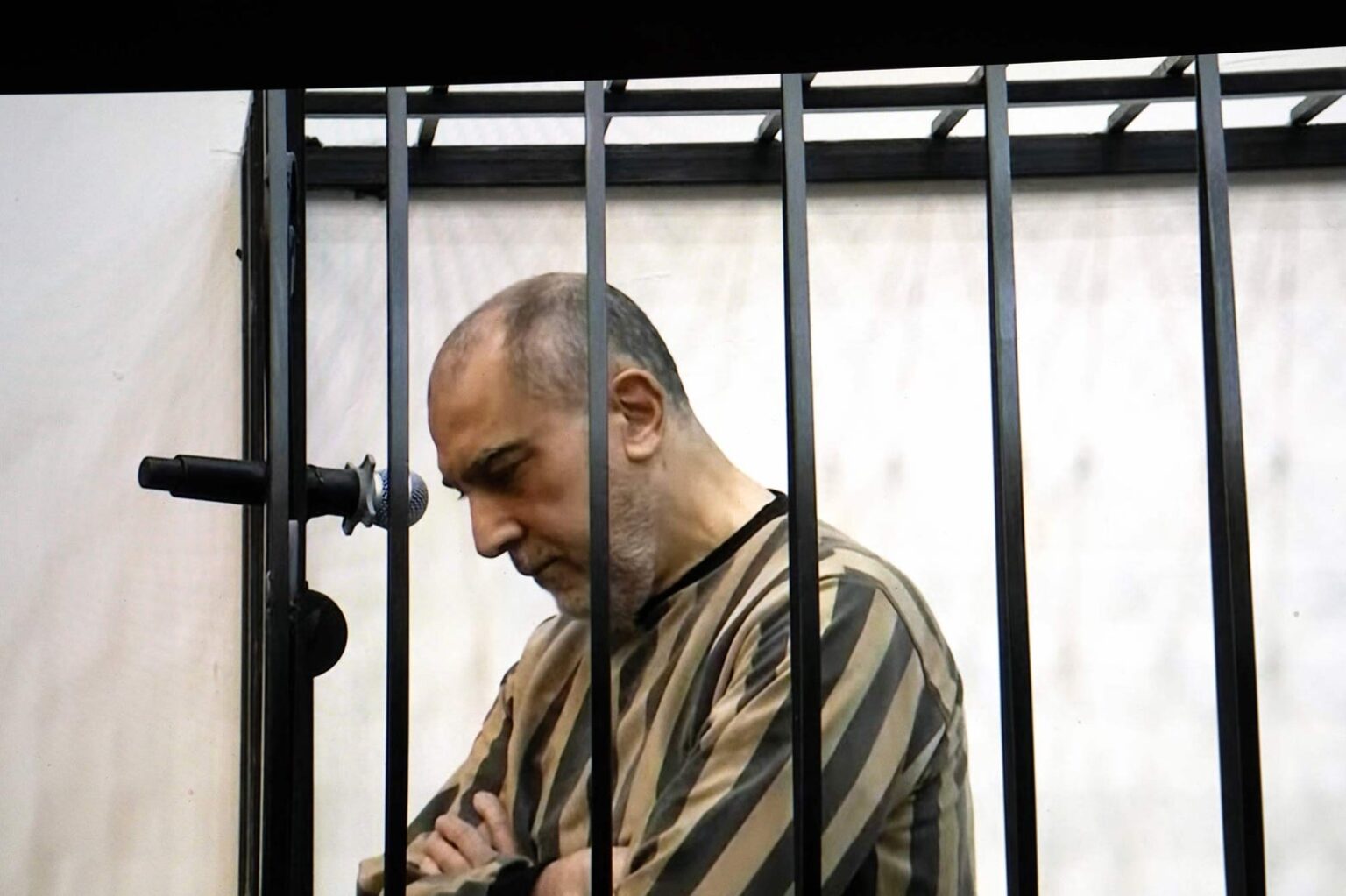
On May 10 in a Damascus courtroom, Atef Najib, Assad’s cousin, sat shackled in a metal cage dressed in a drab striped prison uniform. He was the security chief in the southern province of Daraa when schoolchildren were arrested and tortured for writing anti-Assad graffiti on the walls at their schools. They were jailed for 45 days, and by the time they were released, Daraa had weekly demonstrations that soon spread to the rest of the country.
This was Najib’s second court appearance. The judge read out 10 charges, including murder and torture. Bashar and his brother Maher al-Assad were charged in absentia. As they have fled to Moscow, no one expects them to be arrested any time soon, but this is symbolic, wrote Fadel Abdulghany, head of the Syrian Network for Human Rights: “It moved Assad from the position of a former president, and holder of absolute power, to the position of a defendant before the Syrian judiciary.”
Some of the “graffiti boys,” now adults, were also at the courthouse. The presiding judge, Fakhr al-Din al-Aryan, had himself previously been sentenced to death by the regime he will now judge.
This all took place with the backdrop of new charges against the Syrian civil war’s greatest offenders. The acceleration is not accidental, and accountability is not the only driver. President Ahmed al-Sharaa, head of the interim government, has been under sustained pressure from victims’ families, Syrian human rights groups, and civil society activists, and from Western capitals weighing sanctions relief, to show that his transitional justice rhetoric means something. He has spent the past year building the scaffolding of accountability: a National Commission for Transitional Justice established by decree last May, a Commission for the Missing that names transitional justice as a priority.
Deborah Amos
It’s a Landmark Trial on the Use of Starvation as a Weapon of War.
Read More
But security is the other engine. Former regime networks have not disappeared. Some figures still have weapons, money, local influence, and links to outside actors, mainly Russia and Iran. Those networks have incentives to exploit the unmet promises of the transition in a country where the new state’s authority is uneven, where fuel and electricity prices are spiking, and Syrians are struggling to feed their families. Opening the first trial was a way to address at least one demand.
“The authorities are receiving legitimate pressure from the community, in respect to justice and the economy; now, you have to deliver, so they cannot avoid the people’s demand,” says Mutasem Syoufi, executive director of the Day After, an organization working to support a democratic transition in Syria.
In some ways, arresting these men was the easy part. The harder problem is building a legal system from scratch to prosecute them. There is a gap in the judiciary after most of the Assad-era judges were dismissed. The interim government is prosecuting Atef Najib under the 1949 penal code, a statute written for ordinary murder, not for crimes against humanity. Without a working parliament, passing new laws that meet international standards for war crimes will have to wait.
Critics say the domestic legal framework is not sufficient. There is no law for command responsibility under Syria’s domestic law. The transitional justice commission’s mandate covers only Assad-era crimes, excluding violations by the new security forces during last year’s coastal massacres of Alawites, and sectarian violence against the Druze in the southern city of Sweida.
Another challenge is the volume of potential cases. The new interim government has jailed an estimated 4,000 former regime officials; thousands more, including torturers, are still in the country. In one example, a woman named Hala, who was once known inside the regime’s prison system by the alias “Mounia,” has been accused by survivors of service as a guard in the notorious air force intelligence detention center, where prisoners say she took part in torture and abuse during the Assad era. Victims alerted authorities after spotting her working openly as a hairdresser in an upscale neighborhood in central Damascus, where she posted photos of her hairstyles online. The former detainees recognized her face and her voice. She was arrested in March.
-
Three Judges Just Dared SCOTUS to Say What It Really Thinks About Black Voting Rights
-
This Content is Available for Slate Plus members onlyTrump Just Went Further Than Ever Before to Encourage Another Jan. 6
At the law school at Damascus University, more than 300 students attended a recent seminar addressed by international war crime legal specialists including Stephen Rapp, a former U.S. ambassador-at-large for war crimes issues. The aim is to create a clinical program to get students involved immediately with tools to assist judges and prosecutors. “How you build cases, determining whether you have a crime, and discussing the modes of liability is the key to it,” Rapp says.
Some government officials say the aim is 500 trials over the next five years, but Rapp says even that goal may be a stretch: “They will have a hard time trying 500, and they will have to make a strategic choice in whom to try.”
Those choices will matter to a traumatized society whose members will insist on having a say in the decisions. The bigger test is not how many former generals end up in jail, but whether the new government can create a transparent transitional justice process and strengthen the rule of law for the first time in Syria’s history.