
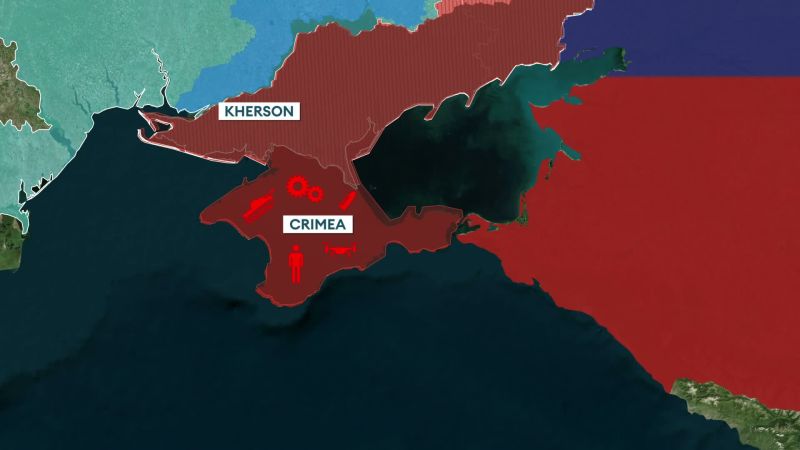
Ukrainian drones are striking the routes Russia uses to move fuel, ammunition, reinforcements and supplies through occupied Crimea and towards the southern front.
The attacks are targeting Russian logistics across Crimea, Kherson and Zaporizhzhia, with fuel convoys, ammunition trucks, rail hubs and supply columns all coming under pressure.
The campaign is focused on Russian ground supply routes linking Crimea to forces fighting in southern Ukraine.
Crimea is central to Russia’s southern war effort. Troops, fuel, ammunition, drones and spare parts move through the peninsula before being sent towards Kherson and Zaporizhzhia.
Ukraine wages drone war over Moscow
Russian forces use two main resupply routes into Crimea. One runs by rail over the Kerch Bridge on the eastern tip of the peninsula.
The other runs to the north along the M-14 road, which follows Ukraine’s southern coast from Odesa on the Black Sea towards the Russian border near Mariupol.
The scale of the drone campaign marks a shift from occasional long-range strikes to a more sustained effort against logistics targets across Crimea and the land corridor into southern Ukraine.
Ukraine is using relatively cheap mid-range drones, including the US-made Hornet, to hunt Russian trucks, fuel tankers, supply depots and maintenance vehicles.
The Hornet flies at low altitude and uses machine vision to recognise Russian vehicles, lock on and strike. Its 5kg warhead is powerful enough to destroy a vehicle.
The Equaliser: Ukraine’s answer to one of Russia’s most feared weapons
Russian military bloggers have raised concern that Ukraine may be setting conditions for a larger operation in the south, with some comparing the campaign to Kherson in 2022, when Ukraine spent months degrading Russian logistics before Russian defences collapsed.
The aim is to weaken Russia before any larger move. Ukraine is identifying choke points, destroying bridges, hitting rail lines, targeting transport corridors and forcing Russian forces to move supplies farther from the front.
Every destroyed fuel truck, delayed ammunition shipment and disrupted transport route adds strain to Russia’s southern logistics network.
Russian troops around Kherson and Zaporizhzhia are especially exposed because much of their supply system depends on the narrow land corridor linking Russia to occupied Crimea.
The pressure does not mean a Ukrainian breakthrough is guaranteed. Russia has repeatedly adapted to Ukrainian tactics during the war.
But Ukraine appears to be gaining the initiative in the south for now, with the next question being whether Kyiv has enough domestic and allied supplies to keep the attrition going before Russian countermeasures close the window.

