
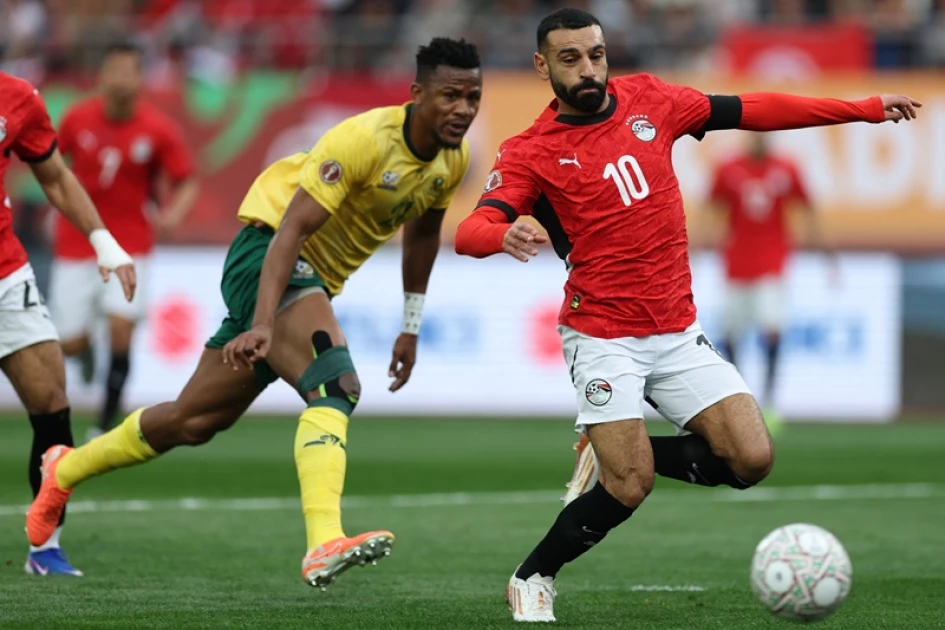
The 2026 FIFA World Cup in North America represents a definitive, high-stakes final chapter for two of international football’s most storied modern contingents: Mohamed Salah’s resurgent Egyptian side and Belgium’s fading golden generation. As the expanded tournament looms, the pressure to cement historical legacies has never been more intense.
Drawn together in a highly competitive Group G, alongside Iran and New Zealand, both squads face enormous stakes as they prepare for the global spectacle. For Egypt, it is a desperate quest to secure a maiden knockout stage appearance under the leadership of a 33-year-old Salah. For the Belgians, it is the absolute last opportunity for veterans like Kevin De Bruyne and Romelu Lukaku to translate a decade of overwhelming potential into tangible international silverware.
A Crucial Turning Point in Group G
The dynamics of Group G present a fascinating clash of footballing philosophies. Belgium enters as the undisputed heavyweight, boasting elite European pedigree and tactical sophistication. Egypt arrives with the organized, counter-attacking threat typical of North African football, heavily reliant on their talismanic captain. The presence of Iran, a side renowned for its defensive discipline, and New Zealand, known for their physical resilience, ensures that neither Belgium nor Egypt can afford early complacency.
The highly anticipated clash between Belgium and Egypt, scheduled for June 15, 2026, in Seattle, will likely dictate the power structure of the group. Tactical analysts view this fixture as a litmus test for both nations. Belgium’s aging defense will be severely tested by the pace and precision of Egypt’s forward line, while Egypt’s midfield must find a way to neutralize the creative genius of the Belgian playmakers. The outcome of this singular match could heavily influence the trajectory of both teams in the tournament.
The Pharaohs’ Pursuit of Greatness
Despite being universally recognized as the finest footballer to emerge from Egypt, Mohamed Salah has yet to taste ultimate success with the national team. His international career is marked by agonizing near-misses, including multiple Africa Cup of Nations final defeats and a deeply frustrating, injury-hampered campaign at the 2018 World Cup in Russia. The 2026 tournament in the United States, Canada, and Mexico offers Salah a final stage to alter his international narrative.
- June 15, 2026: Belgium vs Egypt in Seattle, Washington.
- June 21, 2026: Egypt vs New Zealand in Vancouver, Canada.
- June 26, 2026: Iran vs Egypt in Seattle, Washington.
Egypt’s current iteration, managed by the legendary Hossam Hassan, appears more balanced than previous squads. The emergence of dynamic attackers like Omar Marmoush alongside established veterans provides Salah with crucial support, reducing the burden of isolated brilliance. The tactical setup is designed to maximize Salah’s transitional speed, aiming to exploit the high defensive lines often employed by elite opposition like Belgium. For the Pharaohs, advancing past the group stage is no longer an aspiration; it is an absolute mandate.
The Last Stand for the Red Devils
For Belgium, the narrative is steeped in the anxiety of unfulfilled promise. The so-called golden generation, which dazzled the world by securing third place at the 2018 World Cup, is approaching its definitive twilight. Key figures such as Kevin De Bruyne, Romelu Lukaku, and Thibaut Courtois recognize that 2026 is their final realistic shot at a major international trophy. The recent years have been turbulent, marked by a disappointing early exit at the 2024 European Championships and internal squad friction.
Manager Domenico Tedesco faces the complex challenge of managing aging superstars while integrating a new crop of young talent. De Bruyne’s recent club-level uncertainties following his move to Napoli have raised questions about his match sharpness, yet his visionary passing remains vital to Belgium’s offensive structure. Lukaku, a proven goalscorer on the international stage, will carry the weight of converting the chances generated by the midfield. The Red Devils must shed the psychological baggage of past failures if they are to mount a serious challenge for the trophy.
The Broader Global Implications
The 2026 World Cup’s expansion to 48 teams has fundamentally altered the competitive landscape, creating a more diverse tournament but also demanding consistency across more fixtures to reach the final. For players like Salah and De Bruyne, navigating this expanded format requires peak physical conditioning and elite squad rotation. Their respective journeys hold immense commercial and cultural weight, capturing the imaginations of millions of fans in Cairo, Brussels, and across the globe.
Ultimately, the tournament represents the closing of an era. The global audience will be watching intently to see whether Salah can finally drag Egypt to historic heights, or if the Belgian golden generation can conjure one last masterpiece. Whatever the outcome, their performances in Group G will undoubtedly be etched into the annals of World Cup history.
As the countdown to the Seattle opener accelerates, the stakes are unequivocally clear: for these legendary figures, there is no next time, only the unforgiving reality of the present moment.