
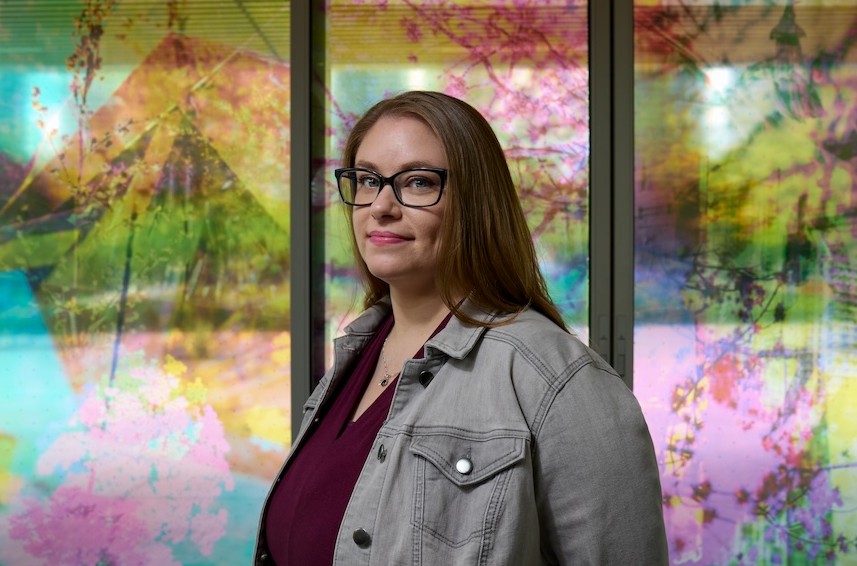
Hamilton-based visual artist Natalie Hunter as the recipient of the 2026 Nordic Artist Exchange (NAX) residency. Sponsored by the Cotton Factory, Hunter will travel to Tallinn, Estonia, in October for a four-week residency focused on artistic research, material experimentation, and the development of a new body of work exploring industrial heritage, labour histories, and the relationship between light, architecture, and memory.
Working in an expanded field of photography, Hunter’s recent projects, Of Rust and Rays and In The Shadow of Rust, were exhibited in What We Inherit at the Workers Arts and Heritage Centre in 2025, exploring legacies of labour and family lineage through photo-based installations.
During the residency, Hunter will work site-responsively throughout Tallinn, drawing parallels between Hamilton’s industrial history and Estonia’s post-industrial architecture and manufacturing heritage. Using analogue 120mm and 35mm film photography, handmade colour filters, and locally sourced industrial materials, she will produce a series of sculptural photographic works that investigate how sunlight, material, and urban space shape lived experience.
“Tallinn and Hamilton share surprising historical connections through industry, labour, and evolving urban landscapes,” says Hunter. “As the daughter of a steelworker raised in Hamilton, I’m interested in how industrial histories continue to shape communities, identities, and environments across generations and cultures.”
Hunter’s residency plan includes research visits to the Fotografiska Tallinn, meetings with Estonian artists and cultural workers, and collaborations with local printers and fabricators in Tallinn’s Arts Union building. Throughout the four weeks, she will photograph industrial sites, process and print film locally, and construct sculptural armatures from regional materials, including metal and wood.
While the residency will serve as the foundation for this new body of work, Hunter intends to continue and complete the project upon returning to Hamilton. Working with Smokestack Studio, she will expand the series for future public presentation and exhibition at the Cotton Factory. The resulting works will place Hamilton and Tallinn into dialogue as post-industrial cities shaped by labour, migration, architecture, and environmental change. The Nordic Artist Exchange program supports Hamilton artists in developing international artistic relationships and research opportunities abroad while strengthening cultural connections between Hamilton and Nordic and Baltic communities.