
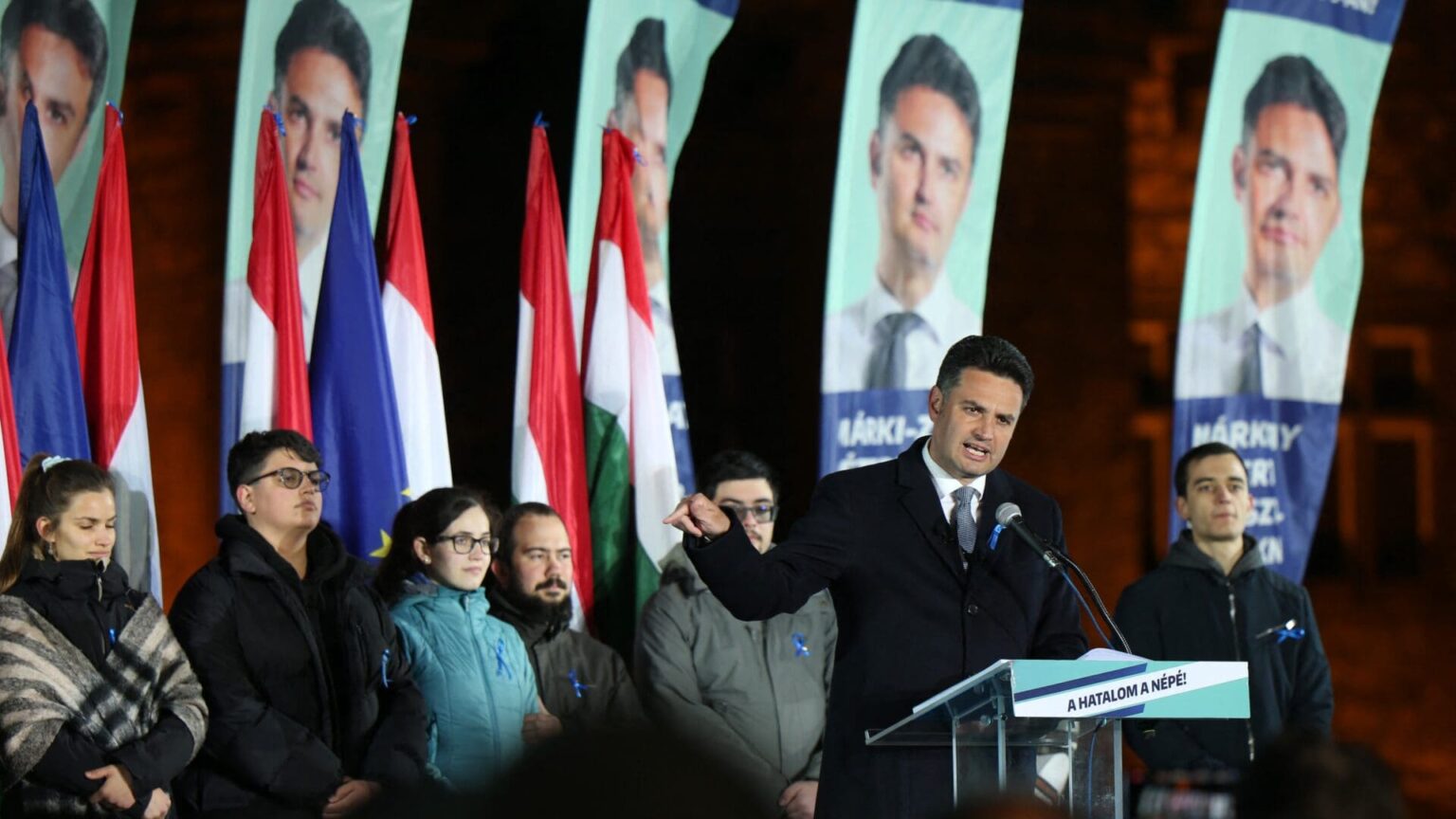
Mayor of Hódmezővásárhely Péter Márki-Zay, one of the earliest opposition figures to openly support Péter Magyar and the Tisza Party against former prime minister Viktor Orbán, has issued his sharpest criticism yet of Hungary’s new government, warning that the country could drift towards a ‘new one-party system’ if democratic checks and balances are weakened.
The backlash came after Magyar announced plans to significantly reduce the salaries of ministers, MPs, mayors, and senior political office holders as part of a broader austerity and anti-corruption package. Márki-Zay argued that linking mayoral salaries to corruption was misleading, insisting that the real problem in Hungary had never been official salaries, but rather large-scale corruption under previous Fidesz–KDNP governments.
‘Corrupt politicians should not have their salaries reduced—they should be imprisoned,’ Márki-Zay stated, adding that lowering mayoral salaries could damage local governments and depress wages throughout municipal administrations.
‘Honestly, this is not what we voted for in April’
The mayor also warned that the Tisza Party could attempt to consolidate power through administrative measures targeting municipalities. He referred to the aforementioned salary reductions, potential term limits for mayors, and speculation surrounding possible early municipal elections. The latter emerged almost immediately after Tisza’s election victory on 12 April, as many mayoral positions remain held by politicians linked to Fidesz, potentially creating obstacles to the ‘full regime change’ frequently promised by Péter Magyar.
‘Then the opportunity opens for the Tisza Party to occupy the municipalities as well, and then the country truly becomes one-coloured,’ Márki-Zay said. ‘Honestly, this is not what we voted for in April.’
The remarks are particularly notable because Márki-Zay had been among Magyar’s most vocal supporters during the 2026 campaign. In an interview with POLITICO shortly before the election, Márki-Zay praised Magyar for succeeding where the fragmented opposition had failed in 2022, arguing that the Tisza leader’s primary task was to defeat Fidesz and hold former officials accountable.
‘If he does that, we will erect a statue for him here in Hódmezővásárhely,’ Márki-Zay said at the time, referring to Magyar’s pledge to send ‘these criminals behind bars’.
Márki-Zay’s criticism fits into an increasingly broader pattern emerging within anti-Orbán circles, including rights advocacy groups, NGOs, and analysts concerned about potential overreach stemming from the Tisza Party’s constitutional supermajority.
As Hungarian Conservative recently reported, one of the most controversial developments so far concerns the parliamentary investigative committees launched by the new government to examine alleged abuses and corruption during the Orbán era. Despite being political bodies, the committees are authorized to wield unusually strong powers, including imposing massive financial penalties and requesting compulsory police escorts.
The Hungarian Civil Liberties Union (TASZ) warned that the legislation risks undermining procedural safeguards and could blur the line between political accountability and quasi-judicial punishment.
‘Márki-Zay’s criticism fits into an increasingly broader pattern emerging within anti-Orbán circles’
Speaking about the committees, Tisza Party Vice President Márk Radnai argued that stronger enforcement tools are necessary because of ‘public dissatisfaction’ and the need for ‘effective procedures’ in politically sensitive cases. Responding to a journalist’s question, Radnai also stated that it was possible under the proposal for Orbán or members of his family to be escorted to parliament by police. The committees were formally established on Thursday, 28 May.
So far, the Tisza leadership has rejected accusations of authoritarian tendencies, arguing that its reforms are necessary to ‘dismantle the political and economic structures’ built under Orbán. Magyar has repeatedly framed his government’s actions as a democratic ‘restoration’ rather than a consolidation of power.
Related articles: