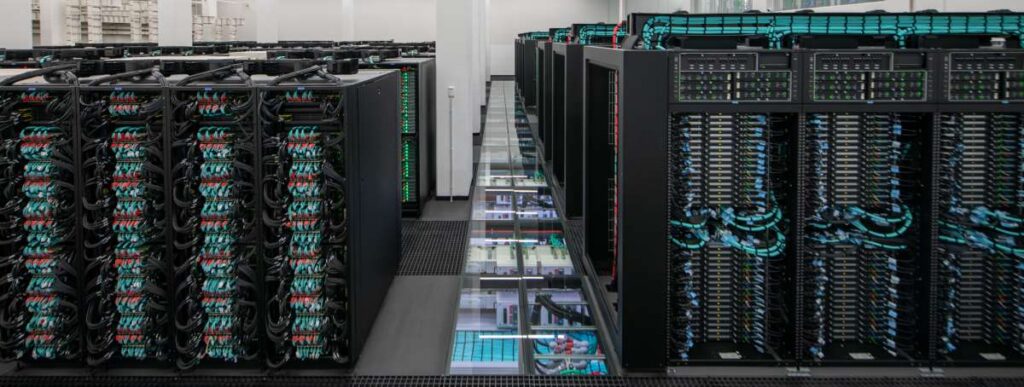
The Barcelona Supercomputing Center-National Supercomputing Center (BSC-CNS) presented on Thursday the third computer dedicated to quantum computing, the EuroQCS-Spain, co-financed with an investment of 9.8 million euros by the European Commission EuroHPC Joint Undertaking and the Government of Spain, through the Ministry for Digital Transformation and the Public Function, which contributes 4.8 million euros.
Digital Transformation reported that, thanks to an analog encoding of information, the new system provides a complementary quantum technology to that previously installed at the center and will be available to researchers across Europe.
With this addition, installed in the renovated chapel of Torre Girona, MareNostrum 5 becomes one of the first supercomputers in the world to combine classical computing (with general-purpose and accelerated partitions) and digital and analog quantum computing (with the two quantum computers installed by the Quantum Spain project and the State Secretariat for Digitalization and Artificial Intelligence and this latest one, respectively).
Of the total investment of this project, 8.5 million euros corresponded to the installation of the machines, with a 50% co-financing between EuroHPC Joint Undertaking and the Government of Spain, and the rest, to the combination of the quantum machine with the classical infrastructure.
Creation of technology
This new quantum system will be part of the European network of interconnected quantum computers in the infrastructure of the European High Performance Computing Joint Undertaking (EuroHPC JU). To date, it has acquired six quantum computers located throughout Europe, three of which (Poland, Czech Republic, and Germany) are already inaugurated.
The portfolio led by Óscar López emphasized that these technologies are key in the Quantum Europe Strategy, which seeks to make Europe a world leader in this field by 2030 and consolidate technological sovereignty, industrial competitiveness, and Europe’s security.
The new quantum computer was presented at an event in the chapel of Torre Girona and featured the participation of the director of BSC, Mateo Valero; the magnificent rector of the Polytechnic University of Catalonia, Francesc Torres; the Secretary of State for Digitalization and AI (Sedia), María González Veracruz; the Secretary of State for Science, Innovation and Universities, Juan Cruz Cigudosa; and the Secretary-General of the Department of Research and Universities of the Generalitat of Catalonia, Josep Oriol Escardíbul.
Also attending were the head of the Quantum Technologies sector of the European Commission, Óscar Díez; the head of R&D of EuroHPC, Daniel Opalka; and the CEO of Qilimanjaro Quantum Tech, Marta Estarellas, in addition to the general director of Artificial Intelligence of Sedia, Aleida Alcaide.
The Barcelona Supercomputing Center-National Supercomputing Center (BSC-CNS) presented on Thursday the third computer dedicated to quantum computing, the EuroQCS-Spain, co-financed with an investment of 9.8 million euros by the European Commission EuroHPC Joint Undertaking and the Government of Spain, through the Ministry for Digital Transformation and the Public Function, which contributes 4.8 million euros.
Digital Transformation reported that, thanks to an analog encoding of information, the new system provides a complementary quantum technology to that previously installed at the center and will be available to researchers across Europe.
With this addition, installed in the renovated chapel of Torre Girona, MareNostrum 5 becomes one of the first supercomputers in the world to combine classical computing (with general-purpose and accelerated partitions) and digital and analog quantum computing (with the two quantum computers installed by the Quantum Spain project and the State Secretariat for Digitalization and Artificial Intelligence and this latest one, respectively).
Of the total investment of this project, 8.5 million euros corresponded to the installation of the machines, with a 50% co-financing between EuroHPC Joint Undertaking and the Government of Spain, and the rest, to the combination of the quantum machine with the classical infrastructure.
Creation of technology
This new quantum system will be part of the European network of interconnected quantum computers in the infrastructure of the European High Performance Computing Joint Undertaking (EuroHPC JU). To date, it has acquired six quantum computers located throughout Europe, three of which (Poland, Czech Republic, and Germany) are already inaugurated.
The portfolio led by Óscar López emphasized that these technologies are key in the Quantum Europe Strategy, which seeks to make Europe a world leader in this field by 2030 and consolidate technological sovereignty, industrial competitiveness, and Europe’s security.
The new quantum computer was presented at an event in the chapel of Torre Girona and featured the participation of the director of BSC, Mateo Valero; the magnificent rector of the Polytechnic University of Catalonia, Francesc Torres; the Secretary of State for Digitalization and AI (Sedia), María González Veracruz; the Secretary of State for Science, Innovation and Universities, Juan Cruz Cigudosa; and the Secretary-General of the Department of Research and Universities of the Generalitat of Catalonia, Josep Oriol Escardíbul.
Also attending were the head of the Quantum Technologies sector of the European Commission, Óscar Díez; the head of R&D of EuroHPC, Daniel Opalka; and the CEO of Qilimanjaro Quantum Tech, Marta Estarellas, in addition to the general director of Artificial Intelligence of Sedia, Aleida Alcaide.
Become a premium member for free!