

Notes from Poland is run by a small editorial team and is published by an independent, non-profit foundation that is funded through donations from our readers. We cannot do what we do without your support.
Polish President Karol Nawrocki has announced plans to strip Volodymyr Zelensky of the Order of the White Eagle, Poland’s highest honour, after the Ukrainian president named a military unit after a group that led massacres of ethnic Poles during World War Two.
However, Polish Prime Minister Donald Tusk, whose government regularly clashes with the opposition-aligned president, has sought to calm emotions, warning that the only one to benefit from conflict between Poland and Ukraine is Russia.
Zaproponowałem, aby jednym z punktów było odebranie prezydentowi Zełenskiemu Orderu Orła Białego – Prezydent RP @NawrockiKn. pic.twitter.com/4NaOAIjO3C
— Kancelaria Prezydenta RP (@prezydentpl) May 29, 2026
“Unfortunately, President Zelensky has shown that Ukraine, in terms of mentality – glorifying bandits, murderers from the Ukrainian Insurgent Army (UPA) – is not ready to be part of the European family,” said Nawrocki on Friday morning.
“Because in the European family, you cannot glorify bandits [who] murdered women and children, murdered Poles,” he added, after announcing that he had proposed stripping Zelensky of the order, which was awarded to him by Nawrocki’s predecessor, Andrzej Duda, in 2023.
Nawrocki noted that a meeting of the body responsible for overseeing the order will next meet on 8 June, when he would propose discussing revoking Zelensky’s award. However, the president noted that the decision on doing so ultimately rests with him, reports the Polish Press Agency (PAP).
Nawrocki’s announcement comes amid growing anger in Poland over a decree issued by Zelensky on Wednesday, in which he named an operations centre for Ukraine’s special forces after the “heroes of the UPA”. He said he had done so “in order to restore the historical traditions of the national army”.
The UPA was a partisan formation created during World War Two as part of efforts to fight for an independent Ukrainian state. However, it was also responsible for the so-called Volhynia massacres, in which around 100,000 ethnic Poles, mostly women and children, were slaughtered, often with great brutality.
The fact that the UPA and figures associated with it continue to be venerated in Ukraine has regularly caused tension with Poland. The two countries also often clash over the Volhynia massacres, which Poland regards as a genocide, a label Ukraine rejects.
Poland’s state historical institute has criticised remarks by the head of its Ukrainian counterpart about massacres of Poles by Ukrainians in WWII.
He said they are regarded in Ukraine as a “local episode” and suggested they do not constitute a genocide https://t.co/MAi6RhpRDL
— Notes from Poland 🇵🇱 (@notesfrompoland) February 11, 2026
Zelensky’s decision immediately triggered condemnation from Poland’s right-wing opposition, which is aligned with Nawrocki and generally favours a tougher line towards Kyiv, especially regarding historical issues.
Przemysław Czarnek, deputy leader of the national-conservative Law and Justice (PiS) party, called it “a shameful signal sent to Polish society” and “a demonstration of extreme ingratitude” towards a country that has been one of Ukraine’s strongest supporters since Russia’s full-scale invasion.
“One cannot speak of partnership with Poland and reconciliation one day, only to glorify the following day the formations responsible for the slaughter of thousands of Poles,” wrote Czarnek on Wednesday.
“If Zelensky does not reverse this scandalous gesture, Poland should move from diplomatic statements to real political actions and consequences, including limitations on support,” he added.
Decyzja Wołodymyra Zełenskiego o nadaniu jednostce wojskowej imienia „Bohaterów UPA” to skandal. Trudno to nazwać inaczej niż demonstracją skrajnej niewdzięczności wobec narodu, który od pierwszego dnia wojny otworzył przed Ukrainą swoje granice. UPA to symbol ludobójstwa,…
— Przemysław Czarnek (@CzarnekP) May 27, 2026
While the Polish government initially avoided commenting, on Friday morning, foreign ministry spokesman Maciej Wewiór issued a statement saying that Poland views Zelensky’s decision “in an unequivocally negative light” and is “raising this issue in conversations with our partners in Ukraine”.
Naming something after the UPA “wounds the memory of this organisation’s victims”, harms dialogue between Poland and Ukraine, and “can be exploited by Russian propaganda, which seeks to divide us and undermine support for Ukraine”, added Wewiór.
Broadcaster RMF reports that Polish deputy foreign minister Marcin Bosacki submitted a formal protest to Ukrainian ambassador Vasyl Bodnar on Thursday and warned that Zelensky’s decision would anger and alienate many Poles.
However, speaking to RMF on Friday morning, Polish interior minister Marcin Kierwiński said that, while Zelensky had clearly made “a bad decision”, Poland should also “not resort to hysterical reactions” and “remember that the most important thing is defeating Russian imperialism”.
W nawiazaniu do wczorajszych słów szefa naszej placowki @P_Lukasiewicz @PLinUkraine –
Jednoznacznie negatywnie oceniamy nadanie ukraińskiej jednostce imienia „Bohaterów UPA”. Ta decyzja rani pamięć o ofiarach tej organizacji i uderza w dialog między naszymi narodami. Może być…— Rzecznik MSZ – Maciej Wewiór (@RzecznikMSZ) May 29, 2026
Later on Friday, after Nawrocki – who regularly clashes with the more liberal government – had made his announcement, Tusk also sought to calm the situation.
“I would expect both presidents to be able to rise above these historical emotions and try to build this difficult but necessary Polish-Ukrainian friendship and cooperation,” said Tusk, quoted by broadcaster TVN. If not, “the Kremlin will truly have reason to rejoice”.
The prime minister added, however, that Zelensky’s decision “violates our historical sensitivity”. He called for Ukrainians to show greater awareness of “what this grim legacy of the UPA means from the perspective of every Pole”.
Jeśli pokłócimy się o przeszłość, ktoś inny wygra przyszłość. Prezydent Ukrainy powinien to wreszcie rozumieć. Polski też. Zanim będzie za późno!
— Donald Tusk (@donaldtusk) May 29, 2026
Meanwhile, among those to criticise Zelensky was former Polish president and Nobel Peace Prize winner Lech Wałęsa, who is a strong supporter of Ukraine. He announced that he will now stop wearing a badge with a Ukrainian flag that is constantly on his chest during public appearances.
“By honouring the UPA bandits, the president of Ukraine has insulted me and all our murdered compatriots,” wrote Wałęsa on social media.
“I have therefore removed the Ukrainian flag from my chest. I will continue to help the nation in its fight against the Soviets [Russians]. I refuse to support President Zelensky!”
While tensions over World War Two history regularly erupt between Poland and Ukraine, the two countries have in recent years also made tentative steps towards reconciliation.
In 2023, Duda and Zelensky jointly commemorated the 80th anniversary of the Volhynia massacres. Last year, Ukraine also lifted its ban on the exhumation of victims of the massacres, tens of thousands of whom are believed to remain buried in unmarked mass graves.
However, Kyiv last year also criticised Poland’s move to establish a national holiday commemorating “victims of genocide committed by the OUN-UPA”, as well as a proposed law by Nawrocki that would criminalise the promotion of ideologies associated with Second World War Ukrainian nationalist groups.
Notes from Poland is run by a small editorial team and published by an independent, non-profit foundation that is funded through donations from our readers. We cannot do what we do without your support.
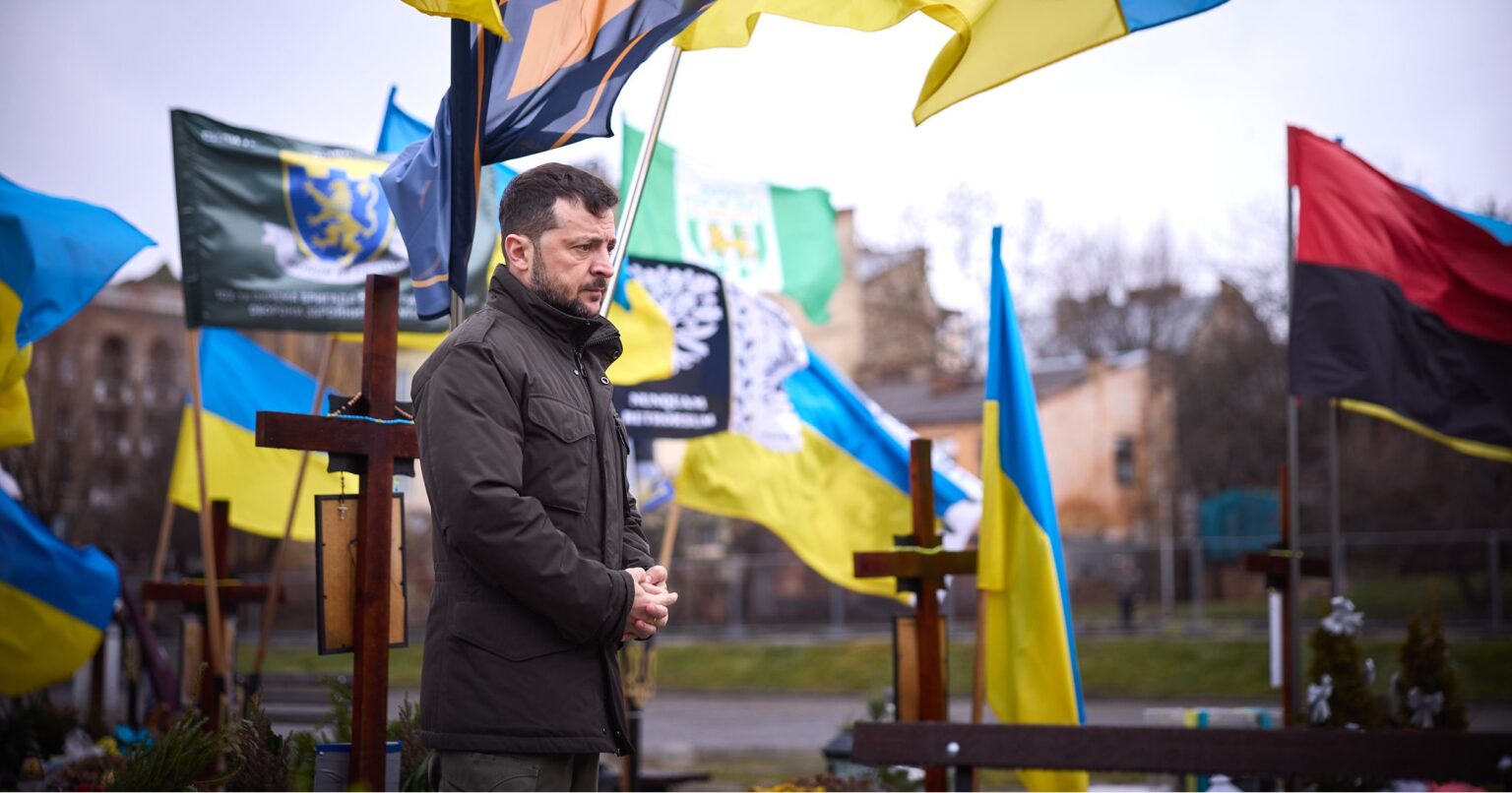
Main image credit: President of Ukraine/Flickr (under public domain)

Daniel Tilles is editor-in-chief of Notes from Poland. He has written on Polish affairs for a wide range of publications, including Foreign Policy, POLITICO Europe, EUobserver and Dziennik Gazeta Prawna.