
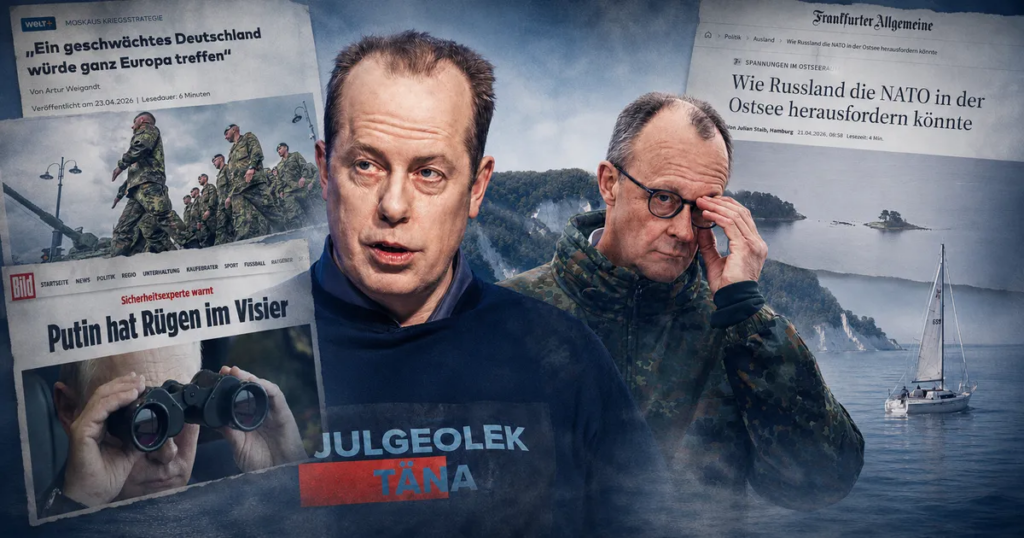
Koort’s inner sensitivity is also evident in his series of historical thrillers, which deal with historically plausible security-related processes in the 14th century in his home region of Vastseliina in southeastern Estonia near the Russian border, as well as in Pskov, Livonia, and elsewhere in Estonia. In 2024, the first part of the novel was adapted into an ambitious and popular summer stage production performed in Koort’s home area, among the ruins of Vastseliina’s medieval fortress. Last year, Koort was admitted to the Estonian Writers’ Union.
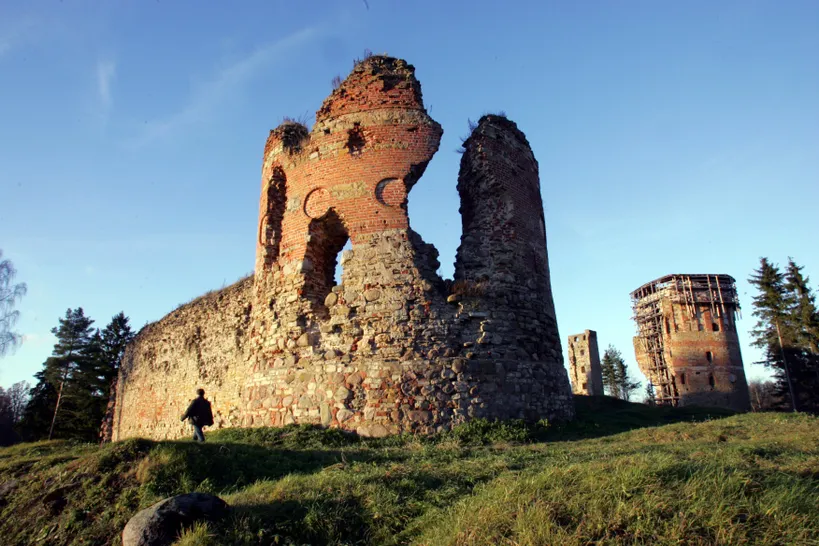
Ruins of the Vastseliina castle in South-East Estonia. Photo: TOOMAS HUIK/PM/SCANPIX BALTICS
The main message of Koort’s article, published on January 25 under the title “In Reality, Germany Is Russia’s Next Target,” was that Germany would be a much more attractive stage for escalation for Moscow, because paralyzing that country would be strategically more worthwhile than threatening NATO’s eastern border.
That payoff can be measured in the financial impact that destabilizing Europe’s largest economic area would bring. Germany is also a key supporter of Ukraine and NATO’s logistical heart. Even causing slight “arrhythmias” in Germany’s investment and economic environment would generate immeasurably greater costs than the temporary occupation of Hiiumaa.
The Magic Word: Rügen
In Koort’s view, this would not require a Russian military campaign into the German heartland. Moscow could instead use hybrid operations: sabotage, cyberattacks, arson, agent networks, staged demonstrations, pro-Russian convoys, disruption of infrastructure, and the buildup of political pressure.