
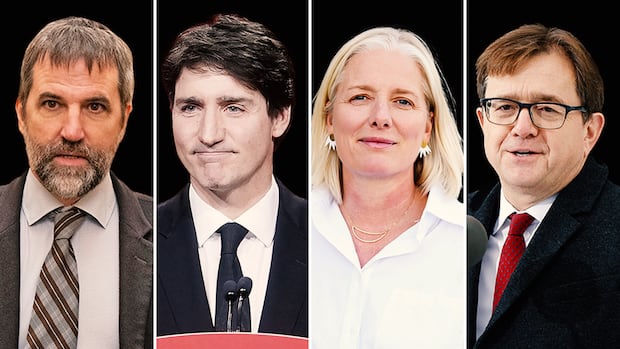
It was the end of an era and the four politicians who were its chief architects gathered in one room in Ottawa.
Former prime minister Justin Trudeau and his former climate change cabinet ministers — Catherine McKenna, Jonathan Wilkinson and Steven Guilbeault — on Wednesday were at the Rideau Club, a private social club near Parliament Hill.
Political operatives behind the scenes, MPs across party lines and journalists were also there. The room was packed and on a warm Ottawa evening in May it quickly got hot.
For a decade the four Liberal politicians and their staffers worked closely to change Canada’s performance and image as a laggard on tackling climate change.
The event’s purpose? Raise a glass to Wilkinson, who soon takes up a diplomatic post as Canada’s ambassador to the European Union.
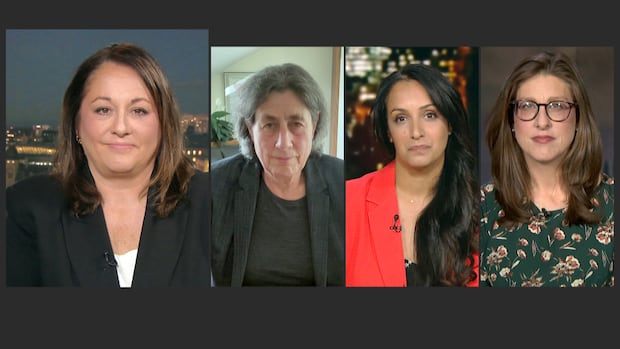
At Issue this week: Prime Minister Mark Carney tells U.S. investors that Canada ‘will help make America great again.’ Climate frustrations push Steven Guilbeault to quit politics. And Alberta’s separatist moves are slammed as a threat to national unity.
But the evening took on greater significance. Just hours earlier Guilbeault, the activist turned government minister, announced he was resigning as an MP. It was also exactly six months to the day he left Prime Minister Mark Carney’s cabinet, unable to defend the new Liberal government’s “backsliding” on climate change.
“This feels sad,” one of the attendees told CBC News as they listened to Wilkinson take the mic.
- Cross Country Checkup is asking: What’s more important to you right now – the climate or the economy? What does that choice mean for you and Canada’s future?Leave your comment here, and we may read it or call you back for Sunday’s show
So close, now so far away
The Liberal government led by Prime Minister Mark Carney has suggested that the approach of his predecessor, the Trudeau government, on climate was not working.
“We are focused on investing to get results,” Carney said on May 14 when he unveiled his federal electricity strategy. “In the end these aren’t words on a page.”
But under the Trudeau plan for the first time ever, Canada was on track to achieve at least one of its climate targets.
In 2023, modelling from Environment and Climate Change Canada showed that if the country stuck with the policies all four politicians had a hand in crafting, it could achieve its 2026 interim goal.
Although the measures would not be enough to achieve 2030 targets, the country was still within striking distance.
The arms-length Canadian Climate Institute in its own analysis came to a roughly similar conclusion. If achieving climate goals was a final exam, the country was on track to score 85 to 90 per cent.
The government’s updated modelling now states that Canada would be lucky to reach halfway to its emissions targets.
Canada was so close and now so far, and likely no room of people in Ottawa would have understood that more than those gathered at the event for Wilkinson.
‘Katy Perry’s boyfriend’ shows up
Wilkinson’s speech gave no hint the soon-to-be-diplomat was displeased with the direction of Carney’s approach on climate change.
He did mention that he came to Ottawa leaving the private sector to advance efforts to fight climate change and that the Carney government is making progress, suggesting it was not as fast as originally planned.
But at the same time global politics have changed.
The other architects of the Liberal climate plan did not address the room. Although the master of ceremonies, Wilkinson’s former chief of staff Claire Seaborn, noted that “Katy Perry’s boyfriend” was in the room.
Necks turned to see Trudeau, hanging at the back, smiling. He was one of the few men there not wearing a suit and tie. At one point he yelled that his life outside politics was “great.”
Carney had announced his bid to run for Liberal leader when Trudeau stepped aside in 2025. That triggered a Liberal leadership race. Wilkinson dropped his competing bid and together with Guilbeault supported Carney on the ballot.
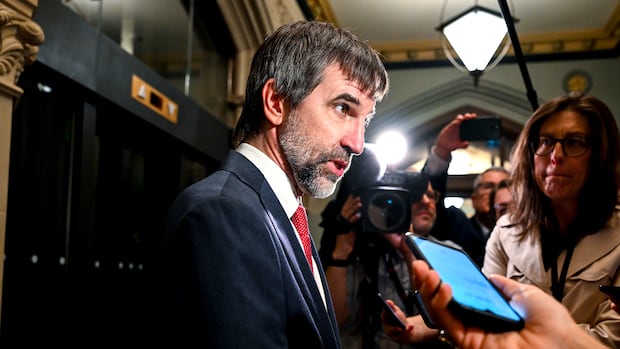
Liberal MP and longtime environmental activist Steven Guilbeault has resigned his seat, saying he plans to continue his fight for the environment outside of government. He will remain a Liberal MP until Parliament breaks for the summer.
Back then, among some, there was little to question about Carney’s climate credentials. He was the globe-trotting central banker known for his speech that linked climate change and financial instability. He further blended climate action and finance working with the United Nations.
In his bestselling book Values, Carney wrote that “to meet the 1.5 C target, around 80 per cent of remaining fossil fuels would need to remain in the ground.”
“I feel confused. I read the prime minister’s book,” said Caroline Brouillette, the executive director of Climate Action Network Canada, a group that brings together climate-focused organizations from coast to coast to coast.
“I also vividly remember his ‘Tragedy of the Horizons’ speech and how groundbreaking it was back in the day. And so my question is: Was that speech only rhetoric or did the now prime minister actually believe its contents?”
As Canada’s 24th prime minister, Carney has done what some feared Conservative Leader Pierre Poilievre would:
- Eliminate the consumer carbon tax.
- Reverse the implementation of the oil and gas emissions cap.
- Scrap the electric vehicle sales mandate.
- Double down on fossil fuel subsidies for LNG and enhanced oil recovery.
- Chart ambitious plans to turn Canada into one of the largest suppliers of LNG in the world.
- Back the construction of a potential bitumen pipeline to the West Coast.
Carney government says it remains committed
And Carney’s work isn’t done.
His government, through the energy accord signed with the Alberta government, is committing to delaying or weakening methane and carbon pricing regulations, key climate policies that were supposed to keep emissions from Alberta’s oil and gas sector in check.
In May the government through its electricity strategy committed to doubling the national grid by 2050 while at the same time opening up the Clean Electricity Regulations to welcome more natural gas power generation.
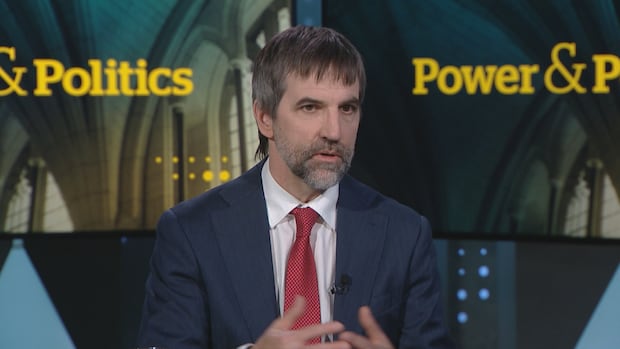
Liberal MP and former environment minister Steven Guilbeault announced on Wednesday that he will be leaving federal politics. Power & Politics hears from Guilbeault on his concerns about Canada meeting its climate targets and the Ottawa-Alberta energy deal.
As CBC News first reported, the government is working on introducing new legislation that would help speed up the construction of major resource projects through streamlining environmental laws. Some of these projects are pivotal for the green transition such as critical mineral mines and electrified high-speed rail.
But environmentalists say it would gut the country’s impact assessment legislation, which McKenna championed through Bill C-69.
While these measures are tough to swallow for some, the government argues they are necessary to generate massive provincial royalties, boost the GDP and help Canada diversify trade from the U.S.
Carney has also suggested that a climate plan will only be effective if it earns the support of most Canadians, and if it respects their pocketbooks.
“To be clear, there is no credible plan to net zero without a relentless focus on affordability,” Carney said on May 14.
Canada’s new Environment, Climate Change and Nature Minister Julie Dabrusin was also at Wednesday’s farewell reception. When Guilbeault and Wilkinson were cabinet ministers she was a parliamentary secretary to them both.
As she did then and does now, Dabrusin defended the government’s environmental policies.
At a federal briefing Thursday on the upcoming wildfire season, Dabrusin was asked about what she would tell Canadians who could be displaced by the summer’s climate-fuelled events.
“As far as our work to fight climate change and knowing that we are very much committed to continuing that work,” Dabrusin said, through the work they are doing to protect nature, a new electricity strategy and a suite of investment tax credits to spur on investments in clean technologies.