
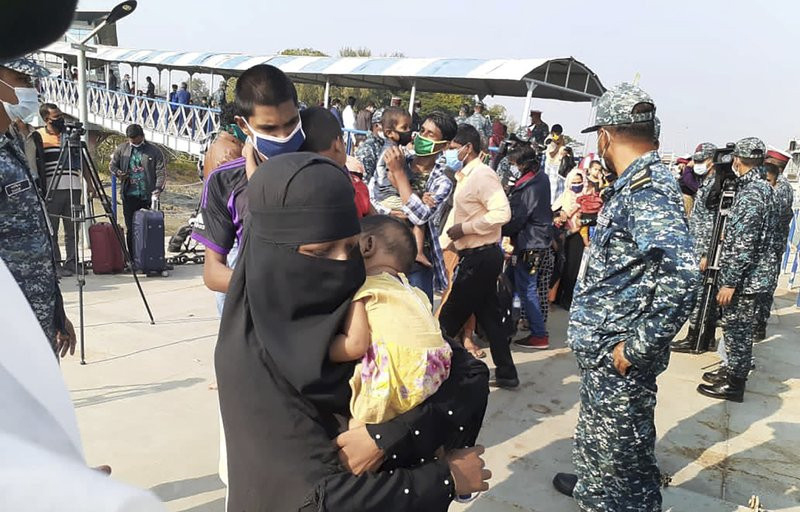
KATHMANDU: Nepal sits at a geographical and political crossroads that has made it, sometimes willingly and sometimes reluctantly, a refuge for thousands of people pushed out of their own countries.
From Tibetans fleeing Chinese rule in 1959 to Bhutanese Lhotshampas driven out by their own government in the early 1990s, and from Rohingyas escaping genocide in Myanmar to smaller clusters of Afghans, Somalis, and Pakistanis, Nepal’s territory has absorbed wave after wave of the displaced.
What makes this particularly striking is that Nepal has never ratified the 1951 Refugee Convention or its 1967 Protocol, has no dedicated national refugee law, and treats undocumented asylum seekers as illegal migrants under its immigration statutes.
Who are the Bhutanese refugees and why did they end up in Nepal?
The people who form the heart of Nepal’s refugee story are the Lhotshampas, an ethnic Nepali-speaking Hindu community that had settled in the southern lowlands of Bhutan over generations, some as early as the 19th century. By the late 20th century, they made up roughly a quarter of Bhutan’s total population.
The trouble began when Bhutan’s government, fearing the political example of neighbouring Sikkim’s merger with India and the pro-democracy movements sweeping through Nepal in 1990, started viewing the Lhotshampa population as a demographic and political threat.
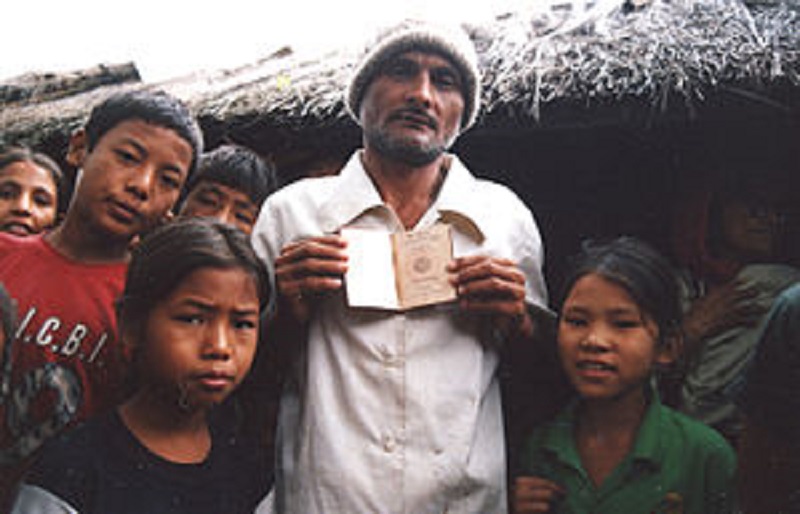
Lotshampa refugees in Beldangi Camp. File photo
The government pushed through the Citizenship Act of 1985, which retroactively stripped thousands of Lhotshampas of citizenship. Following this, the “One Nation, One People” policy forced them to adopt the dress code and cultural norms of the dominant Drukpa Buddhist majority and removed Nepali from school curricula.
When the Lhotshampas organized peaceful protests in September 1990, the response was brutal: mass arrests, torture, village raids, forced evictions, and coerced signings of “voluntary migration” forms.
By the mid-1990s, more than 100,000 people had been pushed across the border into India and then into Nepal, where UNHCR set up seven camps in the Jhapa and Morang districts of eastern Nepal.
How many rounds of talks happened between Nepal and Bhutan to bring these people back, and what went wrong?
Nepal and Bhutan held fifteen rounds of ministerial-level joint committee talks over more than a decade in an effort to find a path for the Bhutanese refugees to return home. The negotiations were painstaking and produced very little.
The two governments did eventually agree on a verification process to categorize refugees into those who would be repatriated, those who would need further review, and those considered non-Bhutanese. However, the verification results were disputed by refugee community leaders, who rejected Bhutan’s classification of the majority as either migrants or voluntary emigrants.
Bhutan consistently maintained that many of those in the camps had never been its legal citizens to begin with, while refugee advocates produced documentation proving decades of residency and legitimate citizenship. The last substantive ministerial meeting, held in Bhutan in October 2003, collapsed without a breakthrough.
After that, direct bilateral engagement essentially froze. Bhutan’s transition to democracy in 2008, widely expected to open new possibilities, produced no change in its position on the refugee question. A democratic government proved just as unwilling as the monarchy to accept mass returns, worried about the political and social disruption of reintegrating a large, long-absent population.
The breakdown of talks left over a hundred thousand people in limbo with no real prospect of going home.
What is third-country resettlement and how did it come to be the main solution for Bhutanese refugees?
When it became evident that repatriation was a dead end, a group of Western nations stepped in with an alternative: resettling the refugees in their own countries. A core group of eight nations, the United States, Australia, Canada, the United Kingdom, Norway, Denmark, the Netherlands, and New Zealand, came together in 2007 to offer this option collectively, framing it as a burden-sharing humanitarian gesture.
UNHCR and the International Organization for Migration ran the logistics, including medical screening, pre-departure orientation, and transportation. The programme launched formally in late 2007, with the first contingent departing for the United States in early 2008. Initially, many refugees were reluctant to go, clinging to the hope of returning to Bhutan. But as that hope faded, uptake grew rapidly.
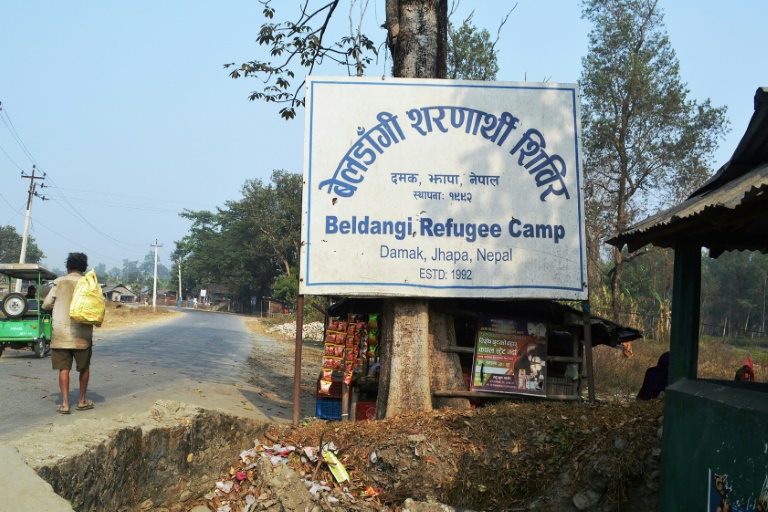
Way to Beldangi refugee camps
By the time group resettlement concluded in December 2016, more than 113,500 Bhutanese refugees had been relocated, the majority going to the United States, which took over 84,000 people. Australia took around 5,500, Canada around 6,500, and smaller numbers went to the remaining countries. This became, at the time, one of the largest coordinated third-country refugee resettlement programmes in UNHCR’s history.
What happened to Bhutanese refugees who chose not to take the third-country option?
Not everyone wanted to leave for a distant Western country. Some refugees, particularly the elderly and politically active community members, refused resettlement on principle, arguing that accepting it would weaken their claim to return to Bhutan and legitimize what had been done to them.
Others stayed because of family ties, health conditions, or simple uncertainty about starting over in an entirely foreign cultural environment. These individuals, numbering somewhere between 6,000 and 7,000, remained in two camps in eastern Nepal after the mass resettlement concluded. Their situation has become increasingly precarious.
UNHCR has steadily wound down operations in the camps, handing over registration responsibilities to Nepal’s government in 2020 and closing its sub-office in Damak. Nepal has consistently rejected the idea of allowing these remaining refugees to integrate locally, insisting that integration is not on the table and that repatriation or further resettlement are the only options.
The United States has continued urging Nepal and Bhutan to resume talks, but progress has been negligible. These few thousand people are caught in an institutional no-man’s land: Bhutan will not take them, Nepal will not absorb them, and they are too old or too few in number to drive meaningful international attention.
Who are the Tibetan refugees in Nepal and when did they arrive?
Tibetans began arriving in Nepal in 1959 after a failed popular uprising against Chinese military rule in Lhasa forced the 14th Dalai Lama and thousands of his followers to flee southward across the Himalayas. Nepal, which shares a long and porous high-altitude border with Tibet, became a natural transit and settlement point.
Over the following decades, waves of Tibetans continued to cross into Nepal, some heading onward to India where the Dalai Lama established his government-in-exile in Dharamsala, and others staying in Nepal permanently. At its peak, the Tibetan refugee population in Nepal was estimated at around 20,000. They settled primarily in Kathmandu, Pokhara, and the mountainous districts along the northern border.
Unlike the Bhutanese, Tibetans were never placed in formal UNHCR-managed camps. They organized themselves into settlements, ran their own schools, monasteries, and businesses, and maintained a visible cultural identity. The Nepali government issued identity documents to many early arrivals, though this practice has not been extended to more recent arrivals from Tibet.
How has Chinese diplomatic pressure changed the lives of Tibetan refugees in Nepal?
The transformation in Nepal’s treatment of Tibetans tracks almost precisely with the deepening of Nepal-China economic and political ties. As Chinese investment, infrastructure financing, and diplomatic engagement grew, Nepal became increasingly reluctant to allow any activity that Beijing might interpret as support for Tibetan separatism.
Tibetan refugees found their freedoms shrinking. They can no longer hold public protests outside the Chinese embassy or elsewhere. Birthday celebrations for the Dalai Lama, once community affairs, are banned. Elections within the refugee community governance structure have been suspended. Nepali authorities have reportedly begun discouraging even traditional cultural events.
More seriously, human rights organizations have documented cases of Tibetan asylum seekers being pushed back at the border without any legal process, effectively returned to Chinese authorities who have a documented history of imprisoning and mistreating those caught crossing illegally.
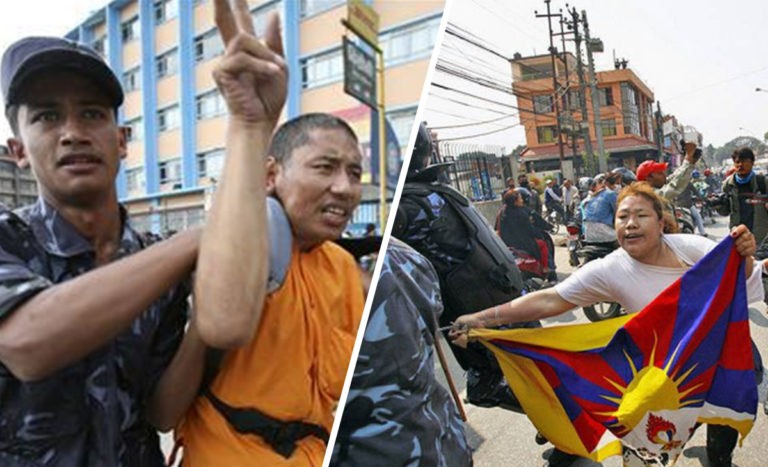
Police arrest Tibetan refugee demonstrators in Kathmandu prior to President Xi’s visit to Nepal; during that time, the government has banned protests of Tibetan refugees. File photo
About three-quarters of the roughly 12,000 Tibetans estimated to remain in Nepal lack any government-issued identity documents, leaving them vulnerable to arbitrary detention and unable to legally work or access public services.
China has also been pressing Nepal to sign agreements that critics say would formalize a framework for returning Tibetans, which would directly violate the international principle of non-refoulement.
Does Nepal have any law that actually protects refugees?
This is a crucial gap in Nepal’s governance framework. Nepal is not a party to the 1951 UN Refugee Convention or its 1967 Protocol, the two main international instruments that define who is a refugee and what rights they hold. More importantly, Nepal has never passed its own national refugee legislation either.
This means there is no domestic legal definition of a refugee, no codified process for asylum applications, no guaranteed rights of protection, and no clear prohibition on forced return.
Foreigners who enter Nepal without proper documentation, including people fleeing persecution, are technically classified as illegal immigrants under immigration law and can be arrested and fined.
UNHCR operates in Nepal under a memorandum of understanding with the government and conducts its own registration and refugee status determination processes, but these have no binding force on Nepalese authorities.
Whether a particular group receives protection effectively depends on political discretion rather than law. Tibetans and Bhutanese were historically tolerated because Nepal saw no political cost in doing so, but that calculus has shifted over time, especially for Tibetans, as relations with China deepened.
Who are the Rohingyas in Nepal and how did they get there?
The Rohingyas are a Muslim ethnic minority from Myanmar’s Rakhine State who have faced systematic persecution, statelessness, and violence for decades. Myanmar has denied them citizenship since 1982.
Following major waves of violence against them, particularly in 2012 and in 2017 when military operations drove nearly 700,000 Rohingyas into Bangladesh in a matter of weeks, many began seeking refuge in countries across South and Southeast Asia. A smaller number made their way overland to Nepal, often passing through Bangladesh and India.
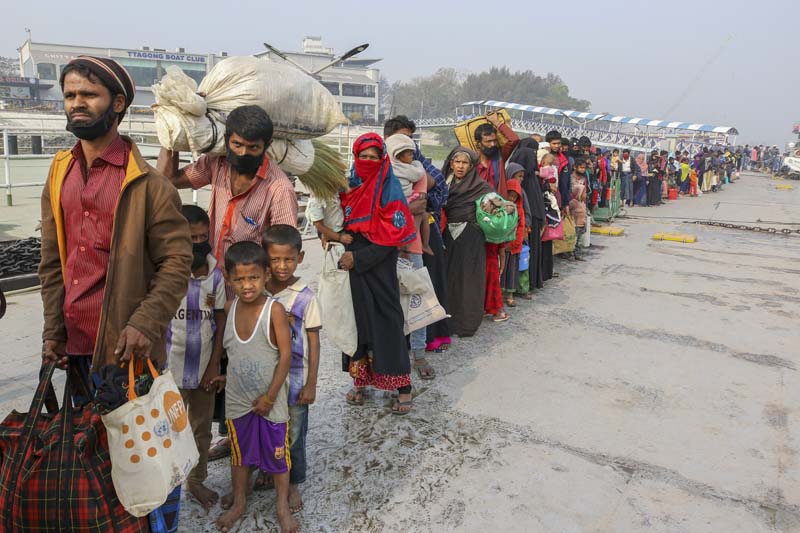
India coast guard helping Rohingya adrift in Andaman Sea. File photo
Unlike Bhutanese or Tibetan refugees who arrived in organized influxes, Rohingyas in Nepal came as individuals and small family groups, largely through informal networks. Many settled in the Kapan area of Kathmandu after being helped by members of Nepal’s Muslim community who encountered them at local mosques.
The Rohingya community in Nepal is estimated at between 600 and 3,000 people, though exact figures are difficult to confirm. Only those who arrived before 2013 were registered by UNHCR and issued refugee documentation; those who came later exist in a legal grey zone with no formal status at all.
What is daily life like for Rohingya refugees in Nepal?
The Rohingyas in Nepal live in conditions that are materially better than the overcrowded camps of Bangladesh but are still marked by deep insecurity and vulnerability. They are concentrated in urban settlements in the Kathmandu Valley, particularly in Lalitpur and Kapan, where families occupy temporary shelters made of bamboo and tin sheets.
UNHCR provided small monthly stipends for those who were registered, but this support was discontinued in 2015, leaving families reliant on informal labour, donations from local NGOs, and the generosity of Nepal’s Muslim community. Because Nepal has no refugee law and treats unauthorized residents as illegal migrants, Rohingyas without UNHCR cards have no protection against arrest.
They cannot legally work, their children cannot be formally enrolled in school in any recognized capacity, and their births go unregistered. There are also reports of police harassment. The psychological toll is enormous: families that survived massacres and expulsion now live in constant fear of deportation to Myanmar, a country that does not even recognize them as citizens, or back to Bangladesh’s overcrowded and dangerous camps.
Some advocacy organizations have noted that Nepal provides a marginally safer environment than India or Bangladesh, largely because the scale of the Rohingya presence there is small enough to avoid generating political controversy.
Are there Afghan or other refugees in Nepal too?
Yes, though in much smaller numbers. After the Taliban’s return to power in Afghanistan in August 2021, a number of Afghans who had been living in Nepal on student or work visas or who were already in transit found themselves stranded and unable to return home safely. Some filed asylum applications with UNHCR.
Nepal also hosts smaller populations of refugees and asylum seekers from countries including Somalia, Pakistan, Yemen, and Nigeria. As of recent UNHCR data, there were roughly a thousand urban refugees and asylum seekers from various countries outside of the main Tibetan and Bhutanese communities.
These individuals are among the most legally precarious: Nepal’s government has not agreed to recognize urban refugees as a formal category, and its National Unit for the Coordination of Refugee Affairs has at various points asked UNHCR to stop recognizing new refugees so that Nepal does not become a more attractive destination.
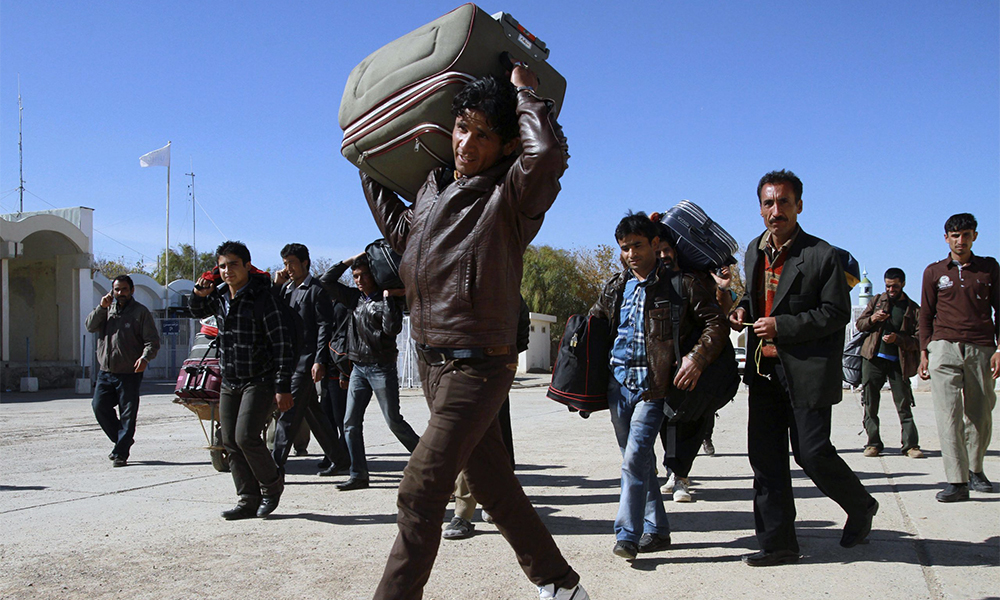
Representational image of Afghan refugees. File photo
People from these countries who lack UNHCR documentation have essentially no protection and no legal pathway to stay. They can be detained, fined, and deported as illegal immigrants, regardless of the dangers they fled.
How does Nepal’s government officially deal with refugees given the absence of any law?
In the absence of a dedicated framework, Nepal operates through ad hoc and discretionary arrangements. The Ministry of Home Affairs handles refugee-related matters through the National Unit for the Coordination of Refugee Affairs, which coordinates with UNHCR.
For Bhutanese refugees in the eastern camps, the government issued identity documents for many years and oversaw the UNHCR-managed camps. For Tibetans, it historically issued “refugee certificates” to early arrivals but stopped extending this to new arrivals under Chinese pressure.
For urban refugees and asylum seekers of other nationalities, the government largely relies on UNHCR’s own processes while maintaining the legal fiction that they are irregular migrants. The entire system functions on tolerance rather than entitlement, which means it is highly vulnerable to political shifts.
When diplomatic or economic interests are at stake, as with China over Tibet, the government has been willing to restrict and even reverse protections without legal accountability. International advocacy groups and the United States government have repeatedly urged Nepal to pass refugee legislation and join the Refugee Convention, but no serious legislative movement has occurred.
Why did the repatriation talks with Bhutan fail so completely?
At the core of the failure was a fundamental disagreement about identity and citizenship that neither side could bridge. Bhutan held that many of those in the camps had never been genuine citizens and that their departure had been voluntary. The refugees and their advocates insisted they had been legal citizens who were forcibly expelled, with documentation to prove it.
The verification exercise, when it was finally conducted in the Khudunabari camp in 2001, categorized only a small fraction of those screened as eligible for immediate return, a result that refugee leaders rejected as manipulated. Bhutan also feared that mass repatriation of a politically mobilized population that had spent over a decade in exile, many with international connections and stronger democratic expectations, could destabilize its own political order.
For Nepal, the issue was diplomatically sensitive partly because of Bhutan’s close relationship with India, Nepal’s dominant neighbour. India, which could have exerted meaningful pressure on Bhutan, chose not to intervene. Without Indian engagement and with Bhutan unwilling to budge, Nepal lacked the leverage to force progress.
The post-2007 focus on resettlement allowed all parties to set aside the unresolved repatriation question, which remains technically open but practically dormant.
What are the key rights violations that refugees in Nepal face today?
Across all refugee communities in Nepal, a common thread runs through the violations: the absence of legal identity. Over half of the refugee population in Nepal lacks any government-issued documentation, which creates a cascading set of deprivations.
Without legal identity, people cannot formally work, open bank accounts, register property, or access most public services. Children born in Nepal to refugee parents face statelessness because their births are either not registered or are issued documents with no legal validity.
Bhutanese refugee children’s births, which had previously been registered, stopped being recorded in 2024. Tibetan children receive only an informal “proof of birth” note with no legal standing. Urban refugees from Myanmar, Somalia, and elsewhere are entirely outside the birth registration system.
For Tibetans specifically, the restrictions go further: surveillance of community activities, prohibition on political expression, bans on commemorating the Dalai Lama’s birthday, and documented instances of forced return to China, where returnees face imprisonment.
Rohingyas and other urban refugees face the constant risk of detention as illegal immigrants. All communities share the vulnerability to trafficking and forced labour that comes with undocumented status.
How has the international community responded to Nepal’s refugee situation?
The international response has been substantial but uneven. UNHCR has maintained a consistent presence in Nepal and has been the primary institution protecting refugees’ most basic interests, running registration, refugee status determination, and assistance programmes, and advocating with the government.
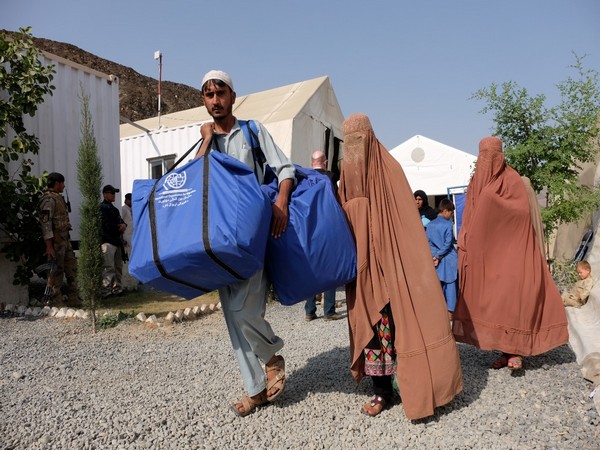
Afghan refugees. photo courtesy: UNHCR
The resettlement programme for Bhutanese refugees was a major multilateral success story, demonstrating what coordinated international burden-sharing can achieve. The United States has been particularly engaged, not only taking the largest share of Bhutanese resettlement cases but also consistently pressing Nepal through diplomatic channels to improve conditions for Tibetan refugees and to stop forcible returns.
The US State Department and human rights organizations including Human Rights Watch have published critical reports and made public statements. However, this pressure has had limited effect when it runs against Nepal’s economic and strategic interests, particularly its relationship with China.
Donor governments have funded UNHCR’s operational costs in Nepal, and NGOs have provided supplementary assistance to vulnerable communities. The gap between international advocacy and actual outcomes on the ground, particularly for Tibetans and urban refugees, reflects how little external pressure can accomplish when a host country calculates that compliance with China’s preferences is more valuable than compliance with Western human rights expectations.
What is the current situation of the remaining Bhutanese refugees in the camps?
The roughly 6,000 to 7,000 Bhutanese who remain in the two eastern Nepal camps at Beldangi and Pathari Sanischare occupy an increasingly marginal position. UNHCR reduced its footprint significantly after group resettlement ended in 2016 and formally closed its field sub-office in Damak.
The agency has been working with ILO and NGOs such as the Lutheran World Federation on livelihood programmes to build self-reliance among remaining camp residents and to strengthen connections with surrounding host communities. Some agricultural and vocational initiatives have been launched in recent years. But the fundamental question of durable solutions remains unresolved.
Nepal refuses local integration. Bhutan refuses repatriation. The prospect of individual resettlement cases being processed is far slower than the previous group programme. Many of those who stayed are elderly, chronically ill, or specifically tied to the dream of returning home before they die.
Advocates working with this community have warned that UNHCR’s gradual withdrawal of support, without any political resolution in sight, risks deepening a humanitarian crisis for the most vulnerable among those left behind.
What is the fake Bhutanese refugee scam in Nepal, what happened, who was involved, and what is its current status?
The fake Bhutanese refugee scam, exposed around 2023, refers to a large corruption scheme in which an organized network defrauded hundreds of Nepali citizens by promising to register them as “missed” Bhutanese refugees so they could be sent for third-country resettlement, particularly to the United States.
The accused allegedly inserted fake names into official government refugee lists and related documents in exchange for large payments, reportedly ranging from Rs 1 to 5 million per person, with the total amount running into hundreds of millions of rupees.
Most of the victims were ordinary Nepali citizens rather than genuine refugees, who were misled into believing they could secure resettlement opportunities through official channels. Investigations later indicated around 875 victims were affected by the scam.
Following the revelations, Nepal Police filed cases in 2023 against around 30 individuals, including high-profile political and administrative figures such as former Deputy Prime Minister Top Bahadur Rayamajhi and former Home Minister Bal Krishna Khand, along with bureaucrats and intermediaries.
The charges included fraud, forgery, organized crime, and even treason-related allegations. Several accused individuals were arrested, while others either went into hiding or were released on bail during the legal process, including former Home Minister Bal Krishna Khand.
By 2024, the Supreme Court rejected bail pleas for some key accused, keeping legal pressure intact. As of 2026, the case remains unresolved, with proceedings still ongoing and calls for further investigation continuing.
The scandal severely damaged public trust in state institutions, exposed deep corruption within refugee-related administrative processes, and complicated the already sensitive issue of remaining genuine Bhutanese refugees, while no confirmed large-scale fraudulent resettlement to the United States was officially established.
What concerns has the new BJP government in West Bengal raised about Rohingyas, and how might this impact Nepal?
In May 2026, after a landslide electoral victory in West Bengal, the BJP government launched a strict policy initiative called “Detect, Delete, Deport,” aimed at identifying and removing undocumented Bangladeshis and Rohingyas from the state.
The administration instructed district officials to set up holding centers for suspected illegal immigrants, remove their names from voter rolls, and coordinate deportations through the Border Security Force. This policy reflects the BJP’s broader national stance on immigration control, border security, and demographic concerns.
Party leaders have justified the move by citing what they describe as “demographic invasion,” allegations of vote-bank politics under the previous Trinamool Congress government, and pressures on local employment and public resources, while also pointing to the use of fake identity documents and the presence of alleged infiltrators, including Rohingyas.
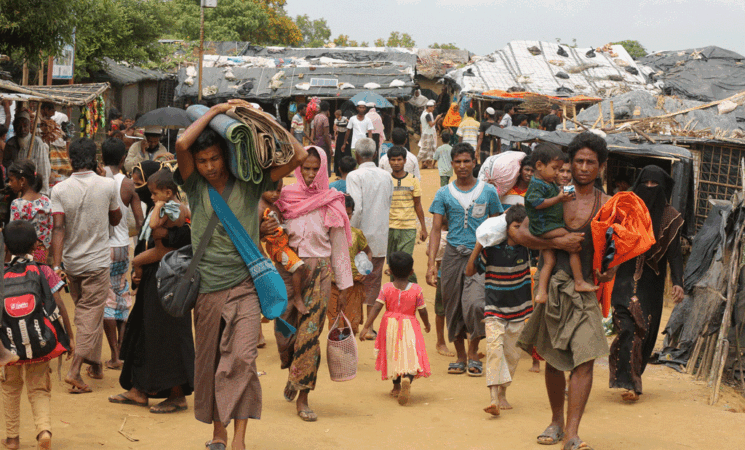
Rohingya Refugees in Bangladesh during COVID-19. Photo courtesy: NIICE, Nepal
For Nepal, this development carries indirect but important implications due to its open border with India. Stricter enforcement and deportation drives in West Bengal and potentially other Indian states could increase the movement of Rohingyas or other undocumented migrants toward Nepal as an alternative route or destination.
Nepal already hosts a small and vulnerable Rohingya population estimated between roughly 600 and 3,000 individuals, and any additional inflow could strain limited resources and increase policy pressure on the government, which lacks a formal refugee law framework.
It could also heighten concerns about Nepal becoming a transit point for displaced populations and lead to tighter border enforcement or pushbacks, while adding complexity to Nepal–India relations on migration management and refugee-related security coordination, especially amid ongoing human rights concerns about forced expulsions and non-refoulement principles.
Is Nepal at risk of becoming a transit country rather than a destination for refugees?
This is a concern that Nepali policymakers themselves have articulated. Nepal’s geographic location between South Asia and the Himalayan region, combined with its open border with India, makes it both accessible and potentially attractive as a waypoint for people seeking to move onward toward wealthier countries.
The Rohingya community in Nepal, for instance, is in part constituted by people who entered through India. Nepal’s government has been explicit about not wanting to position the country as a destination for large numbers of refugees, partly out of fear of straining limited public resources and partly due to political sensitivities about demographic change.
Nepal’s National Unit for the Coordination of Refugee Affairs at one point formally requested that UNHCR stop registering new refugees to prevent that pull effect. At the same time, Nepal’s porous borders and the absence of a legal framework mean that unauthorized arrivals are difficult to prevent or to manage in an organized way.
As climate change, political instability, and ethnic conflicts continue to generate displacement across South and Southeast Asia, Nepal may face increasing pressure from new arrivals regardless of its official preferences.
What does a lasting solution for refugees in Nepal actually look like, and how far away is it?
There is no single clean answer because the refugee communities in Nepal are so different in origin, legal status, and future prospects. For the remaining Bhutanese in the camps, a lasting solution requires either a political breakthrough with Bhutan on repatriation, which seems distant, or a renewed international commitment to individual resettlement processing for those who want it, combined with genuine local integration pathways for those who do not.
For Tibetans, the path runs through Nepal’s own political choices about how much it is willing to let Chinese diplomatic pressure determine its human rights obligations. Issuing valid identity documents to all registered Tibetans would be a meaningful first step that Nepal has so far refused to take.
For Rohingyas and other urban refugees, the most urgent need is a domestic legal framework that defines their rights and protections rather than leaving them exposed to arrest and exploitation.
Nepal passing its own refugee legislation or acceding to the 1951 Refugee Convention would not solve every problem, but it would transform the basis on which all these communities exist in the country, shifting them from tolerated guests subject to political whim into rights-holders with legal standing.
Given Nepal’s current political dynamics and its deepening economic ties with China, none of these changes are imminent. The refugees who have spent decades waiting in Nepal may have to wait considerably longer still.