
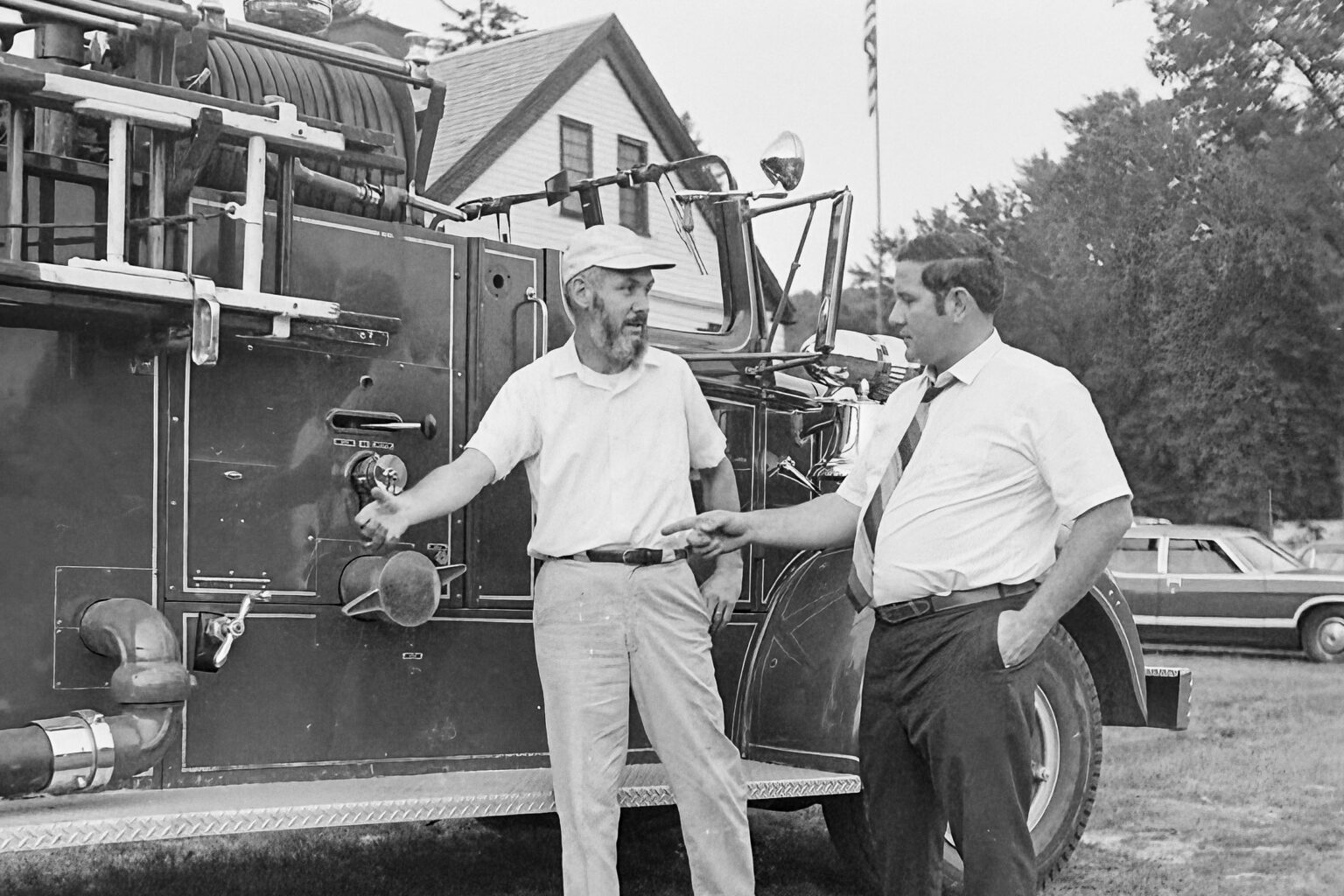
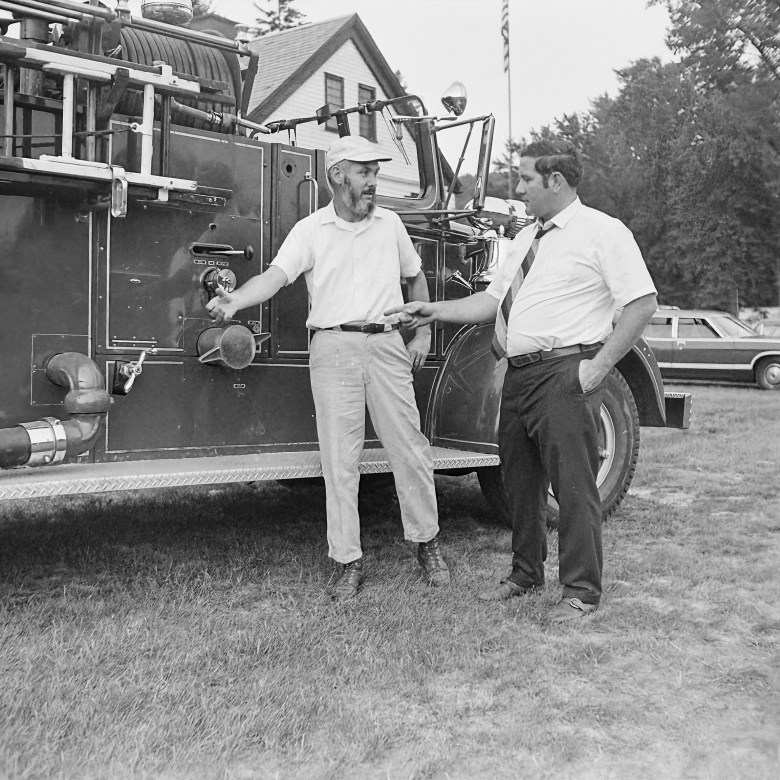
 Plainfield auctioneer William A. Smith, right, quizzes Meriden Fire Chief G. Gardiner MacLeay Jr. about fine points of a fire truck. Smith had just presented MacLeay a check for $600 to be divided among the Plainfield, Meriden and Cornish fire departments. The money was raised from donations at a preview showing of antiques prior to the second session of the James Campbell Lewis estate conducted by Smith in July 1971. (John Tichenor / Valley News)
Excitement was swirling in the clubby environs of the New England antiques business. Some were terming it “The Auction of the Century” and a few were even calling the young principal “The Auctioneer of the Century.” It was spring of 1971 and the stage was being set for the sale of a vast trove of rare and valuable furniture from the Cornish collection of James Campbell Lewis.
It would live up to the hyperbole, when hundreds of dealers, collectors and the curious showed up to witness the dispersal of the Lewis array of rare furnishings, a project that would take two three-day sessions to complete. And the event would solidify the reputation of a youthful Plainfield auctioneer, William A. Smith, as a go-to for the sale of high-end antiques from around the Northeastern region.
Lewis was a British-born New York moneyman who came to Cornish with his wife, Elizabeth von Krausz, herself an authority on antique furniture and also a rosarian, a famed writer and lecturer on the plant species. In 1950 they acquired the real-estate holdings once owned by C.C. Beaman, wealthy New York attorney who was the early patron of noted American sculptor Augustus Saint-Gaudens.
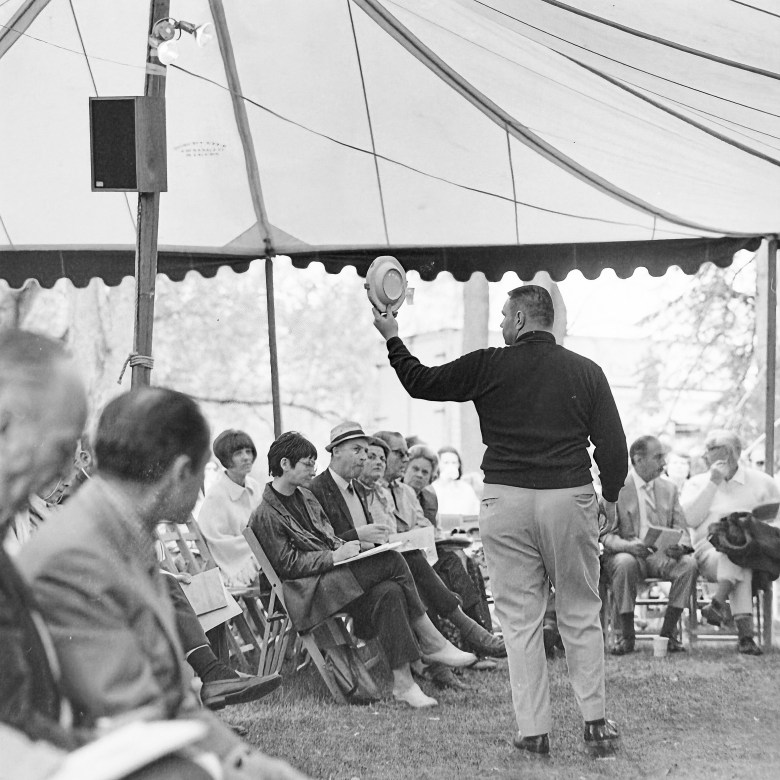 An assistant at the auction of the James Campbell Lewis antique collection holds a Canton china piece aloft for prospective bidders in Cornish, N.H., on May 28, 1971. The first of six auction days brought in $144,000 for 300 items from the early Americana collection, which was considered one of the finest in the country. (Larry McDonald / Valley News)
The property included a mansion, a pavilion for social events, a small farm and a broad swath of land along the banks of the Connecticut River with spectacular views of Mount Ascutney. In recent times it has come to be called Blow-Me-Down Farm and is part of the Saint-Gaudens National Historical Park. Just up the road there was a second mansion, one surrounded by tall pines and today called Mastlands.
Following the deaths of both of the Lewises, their five heirs decided to sell the 1,000-acre Cornish property and its entire contents. Smith assembled a syndicate of wealthy investors from Woodstock, Quechee, Lebanon and Manchester, N.H., to make an offer on the whole package.
They put up $500,000 cash money for the antiques (a $4.2 million tender in 2026 dollars), and another $250,000 for the real estate ($2.1 million today) including the mansions. The deal was completed — negotiations stretched over six months — and plans were soon launched to auction off the antiques, which were housed in both mansions and as well as outbuildings. Besides furniture, the offerings included silver and rare glass and china items.
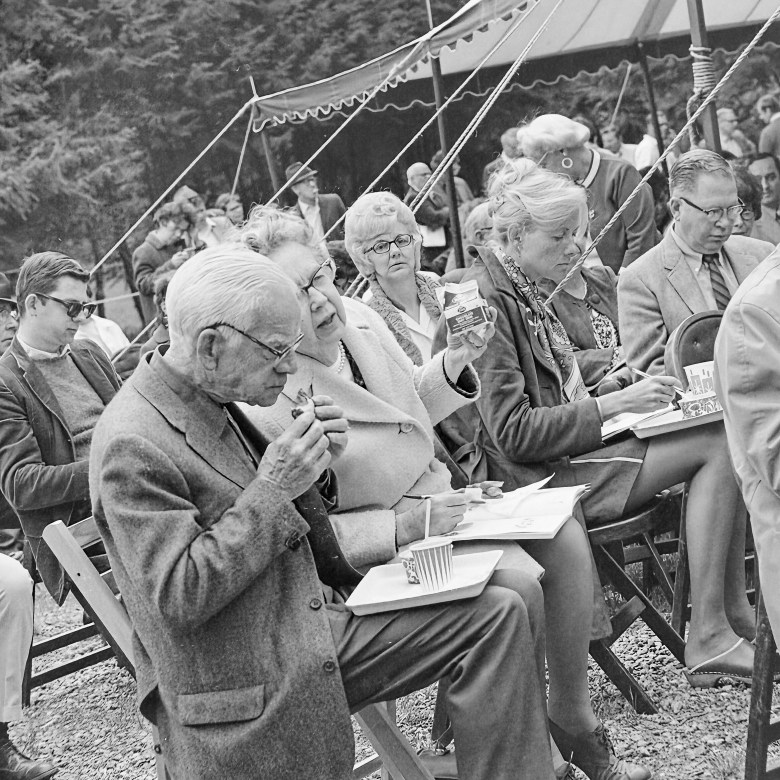 Attendees eat lunch during the auction of the James Campbell Lewis antique collection in Cornish, N.H., on May 28, 1971. (Larry McDonald / Valley News)
At the first session of the Lewis antiques auction, held in May 1971, collectors, museum curators and dealers from all over the U.S. and abroad descended on Cornish. There was a rumor going around that nobody would deny that former First Lady Jacqueline Kennedy had a buyer there to win her a certain valuable piece. The second session was held in July, and when it was all over the gross was estimated by observers at over $1 million, easily winning back way more than was put up by the investors overall. And there still was the real estate to sell off.
Hillsborough, N.H., native William A. Smith earned a civil engineering degree from New England College in 1962, but as a teenager he began developing a love for antique furniture. He worked for Richard Withington, also of Hillsborough, when Withington was the dominant force in top-grade antique auction sales in New Hampshire, and Smith was able to learn the ins and outs of the business under the tutelage of a master.
Smith became a mathematics teacher at Lebanon High School and on the side began testing the waters as an auctioneer in his own right. Those early forays rarely featured high-end furnishings; sometimes they were just a step up from rummage sales. But he also greatly expanded his following by helping numerous charitable organizations around the Upper Valley and beyond by running their benefit auctions.
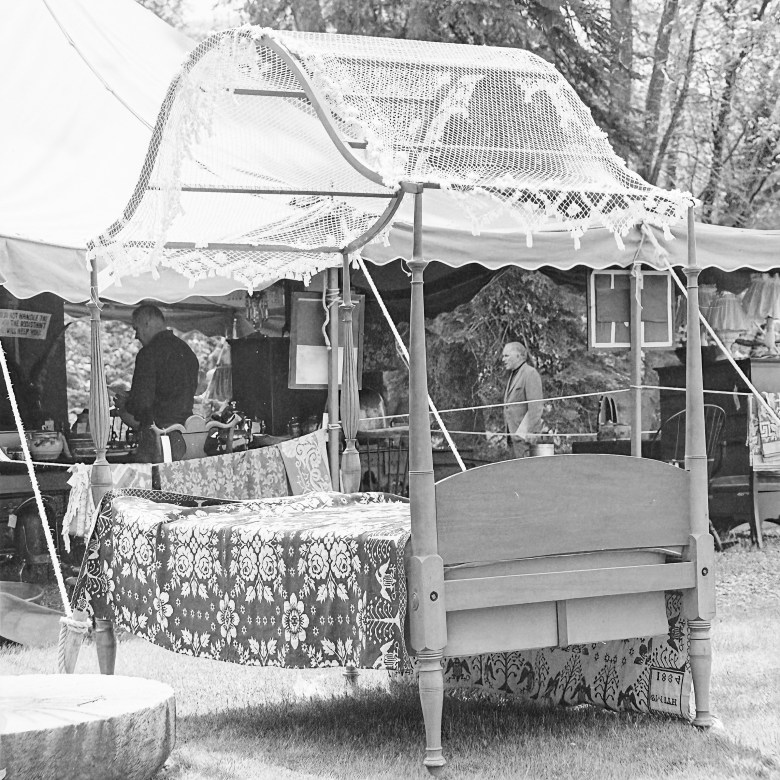 A four-poster bed sits on display at the auction of the James Campbell Lewis antique collection in Cornish, N.H., on May 28, 1971. (Larry McDonald / Valley News)
Eventually he had built up enough business that he was able to give up his teaching job and go into appraising and auctioning antiques full time. The Lewis deal would prove to be an inflection point for the Smith auction business — his brand would spread and lead to more and more prestigious gigs. Smith acquired the former elementary school building in Plainfield Village and turned it into a gallery and auditorium space where items from various sellers could be assembled and sold.
A key part of Smith’s appeal to his clientele was the way he ran the auctions. He shunned the typical loud machine-gun style auctioneer’s chant, using a more relaxed method, with plenty of humor and kidding of bidders mixed in. He always maintained a solid team of family members and employees skilled at carefully moving valuable furniture, erecting tents and keeping up with the multiple other details of the business.
The backbone of the business through those years was the traditional “country auction” where the Smith crew would come to a location and set up a tent on the lawn. Items would be lugged out of the house or sheds and sold piece by piece. Then the buyers would haul their purchases home in their pickups and station wagons. Countless sales also took place at the Plainfield gallery facility during the summer and fall.
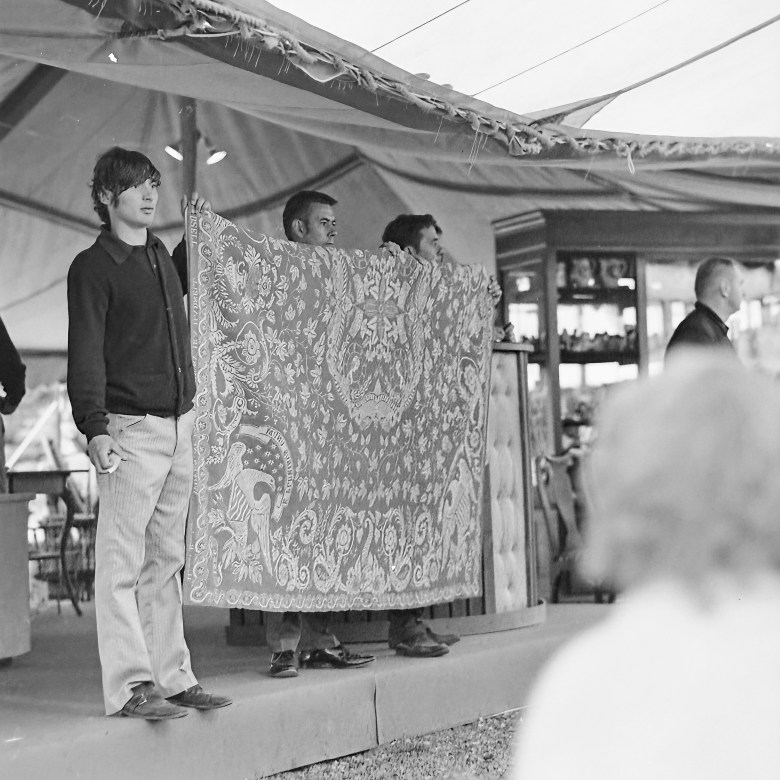 Assistants hold up an antique rug for bidding during the auction of the James Campbell Lewis antique collection in Cornish, N.H., on May 28, 1971. (Larry McDonald / Valley News)
When Smith died in 2000, the business never faltered, for his son William G. Smith had already served a long apprenticeship in the antiques business and had developed the same talents and methods as his father, assuring the continuity of the organization.
Son William G., best known as Billy to most old customers, carries the business on, but he’s careful to explain how things have changed since his father’s death. In a recent interview he outlined the current situation:
“It’s a whole different world today. Artwork and jewelry are strong. So is folk art. You can’t give away Victorian stuff; dark wood is a challenge.
“Queen Anne, Federal, Chippendale are only 5% of the market. If you have a pretty piece of tiger maple showing its original look it can be valuable, but if it’s had anything put on it, it’s not.
“It’s no longer about historical; it’s the look,” he says.
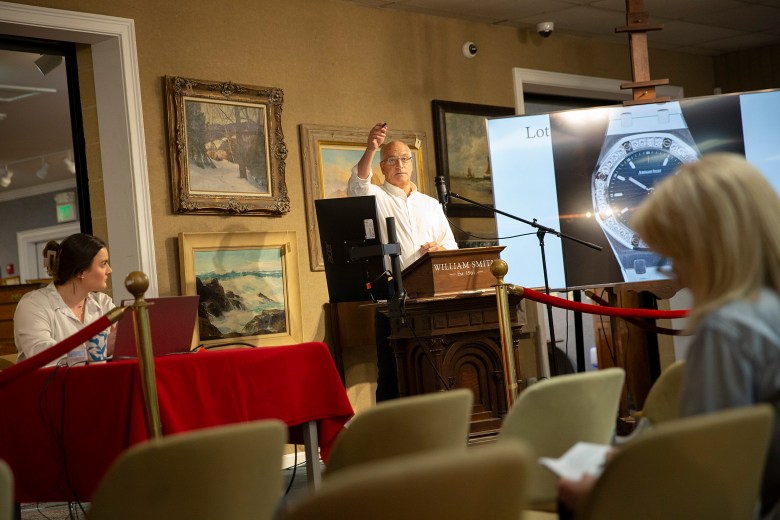 Auctioneer William G. Smith, center, takes bids on an Audemars Piguet, Royal Oak, stainless steel wrist watch that was a gift from Justin Timberlake to his attorney during a live auction at William Smith Auctions in Plainfield, N.H., on Wednesday, May 27, 2026. The watch sold for $25,000. ALEX DRIEHAUS / Valley News
All the recent literature about tastes in household furniture paints a stark reality: younger generations prefer the practical contemporary over the classic antique.
But the greatest change over the past quarter century has been the near-complete takeover of the field by online bidding. The traditional tent sale hasn’t disappeared — sometimes one is held almost for nostalgia’s sake — but the internet rules the game, and Smith and anybody else in the trade is constantly in a race to keep up with technology and changing customer preferences.
A large Smith sale was held on the Wednesday of Memorial Day Week this year. It featured a glossy catalog of more than 500 lots, including jewelry, fine art, Americana, clocks, Oriental rugs, silver and an array of furniture. At the back of the catalog were two classic motor vehicles tossed in for good measure: a mint condition 1970 International Scout and a 1950 restomod Chevy pickup, each with an appraised value of $30,000 to $50,000.
More than 23,000 copies of the catalog were mailed out and the entire catalog was posted on the Smith site on the internet. Between the printed catalog, the Smith online posting and third-party platforms there was the potential of a million viewers for the listing of items coming up for sale. To assemble all these pieces Smith has an in-house graphics and IT specialist.
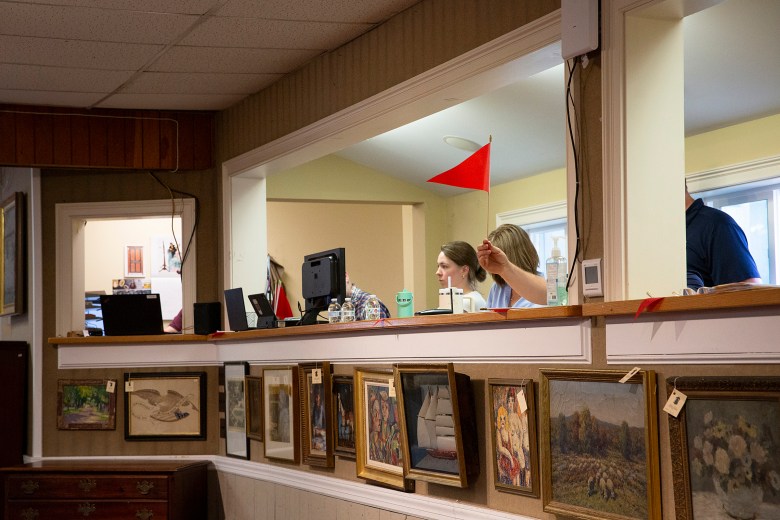 Clerks take bids over the phone during a live auction at William Smith Auctions in Plainfield, N.H., on Wednesday, May 27, 2026. Many of the business’ sales are now hybrid, with bids being placed online in timed auctions. ALEX DRIEHAUS / Valley News
So the sale should be considered a hybrid. A buyer could come to the Plainfield gallery and bid in a “live” setting. Clerks were on telephones, prepared to receive and place bids and there were bids coming in from the internet. Smith and co-auctioneer Leon Rogers were geared up to move the entire catalog offering in the space of just six hours.
Right on the heels of this sale would follow an online “timed” auction where bids are taken solely by electronic means; this arrangement has become the dominant format for Smith auctions, as well as those of competitors.
To feed this beast, Smith combs the country for quality items to put up for bid, whether it is in the occasional, and rare, hybrid live/online sale or a straight internet-timed auction. Besides the Plainfield base of operations, the company maintains offices in Greenwich, Conn., Sarasota, Fla., and Phoenix, Ariz., where good items are apt to be found. Much classic antique furniture is in the Sunbelt because it’s where snowbirds from New England have relocated and are downsizing.
A consequence of this far-flung acquisition system is that Smith spends a lot of time and resources on logistics. A piece of furniture or artwork may be handled four or five times between the seller and buyer at the end of the pipeline.
But he’s frank about the revolution that’s swept the auction game in the years since his dad died 26 years ago.
“Online has saved us,” he says.
Steve Taylor of Meriden has contributed to the Valley News for many years.