

The Finnish government is moving to verify the readiness of its civil defense infrastructure, scheduling a nationwide test of its emergency broadcasting and siren networks while explicitly integrating drone defense alerts into its public safety protocols, Yle reported.
The operational test will take place on Monday, June 1, at 12:00. The exercise comes at a time of heightened radar monitoring along NATO’s northern and eastern flanks due to repeated cross-border airspace violations.
Follow our coverage of the war on the @Kyivpost_official.
Distinguishing tests from true emergencies
Finland traditionally tests its audible public warning infrastructure on the first Monday of every month, unless the date coincides with an official public holiday. Ahead of the June 1 exercise, the Ministry of the Interior issued a public advisory urging citizens to familiarize themselves with the audio profiles of the state’s warning frequencies to prevent unnecessary panic.
The ministry outlined the exact acoustic signatures used within the civil defense framework, starting with the test signal, which is a flat, continuous tone that lasts for exactly seven seconds to indicate a routine system check requiring no public action.
In contrast, the danger signal consists of a fluctuating, rolling alarm that repeatedly rises and falls in pitch for a full minute, meaning an active hazard is present and citizens must immediately move indoors, seal windows, and await official instructions. Finally, the all-clear signal is a flat, continuous pitch that sounds for one unbroken minute, letting the public know that the immediate threat has passed.
Other Topics of Interest
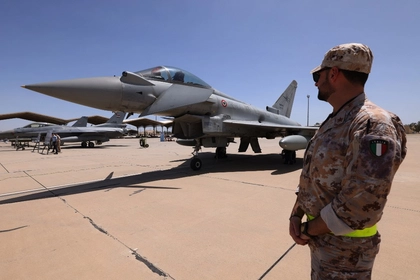
Italy Deploys Troops and Jets to Romania After Russian Strike
Italy is deploying approximately 100 troops and several fighter jets to Romania to train the Romanian military in counter-drone tactics. The deployment, originally scheduled for a later date, was accelerated following a May 29 incident where a Russian drone crashed into a residential building in Galați. Stationed at the Mihail Kogălniceanu Air Base near Constanța, the Italian contingent will spend roughly a month training Romanian forces to intercept and destroy unmanned aerial vehicles (UAVs).
Adapting sirens to the drone era
The acoustic network forms the backbone of Finland’s multi-platform emergency broadcasting system, which simultaneously pushes digital push-notifications to civilian smartphones through the state-backed 112 Suomi mobile application.
While the sirens have historically been reserved to alert outdoor populations against hazardous industrial smoke, toxic gas leaks, or extreme weather conditions, the Ministry of the Interior revealed a significant policy modernization. Moving forward, the regional rescue services have been explicitly authorized to activate the public siren network to warn local populations of incoming hostile or unidentified drone threats.
Securing the Baltic and Nordic air corridors
The inclusion of drone protocols into standard civil defense drills follows a series of troubling aerial incursions that have tested the air defense grids of northern European nations.
Finland was recently forced to enact an emergency lockdown of its primary international aviation hub, Helsinki-Vantaa Airport, after an unidentified long-range drone breached national territory and hovered in dangerous proximity to a high-capacity domestic oil refinery.
This vulnerability is shared by regional neighbors. Estonia recently took steps to build a comprehensive surveillance umbrella by permanently activating a stationary drone detection and monitoring network along its southeastern land borders following an incident where NATO Baltic Air Policing fighter jets had to down a rogue asset over Lake Võrtsjärv.
Concurrently, Latvia has repeatedly scrambled allied fighter jets and halted rail transit this month after several explosive-laden Russian drones crossed its border, with one directly impacting an industrial fuel depot in Rēzekne. By standardizing drone warnings within its monthly siren drills, Finland aims to ensure its population is mentally and logistically prepared to react to the asymmetric aerial threats increasingly drifting into NATO airspace.