
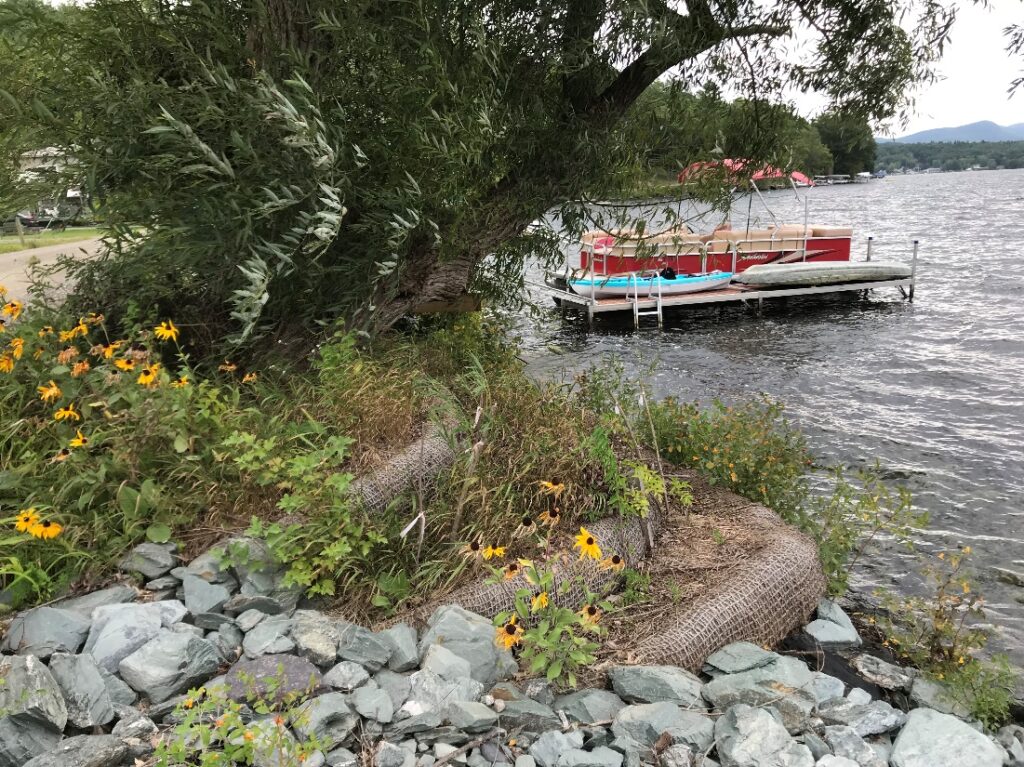
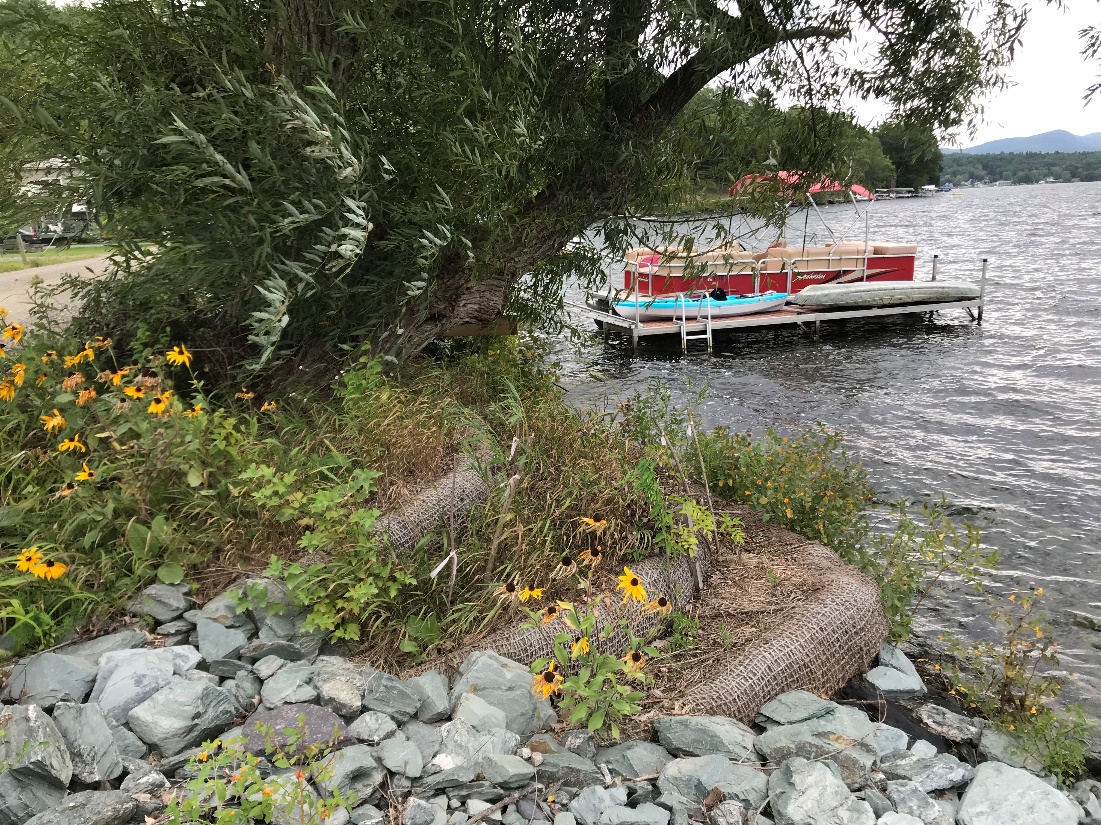
A shoreland property owner used a best management practice for encapsulated soil lifts to reduce erosion and stabilize the shoreline along Lake Bomoseen; the lifts or terraces also help to protect water quality and recreate wildlife habitat.
Vermont Business Magazine As folks head to their lakefront properties for the summer, the Vermont Lakes and Ponds Program is offering guidance to help property owners protect and restore their lakeside properties. The Shoreland Best Management Practices guidance highlights different ways owners can improve their properties to benefit lake health and shoreline habitat.
“Vermont passed the Shoreland Protection Act in 2014 to balance reasonable shoreland development with the protection of lake ecosystems,” said Department of Environmental Conservation Commissioner Misty Sinsigalli. “Property owners can use our department’s Shoreland Best Management Practices guidance to plant native trees and shrubs, install rain gardens to absorb runoff, improve driveways and pathways, create no-mow zones, and more.”
The Shoreland Protection Act regulates new activities in protected shoreland areas that are within 250 feet of the shoreline of lakes and ponds that have a surface area of 10 or more acres.
Property owners need a Shoreland Protection Permit for activities in protected shoreland areas that create:
- Cleared areas (removing vegetation like trees or shrubs or disturbing the natural ground cover) or
- Impervious surfaces (any hard or solid surfaces like roofs, roads, and parking lots where water runs off instead of soaking into the ground).
Shoreland property owners can use the Sharing the Edge booklet to learn more about regulations and best practices for lakeshore management. The booklet also details what a healthy shoreland looks like and how Vermont manages its public waters.
To ask questions about proposed projects, property owners are encouraged to reach out to their regional Lake and Shoreland permit analyst. They can also visit the online Permit Navigator to find out what other state environmental permits might be needed.
For owners who want to go above and beyond Vermont’s shoreland regulations, the Lake Wise Program offers free technical assistance to support lake-friendly living. The Vermont Lakes and Ponds Program oversees this voluntary initiative that awards shoreland property owners who develop and manage their property to support the lake.
“The Lake Wise Program works with lakeshore owners to manage their property in a way that will reduce runoff and erosion into the lake while creating or maintaining healthy lakeshore ecosystems,” said Alison Marchione, DEC Shoreland Restoration Ecologist. “Since the beginning of the program in 2013, 1,329 lakeshore owners have had their property assessed and 483 lakeshore owners have earned a Lake Wise Award, making a positive impact on our state’s shorelines.”
Learn more about the Lake Wise Program and the Shoreland Best Management Practices guidance. Contact Alison Marchione with any Lake Wise questions at 802-490-6128 or [email protected].
The Department of Environmental Conservation is responsible for protecting Vermont’s natural resources and safeguarding human health for the benefit of this and future generations. Visit dec.vermont.gov and follow the Department of Environmental Conservation on Facebook and Instagram.
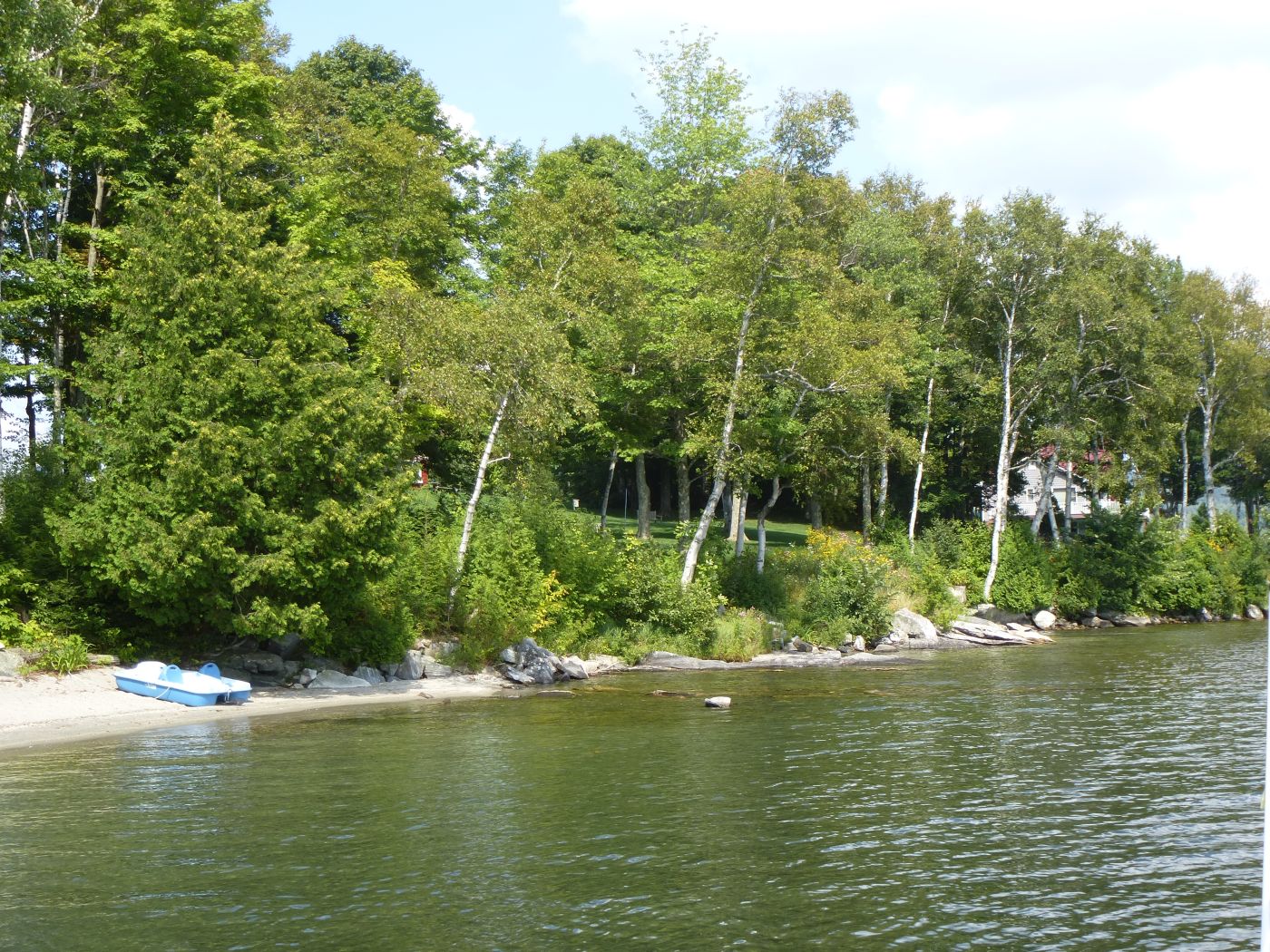
Healthy lakeshores provide wildlife habitat, reduce erosion, and protect water quality.
Vermont Agency of Natural Resources Website.
To support vital journalism, access our archives and get unique features like our award-winning profiles, Book of Lists & Business-to-Business Directory, subscribe HERE!
 Vermont Business Magazine